An abstract reasoning test for fast-changing roles
Find the people who can spot the rule in an unfamiliar pattern and apply it. Almost no language, so it works across countries, and every result is checked before you rely on it.
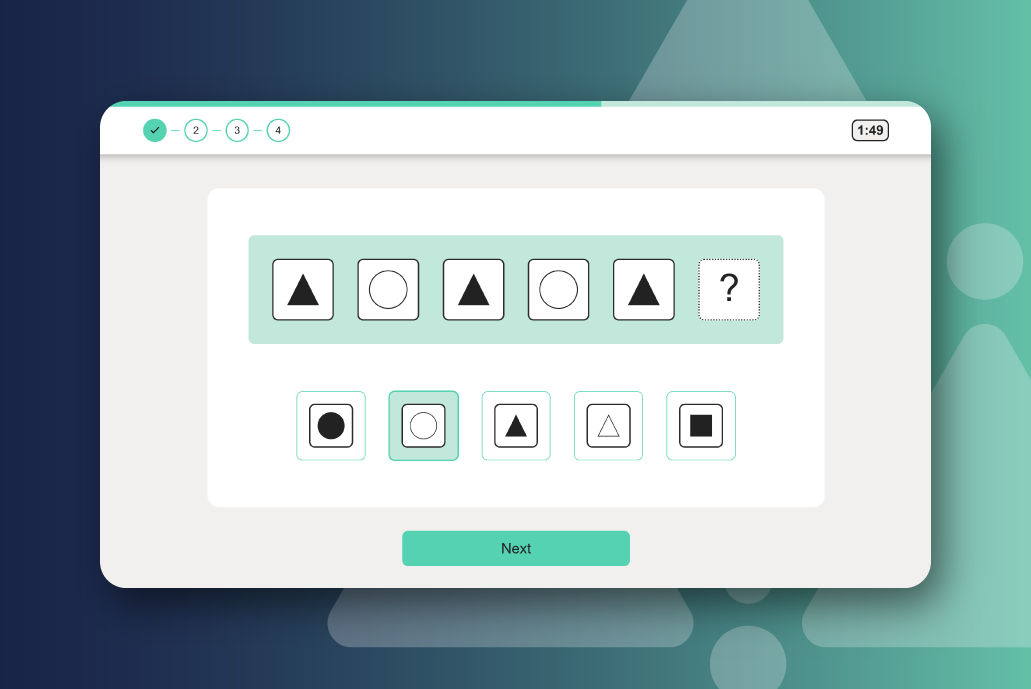
An abstract reasoning test shows how well someone finds the rules in unfamiliar patterns of shapes and symbols. Because it needs almost no reading, it suits global hiring and roles that change fast. Abstract reasoning is one part of a wider cognitive ability assessment. For a direct read on how people learn, see learning agility.
Built for new problems
Abstract reasoning draws on the flexible thinking people use in situations they have not met before, which matters most where roles change fast.
Works across languages
Questions use shapes and symbols instead of text, so the same test travels across countries with very little translation.
Credible at senior level
The abstract format was developed because clients found it more relevant for senior and executive candidates than diagram-based tests.
Result integrity
Trust every result you see
Shape-based questions travel across countries, so candidates may sit them anywhere. These checks keep each result trustworthy wherever it is taken.
Randomized by design
Each of the eight timed sets is drawn at random from a graded bank, so every candidate faces a different test of the same difficulty.
Unusual results flagged
Each test carries a built-in check for unusual response patterns, the kind AI use can leave. It tells you when a retest is needed, and candidates taking the test notice nothing different.
Supervision when it counts
For global or high-stakes hiring, retest flagged candidates under supervision or add remote supervision from the start.
Clients
What clients see
“It’s like an antenna going up before I meet a candidate. One person we asked to redo the assessment was completely open about having used AI.”
Talent acquisition team
UK asset management firm
Choose the right format
Abstract or diagrammatic?
Abstract test
Series of shapes and symbols in timed sets of four. Suited to senior and global roles, where reading load should not affect the score.
Diagrammatic test
Diagrams showing processes and transformations, close to working with real systems, for technical and professional roles.
Inside combined tests
A short abstract section sits in Executive Aptitude for senior roles, and in our 12-minute mobile-first global test.
Help and support
Common questions answered
What buyers and hiring managers ask us most about this test.
Both measure logical reasoning about systems. Abstract reasoning uses series of shapes and symbols; diagrammatic reasoning uses diagrams of processes and transformations. Scores on the two correlate strongly, so choose the format that feels most relevant to the role.
A full abstract reasoning test takes 16 minutes, in eight timed sets of four questions. The diagrammatic alternative takes 24 minutes, and combined tests include a shorter abstract section of four to six minutes.
No. Every candidate gets a different selection from a graded question bank, with easier sets first and harder sets last. Scores are equated so results compare fairly across candidates.
Each abstract test includes a check that flags unusual response patterns and tells you when to retest. For high-stakes or international hiring where you need certainty, add remote supervision.
Yes. A timed abstract practice test shows the shape-and-symbol format and gives feedback on each answer. Take it yourself to see exactly what your candidates will experience.
Where to next
More on reasoning tests in hiring
Jaguar Land Rover: aptitude screening at volume, decisions in 48 hours
A Swift Aptitude Test as the second screening stage helped cut hiring time from three weeks to 48 hours, with screening costs down 70%.
Generative AI and the integrity of online testing
What AI tools mean for psychometric assessment, and how test design keeps results trustworthy.
Fujitsu: reasoning and judgment measured in one graduate flow
A Swift Executive aptitude test sat alongside an immersive SJT, and 18% more candidates completed a fairer process.
Remote test supervision: what responsible practice looks like
Notes from the International Test Commission on remote proctoring and AI assisted supervision.
Why ability and behavior are stronger together
Combining aptitude, personality and situational judgment in one stage raises validity, fairness and ROI.
Designing tests candidates want to finish
How UX and cognitive load shape the candidate experience, and what a poor one costs your employer brand.
Get started
Find the right test for your roles
Tell us the roles you are hiring for, and we will recommend the level, format, and safeguards that fit.













-1.jpg)