










Taking an aptitude test?
If an employer has invited you to sit one, go to our candidate area where you can find information on how to access your practice tests and an outline of to what to expect when taking our assessments.

Match the level
A test pitched too easy passes everyone. Pitch it too hard and you lose people who would have done the job well. Set the difficulty to the level you hire at.

Set the pass mark
Set it from what the role needs, never from a round number. Every point you raise it shrinks the pool, and it can change who gets through.

Prepare candidates
Tell candidates what the test covers and point them to the free practice tests. People who know what is coming give you a truer read of how they think.

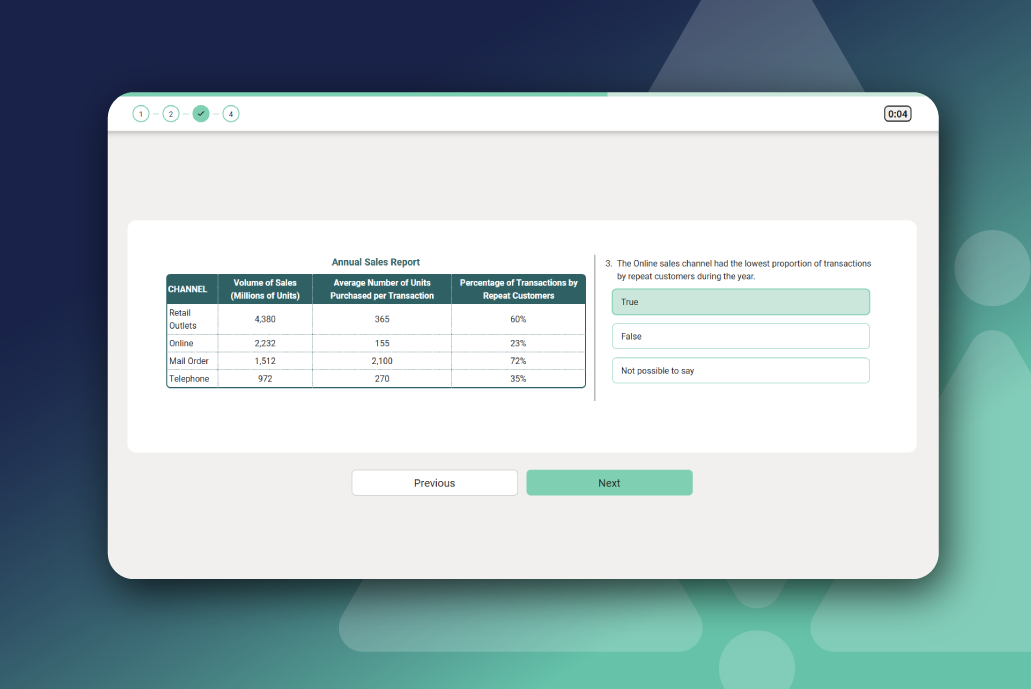
Frontline and volume
Contact center, retail and operations roles depend on learning procedures fast and working accurately with numbers. A short test early in the process narrows a large applicant pool before anyone spends time on interviews.
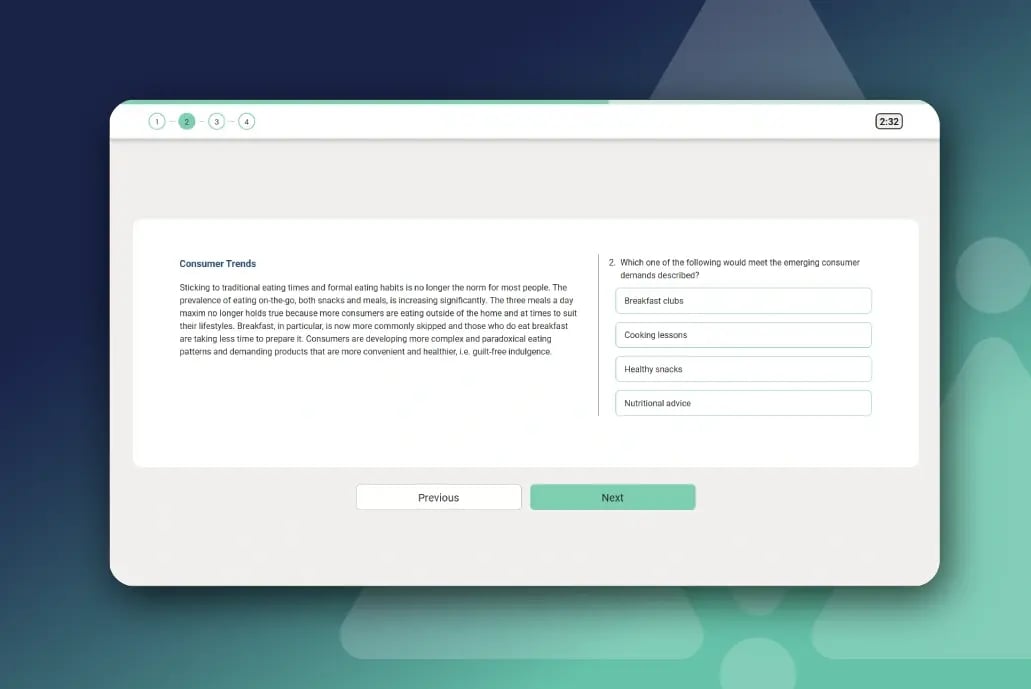
Early careers
Graduates and apprentices have little work history to judge, so reasoning carries more of the decision. Verbal and numerical tests at graduate level show who will learn fastest once training starts.
Analytical roles
Finance, analyst, consulting and policy roles run on written reports and figures. Test verbal and numerical reasoning at professional level, where the gap between candidates is judgment rather than knowledge.

Technical and safety
Engineering, maintenance and security roles depend on reading diagrams and plans and seeing how things fit together. Abstract and spatial reasoning tests show who can work that out before it matters on site.

Sales aptitude
A sales aptitude test checks the reasoning sellers use daily: pricing and discount math on the spot, and reading a proposal or contract closely. Pair it with a behavioral read of drive and resilience.