


Change readiness, before the business shifts
See how each person is likely to respond to the change ahead, and put the support where it will keep the business moving.
TRUSTED BY TEAMS RUNNING MAJOR CHANGE
Why measure early
Run it when a restructure, a merger, a redundancy program or a new operating model is decided and not yet announced.
Before launch
Change readiness is how well someone copes with and contributes to change. Read it from behavior, before the change starts.
- A read for every person in scope
- Ready before the first workshop
- Behavior, not a pulse survey
Four enablers
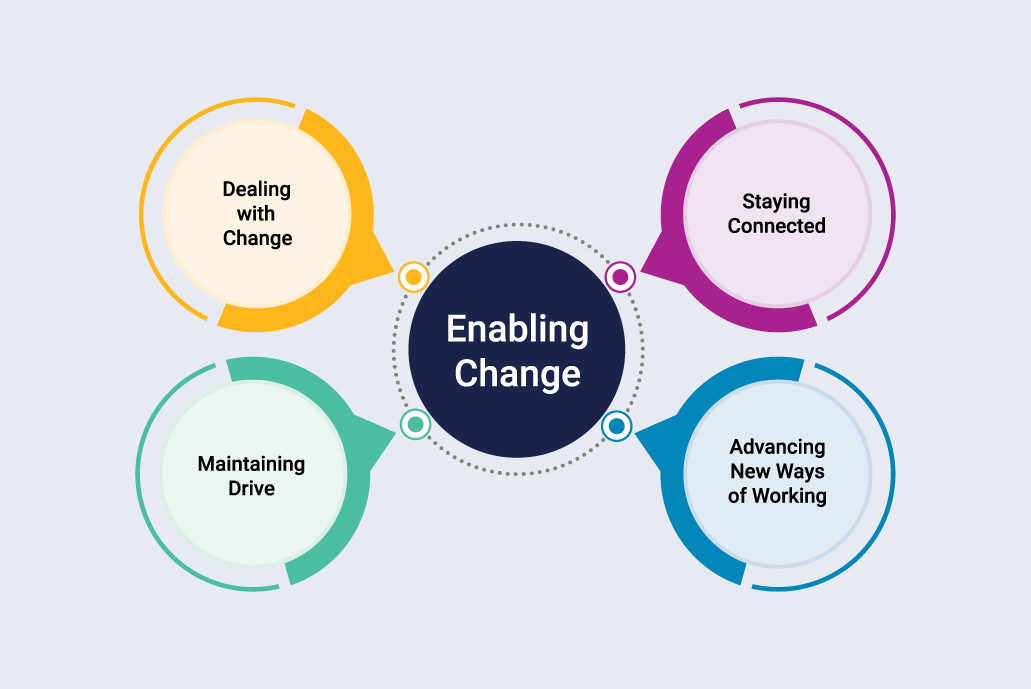
Dealing with change, staying connected, enabling new ways of working, maintaining drive. Which one is missing decides the support a person needs.
- Strengths and gaps per person
- Language a line manager can use
- Actions the person writes themselves
Group view
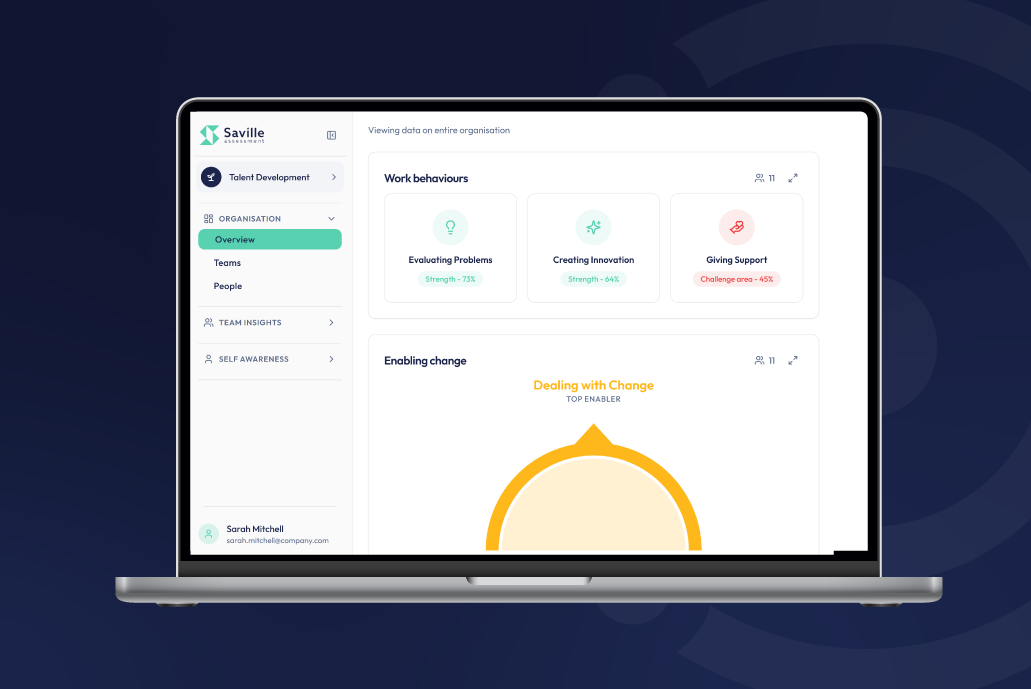
Group profiles show where teams are strong, stretched or exposed, so support goes to the teams that will struggle first.
- Compare sites, functions and layers
- Around 60% more accurate targeting
- Use the same read for the next change
What the team running the change gets
One behavioral completion per person, and everything the team needs to act on it.
A read for each person across the four enablers of change. What they will find easy, what will stretch them, and what helps them hold up, with their own actions written at the end.

Where teams are strong, stretched or exposed, compared against your own internal norms and market benchmarks, so you see the pattern before the first session is booked.

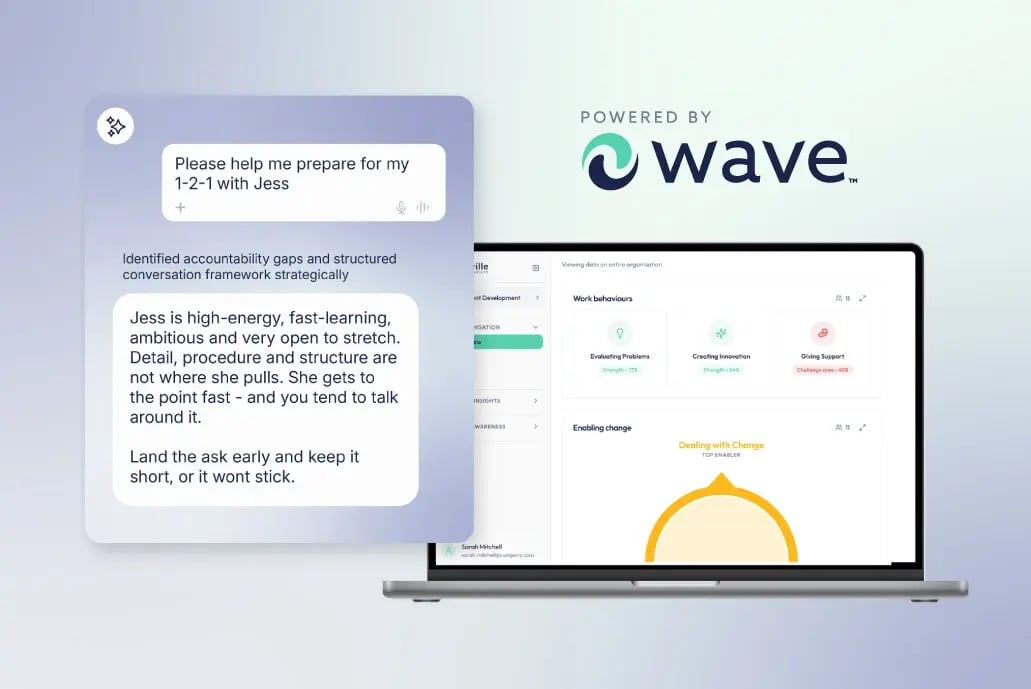
Managers and their people can ask about themselves, a colleague or a conversation they are about to have, inside the assistant they already have open.
Feedback conversations and team sessions, run by us, or by your own people once they are trained and accredited by us, so the read turns into action.

How to measure change readiness
Four steps, usually inside a single quarter.
SET THE SCOPE
Agree who is in scope and what the change is asking them to do differently. That decides the depth of assessment and the groups you will compare.
ASSESS ONCE
Everyone in scope completes a behavioral assessment online. One completion produces the individual read and feeds the group view.
READ THE PATTERN
You see where readiness sits by team, site and layer, and decide where the support goes before the first announcement lands.
SUPPORT AND RECHECK
People work through their own actions with their manager, teams meet where the gaps are shared, and the same read carries into whatever changes next.
What people get for taking part
Change is the hardest time to ask people for anything. This gives something back.
Their own report
Insight that keeps working
One completion does not expire with this change. The same data feeds their development, and the next shift the business makes.
How to introduce it

CLIENT STORY
Managers caught in the middle of a change
Frequently asked questions
The questions teams ask before they commit to running this.
A change readiness assessment measures how well people are likely to cope with and contribute to change at work, from their behavior rather than their opinion of a change already announced. It produces a read for each person and a group view for the team running it.
A survey tells you how people feel about a change they have already heard about. This is behavioral, so it can run before the announcement, and it indicates what people are likely to do rather than what they currently think.
Before the change is announced, while the design is still open. The value is in aiming the support, so a read that arrives after the first wave of communication has missed the decisions it was meant to inform.
Yes. Group profiles show where teams are strong, stretched or exposed, so you can compare sites, functions and layers and put the support where the gaps are. The individual read and the group view come from the same completion.
No. The reports are written in plain language for line managers. Your own people can run the feedback conversations and team sessions once they are trained and accredited by us, and we can deliver them for you instead.
That it is a development assessment, which is what it is. The invitation stands on its own, the outputs are theirs, and none of it depends on the business being ready to explain what is changing yet.
Talk to us about the change you are planning
Tell us what is changing and who is in scope. We will show you the outputs.