



Early careers development from month one
See what each graduate and apprentice actually needs in their first weeks, so their development starts long before their first review.
TRUSTED BY TEAMS BUILDING THEIR NEXT GENERATION
Why graduates stay with the right development
Self-awareness
Employers rank self-awareness as their biggest gap in graduates, and it is growing fast: 54% this year against 35% three years ago.
- Named strengths, not vague feedback
- The blind spots they cannot see
- Language they can use themselves
Seen properly
There is no performance record yet, so behavior is the only accurate evidence, and everyone is read on the same basis.
- Potential, not where they studied
- Fair to apprentice and non-graduate routes
- Rated 27 out of 30 by the British Psychological Society
Early warning
You see who is drifting while there is still time to act, rather than reading it in a resignation letter.
- Spot a mismatch in month one
- Act before the exit interview
- Up to 5% lower voluntary turnover
Source: Self-awareness and resilience figures: ISE Student Development Survey 2025, 148 employers. Turnover figure: Saville TD ROI model, modeled on organizations of 500 or more employees. The British Psychological Society is the professional body for psychologists in the UK, and its independent review scored the assessment 27 out of 30 across six technical areas.
What your intake actually walks away with
Where the insight lives, and the reports a new joiner and their manager hold.
They can look up their own strengths and development areas any time, in the platform or inside the AI assistant your team already uses, long after the program ends.
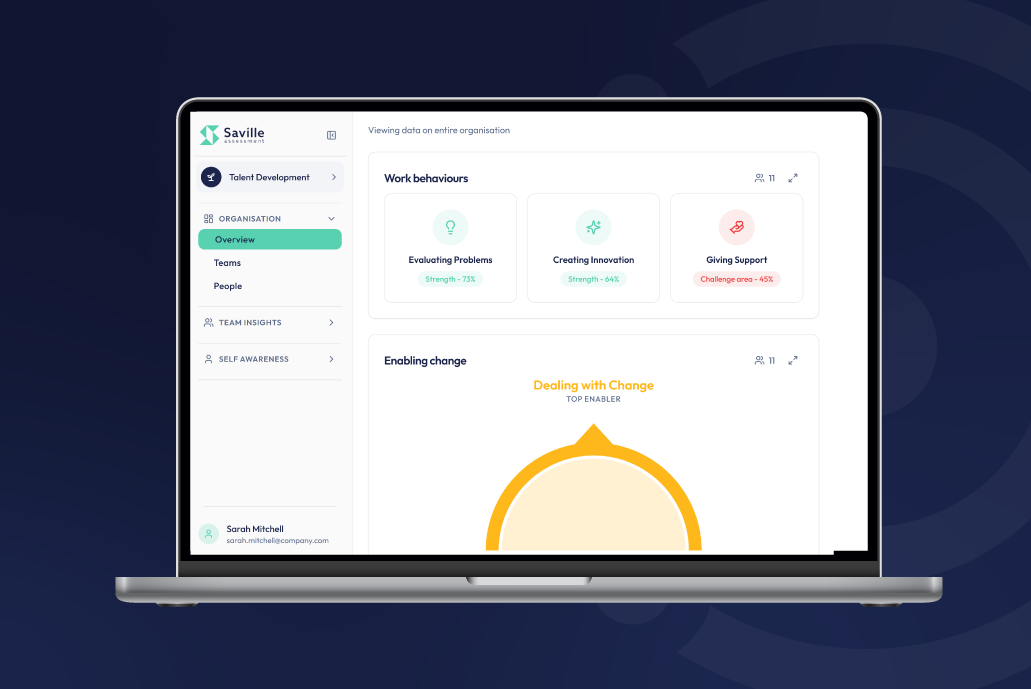
Their real strengths, the things they will find hard in this kind of work, and a development plan template they fill in themselves in the first weeks.

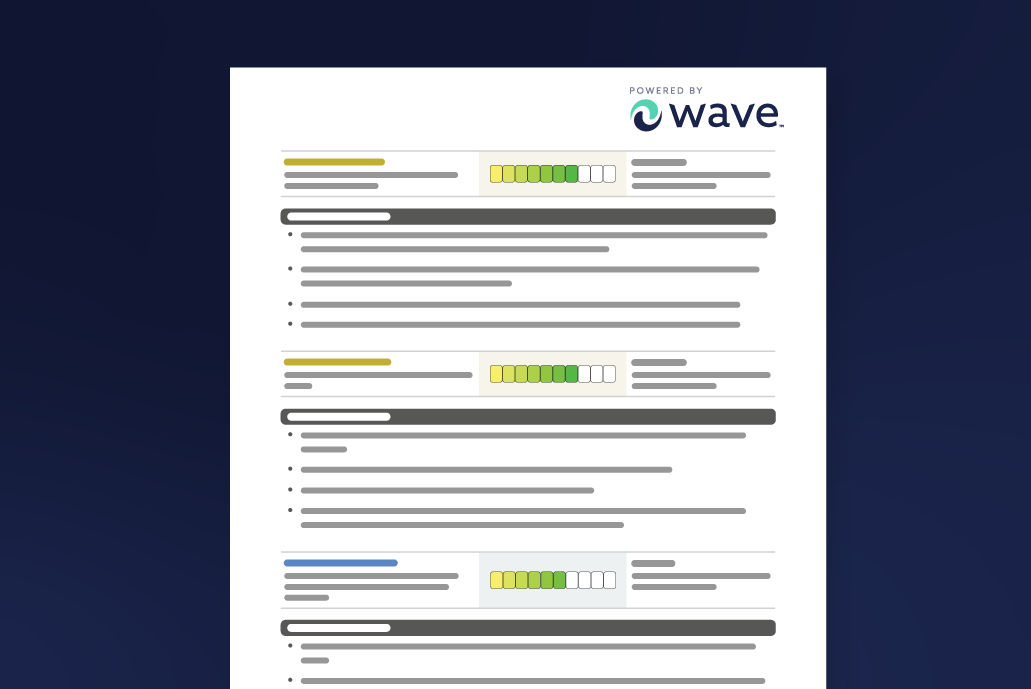
The two or three things worth their effort first, with editable actions they and their manager agree and come back to.
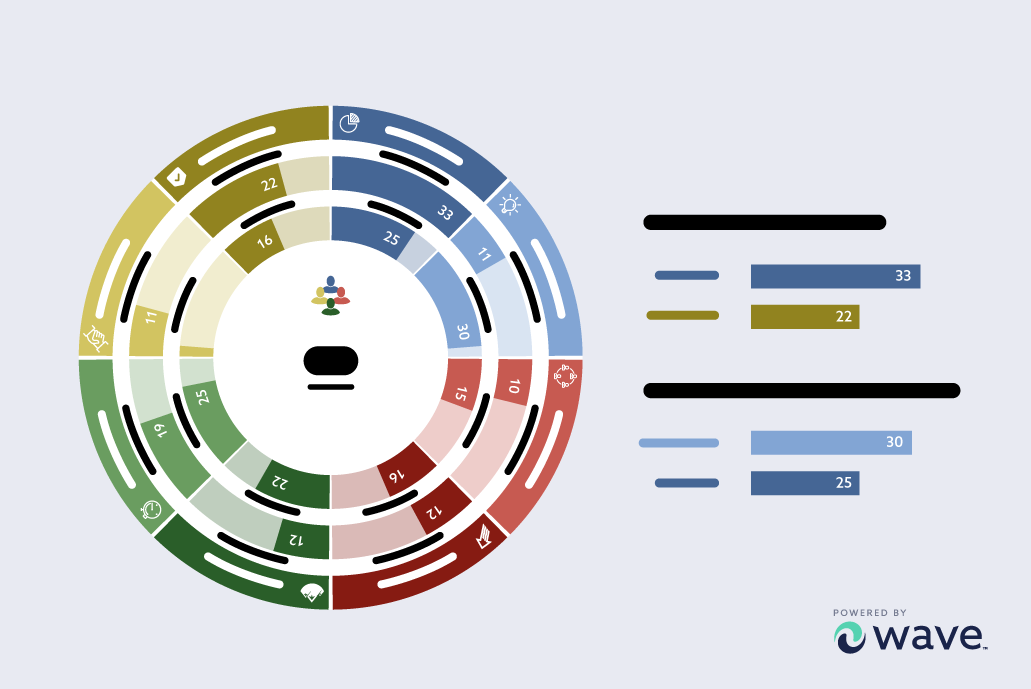
How they work alongside the team they have just joined, so a manager can pair them well and pick the right buddy or mentor.
How early careers development works
From their first week to their first year
WEEK ONE
A new joiner completes a behavioral assessment before their manager has formed a view of them, and gets insight written for them, not about them, to use from day one.
MONTH ONE
Their manager holds the same read in plain language, so the first real development conversation happens now, not at the first formal review nine months later.
FIRST YEAR
Group analytics show where the intake as a whole is strong and where it is thin, so next year's program is built around the gaps that are actually there.
Is your development strategy maximizing retention?
Put in your intake size and see what ROI your development strategy could be leaving on the table.
Frequently asked questions
If it is not here, ask us. You will get an answer from a person.
Early careers development is how you decide what each graduate or apprentice should work on, rather than putting the whole intake through the same program. It uses a behavioral assessment completed soon after they join, because at that point there is no performance history to base a plan on.
In their first few weeks, before a manager has formed a fixed view of them. That timing is what makes the first conversation specific rather than general, and it gives you a starting point to develop from rather than a judgment to defend.
They complete a short assessment again. An assessment is run for a purpose, and hiring and development are different purposes, so the read you develop from is the one taken for development. It takes minutes, and it is the step that makes everything afterwards personal to them.
It covers what the person is naturally strong at, what they will find harder in this kind of work, and the two or three things worth their effort first. It is written for the person and their manager, not for a specialist, so both can act on it without a debrief in between.
No. Managers get a plain-language view written for someone running a one to one. If you would rather run structured feedback sessions in house, we accredit your own people to do that through our training.
Yes. The same approach covers graduates, apprentices and any early careers intake, because it reads how someone works rather than what they have already achieved. That is also why it reads fairly for people joining without a degree or a relevant work history.
Tell us about your early careers intake
Tell us the size of your intake and we will show you how this works for it.