


Employee development tools people use more than once
Give every professional a clear read on how they work, and their manager the language to run the conversation without needing a specialist.
TRUSTED BY TEAMS BUILDING THEIR NEXT GENERATION
How employee development tools work
One completion, then the insight wherever they work.
THE PROBLEM
For most of your people, development means an annual review and a training catalogue. Their manager guesses at what they need, and half of them dread the conversation.
ONE COMPLETION
Each person completes a behavioral assessment once. There is a range of options for length and depth, so you can cover a whole population and go deeper where a role justifies it.
WHERE IT LANDS
A Development Report written to them, and the same read written for their manager. Both sit in Wave Connect, and both can be asked about inside the AI assistant they already use.
DEPTH WHERE IT PAYS
Add 360 feedback where the role justifies multi-rater input, and a feedback session where you want a trained debrief rather than a manager conversation.
Why it sticks
The manager
Most managers were never trained for any of this. The Coaching Report gives them the read and the words, so the conversation happens.
- 82% stepped into the role untrained (CMI, 2023)
- No specialist in the room
- The same language across the business
The aim
Effort goes where it would change something. Around three quarters of the development effort that would otherwise miss is recovered.
- Strengths and limitations, measured
- Priorities ranked per person
- The insight shows up where it matters
The cycle
The read does not expire with the review. When someone changes role or changes manager, the same insight is there rather than starting again.
- One completion, reused
- New manager, same language
- No starting again from scratch
Source: Recovered-effort figure - Saville talent development ROI model, 2026.
What each person and their manager gets
Insight where people already work, the two reports behind it, the depth options, and the multi-rater step where it makes sense.
People can ask about themselves, a colleague or a conversation they are about to have, inside whichever AI assistant they already work in. The insight arrives at the moment it is needed rather than sitting in a file.
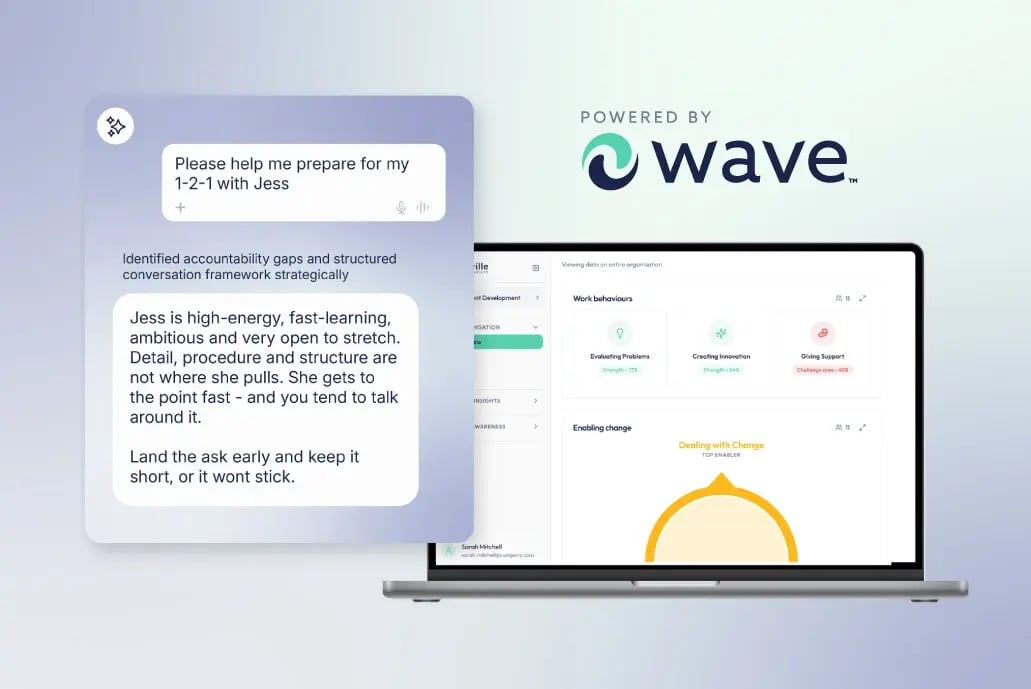
One completion, two reports. Theirs is written to them: what they are at their best, what gets in the way, and the two or three shifts worth making this year. Their manager gets the same read, written to talk from.
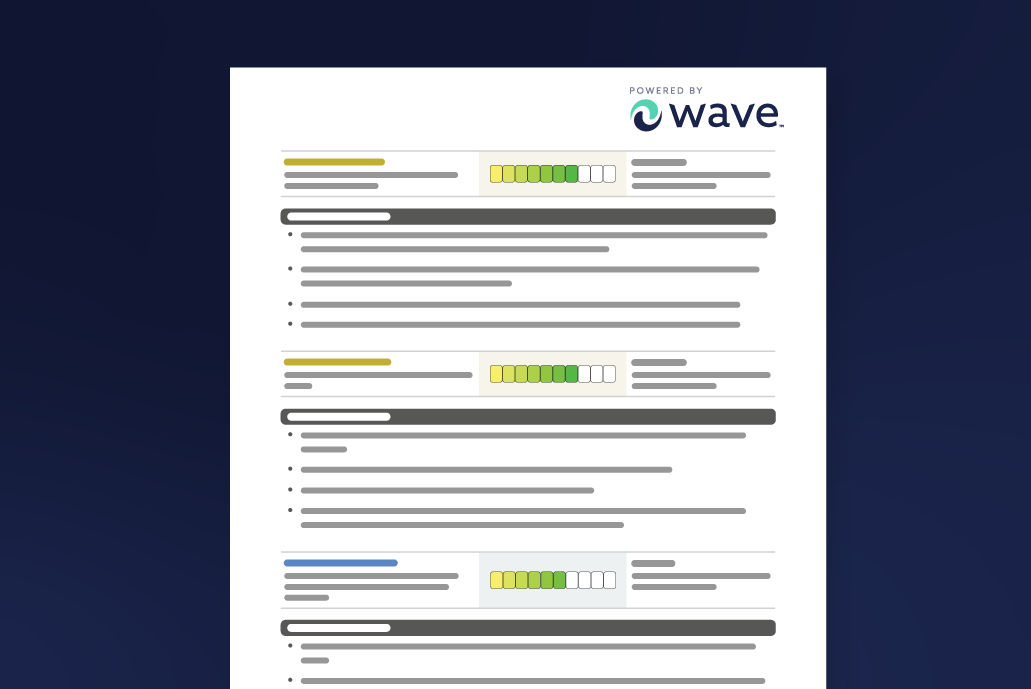
A short assessment where you are covering a whole professional population, and a fuller read where the role carries more risk. The depths produce different outputs and all sit in one platform.

Multi-rater feedback where self-report is not enough. How the people around them actually experience them, read against the same framework as the reports above.
315 people, individual reports in six and a half weeks
A life sciences drug development and manufacturing accelerator took its whole population through end to end. Development reports went to everyone on the program, not only the people already labeled high potential.
There isn't any other company that will drive this level of product and service.
What untargeted development is costing you
Tell us how you work out what each professional needs to develop today, how many people are on the program and your industry. You will see what targeting development with Saville gives back each year in spend you stop wasting and productivity you gain.
Frequently asked questions
What talent teams ask before they roll this out across a population.
It is a short plan built from measured behavior rather than opinion. Two or three priorities taken from the person's report, the specific actions attached to each one, and a date to look at it again. The person writes it with their manager, usually straight after the first conversation.
Weeks rather than months. In the life sciences program above, 315 people completed the assessment and had individual reports within six and a half weeks of launch. The assessment itself is one sitting per person and needs no scheduling around a facilitator.
No. The Coaching Report is written for the manager, in plain language, to run a conversation from. Where you want the insight to land harder, feedback sessions give people a trained debrief, and your own team can get accredited to run those conversations in house.
Not always. Where the platform already holds a completion for someone, it can be put to work for development rather than assessing them again. Where it does not, or where the existing read is the wrong depth for what you are developing, the person completes one for development. It is one sitting either way, and it is the step that makes everything after it personal.
No, it aims it. You keep the programs, the courses and the budget you have. What changes is who goes on what, and whether a manager can have a useful conversation about it afterwards instead of waiting for the next review.
Talk to us about developing your professionals
Tell us the size of the population and the problem, and we will show you what it looks like.