AI is writing the CVs and AI is grading them, preferring its own writing by up to 82%.* So who is measuring the person?
The Screener: twelve questions, about two minutes, one fit score on every applicant.
*University of Maryland, Robert H. Smith School of Business, June 2026.
One item for each of the twelve areas of behavior that predict performance at work, drawn from an item bank refined over twenty years. The science underneath was independently rated 27 out of 30 across six technical areas by the British Psychological Society.
Around 90% of a 45 to 60 minute structured interview, in about two minutes. More than five times what any CV can carry, whether a person reads it or a model does.
Every candidate is measured against the same benchmark group, not against whoever else applied that week. Apply in a quiet week or in a flood of a thousand, and the same answers get the same score.
Selected from an item bank of hundreds, and optimized for lower age, gender and ethnicity differences. The scoring is fixed arithmetic rather than a model’s judgment, so when anyone asks why a candidate scored what they did, there is an answer you can show them.
ISO/IEC 27001:2022 certified, so you can trust that your data is safe, secure, and handled responsibly.
“We now have a more robust, fairer hiring process, protecting our managers and evidencing our hiring decisions with a clear criteria for selection.”
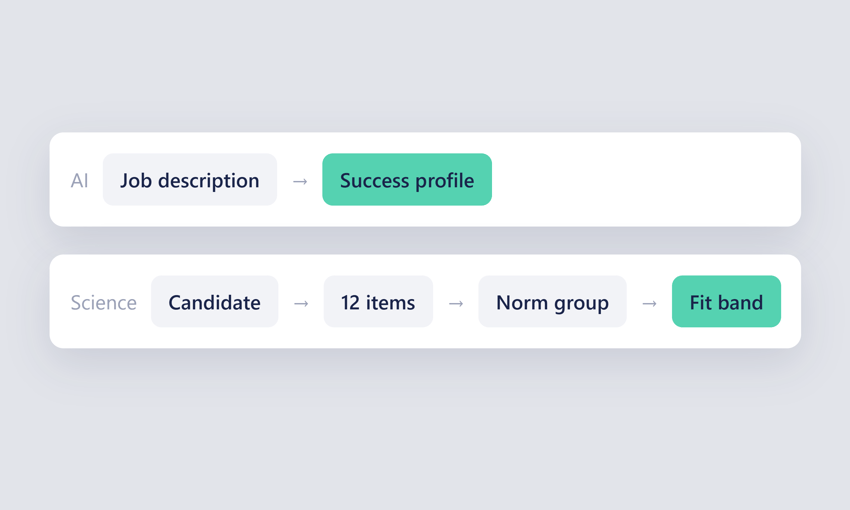
Your job description does the work. The Screener reads it, works out what good looks like for that specific role, and weights the score accordingly. No profile to build, no criteria to type in, no project per vacancy.
The connector into your ATS is already built and tested. Switch it on for a role and your recruiters never leave the system they already have open.
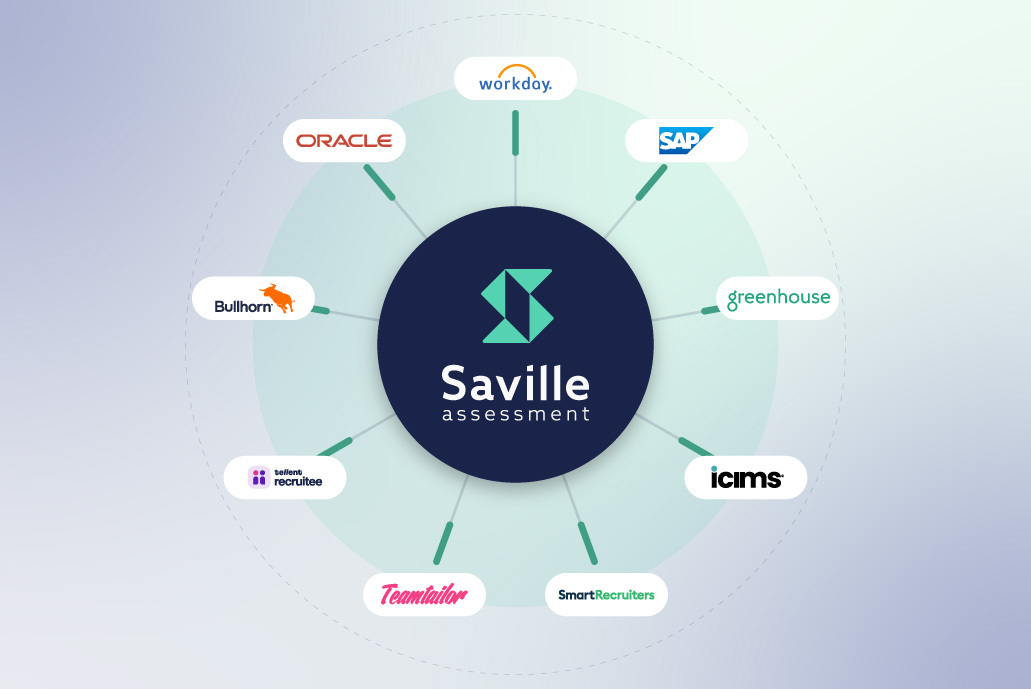
If your team hires in it, the Screener can run in it.
Available connectors via our integration layer. Wordmarks shown as text pending per-platform logo permissions.
Sift on CVs alone and roughly one in five of the people you shortlist cannot do the job. Screen everyone first and that falls to about one in fourteen. Same roles, same recruiters, two fewer interview slots spent on people who were never going to work out.
AI touches your job description and nothing else. The candidate is measured by a fixed instrument: twelve items, twelve prediction equations worked out in advance, scored against a norm group. The same arithmetic for everybody, every time. Nothing learns from who you hired last year, and nothing decides anything. You set the threshold. The call stays yours.
Start with 1,500 applications for one role. Every one gets scored, and roughly the top 10% surface for review. Pair that with the eligibility questions your ATS already asks and you are down to the people genuinely worth a call. Nobody read a CV to get there.
A polished CV tells you who wrote it best, not who will do the job best. An AI-optimized application can outrank your strongest candidate, and a plainly written one can bury them. Score the person, and the quality of the writing stops making the decision.
Nobody makes good decisions about the 900th CV. Every applicant is measured the same way, in the same two minutes, against the same profile, and the list arrives already in order. The sift stops being a week of reading.
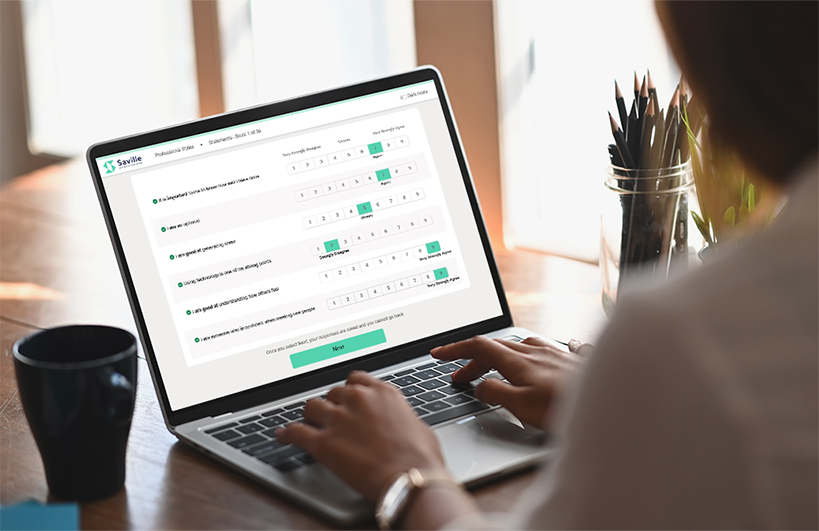
No camera. No recording. No one-way video interview. Twelve questions on a phone, and 97% of the people who start it finish. For many applicants it is the first time the process has measured them rather than their paperwork.
“I’m a department of one, so it had to be quick, easy, and simple to understand, for me, the hiring manager and the candidate. If I can do it, anybody can.”
Screening and assessing are two different jobs, and both of them always need doing. The Screener takes you from a thousand applicants to a shortlist. It measures behavior, returns one band, and stops. No report, no dashboard, no interview guide, and no aptitude measurement at all. That is exactly what makes it viable on 1,500 people.
Once you are down to the handful you are serious about, a deeper behavioral assessment tells you who to hire and how to interview them. Narrow twice and the whole funnel gets tighter than either stage manages on its own.
Bring us a role you are drowning in. We will show you what the list looks like once every applicant has been measured, using your own job description, in your own system. Fifteen minutes.
About 85% of the people you invite complete it, and 97% of those who start it finish, so almost all of the drop-off happens before anyone sees a question. You are charged on completion, which means the ones who do not finish cost you nothing.
There are 116 connectors available through one integration layer, already built and tested. The Screener fires when a candidate applies, and the score comes back onto their record. Tell us which system you use and we will confirm.
No. AI reads your job description to work out what good looks like for the role. The candidate is scored by a fixed instrument against a norm group, using the same arithmetic every time. We return a fit band and never a decision. You set the threshold and your team makes the call.
Behavior. Twelve items covering the twelve areas of behavioral effectiveness that predict performance at work, weighted to your job description. It does not measure aptitude or technical skill, so run it alongside the eligibility and experience questions your ATS already asks.
Different job. Screening takes you from a thousand applicants to a shortlist. Assessment takes you from a shortlist to the right hire, with reports and interview guidance the Screener deliberately does not produce. This one is built and priced for the first job.