





Situational judgment tests that screen candidates and sell the role
THE ORGANIZATIONS THAT ASSESS WITH US
What a situational judgment test does that an interview cannot
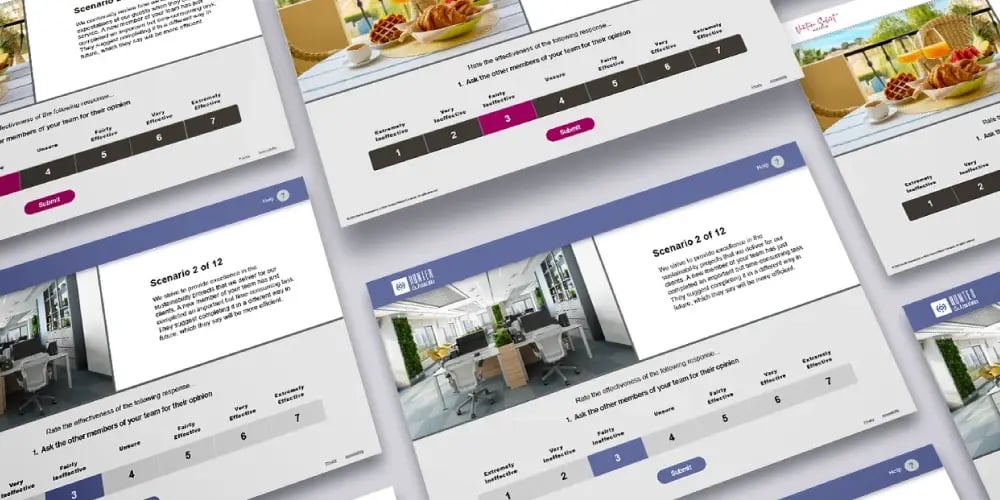
It puts a candidate inside the job and scores what they do, before either of you has committed to anything.
A scenario lifted from a library measures how someone handles a generic workplace. One written from your roles, against your competency framework, measures the calls they will actually have to make in week one.
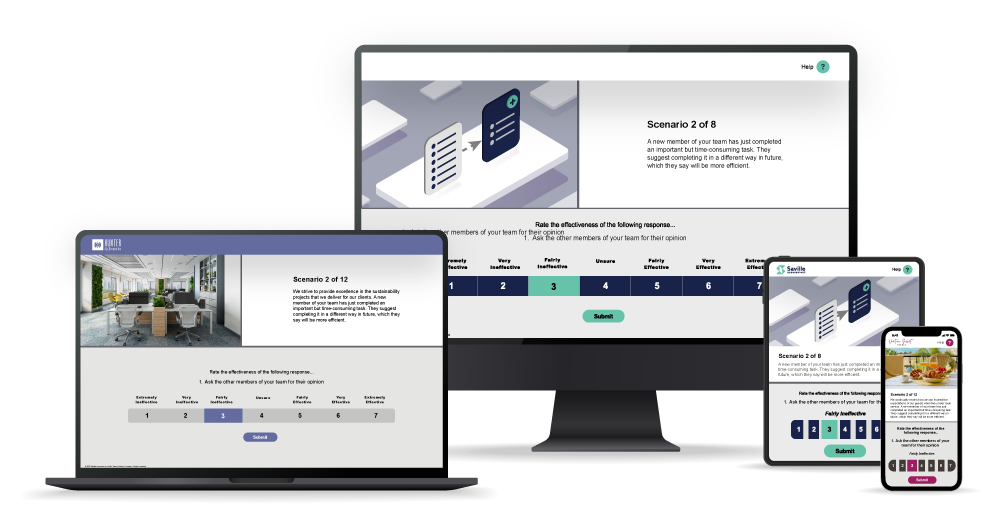
Most assessment stages are something candidates endure. This is the one they tell people about, because it shows them the job rather than testing them on trivia.
One client saw 21% more candidates complete it than completed the scored application form it replaced.
Scenario-based assessment does not reward a particular education or a polished resume.
One client saw a 19% increase in completed applications from ethnic minority candidates after introducing one.
Built bespoke or
ready off the shelf
We'll advise which one your situation calls for.
Designed around your roles
Ready to use
Off-the-shelf versions for manager, customer-facing, retail and logistics roles, live as soon as you want them, with no design time. The obvious starting point when the volume is there but the budget for a bespoke build is not yet.

Build one from your own job
What it did at Heathrow
Security officers make up half of Heathrow's workforce. They needed better applicants, a better candidate experience and a shorter process, without trading any of the three.
£40,000
Saved per cohort, by removing 700 phone interviews and over 100 assessment center places.
10,000+
Automated feedback reports sent to applicants, whether or not they got the job.
16 to 65
The age range that completed it, across a wide range of ethnicities, with no group differences found.
Frequently asked questions
If it is not here, ask us. You will get a fast response from an expert member of the team.
A situational judgment test puts a candidate in a realistic work scenario and asks what they would do. It measures judgment rather than knowledge, and because the scenarios come from the job itself, it doubles as a preview of the work for the candidate.
Build your own where the role is core to your business, high volume, or unusual enough that generic scenarios would miss the point. Use ready-made ones where you need something running quickly for manager, customer-facing, retail or logistics roles. We will say which one your situation calls for, including when the answer is the cheaper one.
They can understand the format, and we point them to material that helps them do that. What they cannot do is revise the answers, because the scenarios come from your roles and the judgment being measured is their own. Preparation reduces nerves rather than changing scores.
It is a poor target for it. There is no single correct answer to discover, candidates rate each response separately rather than picking one from a list, and we have seen no rise in scores that would suggest widespread AI use. Response patterns are checked automatically and anyone who should be re-tested is flagged.
It varies with the role and the format: a short set of text scenarios is quicker than an immersive video journey, and we size it to the stage of the process it sits in. Candidates can complete it on a phone, and every applicant can receive an automated feedback report afterwards, which is what turns a screening step into something they will recommend to a friend.
Tell us what you are hiring for
The role, the volume and the problem you are trying to solve. We will tell you what an SJT would change about it.