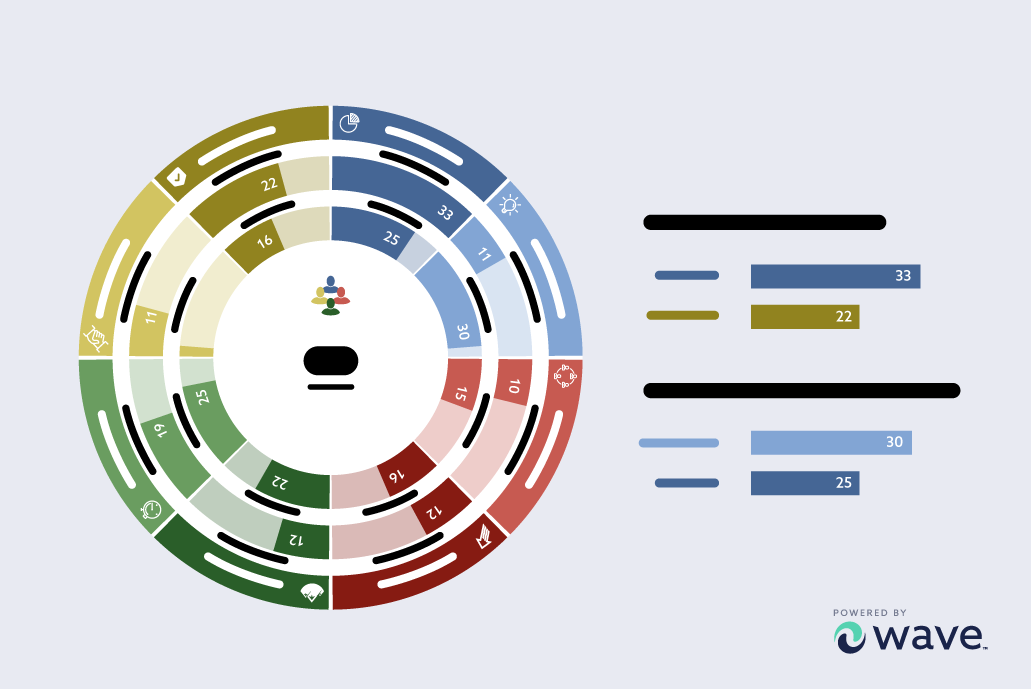






Teams covering a wider spread of roles tend to outperform teams clustered in the same few. Most groups do not know which they are, because nobody has plotted them.

Every group is light somewhere, and the work attached to those roles quietly does not get done.
The group view counts how many hold each role as preferred and as least preferred, so the gap stops being a hunch.

An even spread is not automatically right. A research team should be heavy on analytical roles; a delivery team should not. The group view is read against what your team is for.

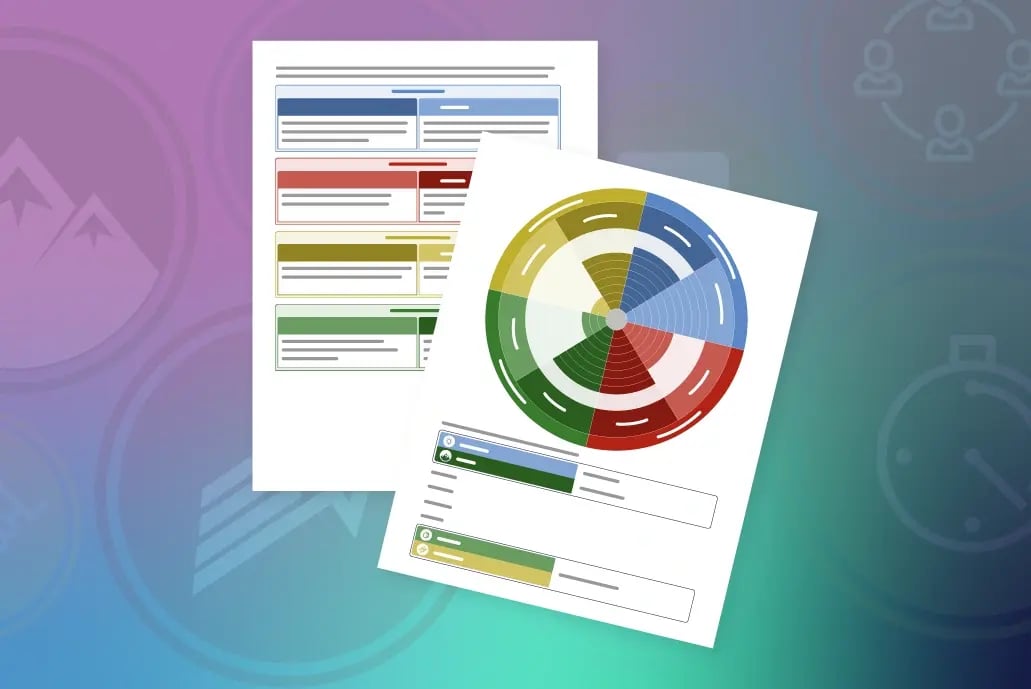
A report each person can use alone
The two roles they are most likely to adopt and the two they are least, what that combination is good at, where it trips them up, and how to work with people nothing like them.

The group view
Three people or three hundred on one wheel. How many hold each role as preferred and as least preferred, and the group's two of each. Where the group is light, it suggests what to do.
A session you can actually run
Facilitator deck, a pre-session activity and a bank of exercises that work in a room or on a call. It ships with the assessment, so you can run the session yourself or have us facilitate.


“A software business coming out of a demerger put its UK sales leadership team through a half day session. Siloed working and communication got named, owned and planned against. The team then ran it with their own sales teams.”

A new team, a merger, or a new hire joining one
Profile the group that exists, then see how a new person fits before they start. It also settles buddy and mentor pairings, which is what makes onboarding fast.

A team underperforming for no obvious reason
The individuals check out. The output does not. Team profiling shows the gap between the roles the work needs and the roles the team covers.