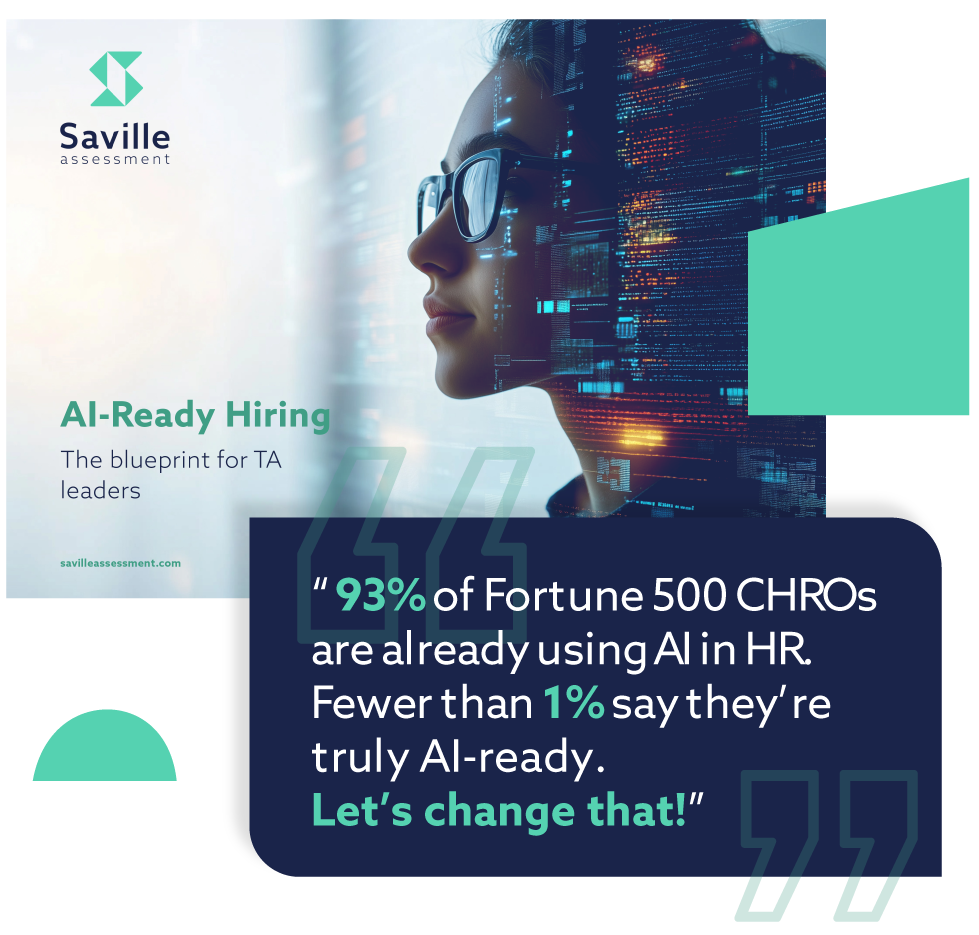
Fewer than 1% of leaders say their organization is fully AI-ready but closing that gap starts now.
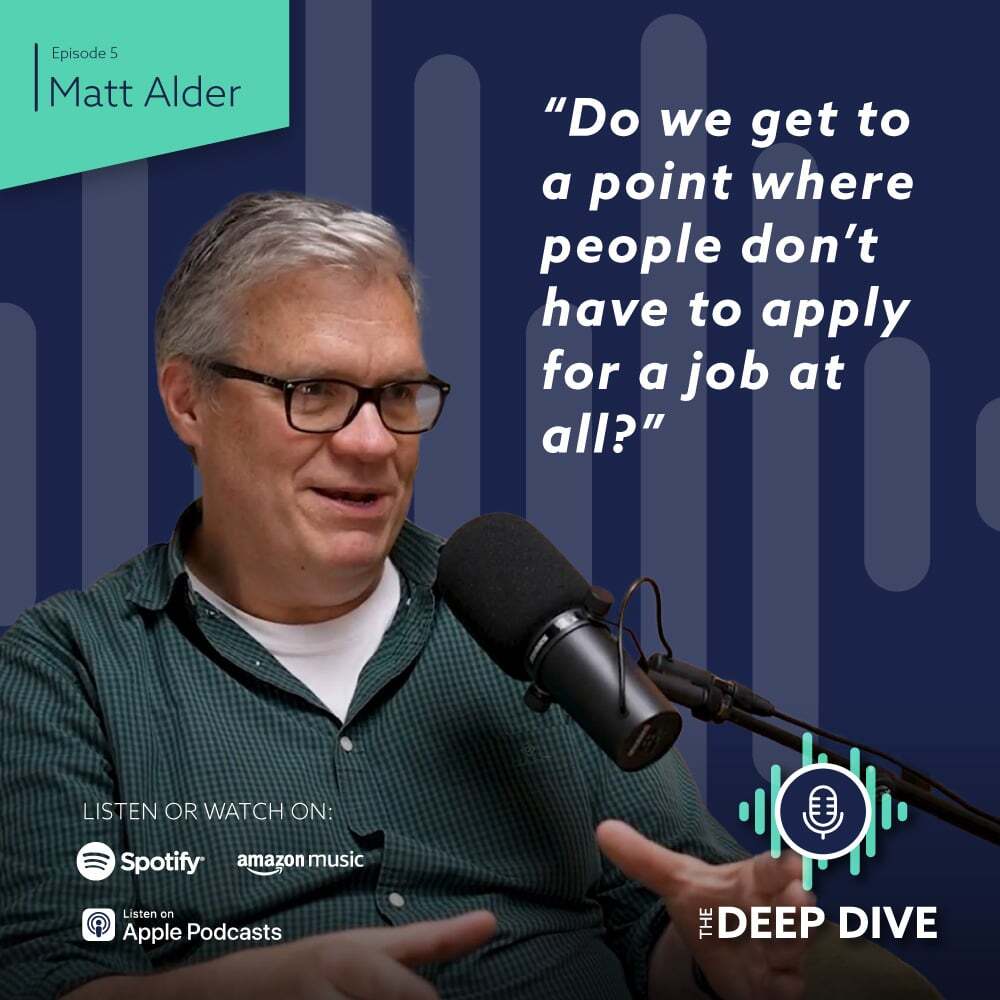
The shape of hiring is changing quickly, and as Matt Alder put it on The Deep Dive podcast: "If you have more than 10-15 years left in your career, this absolutely affects you."
AI Adoption: The Current Picture
AI has moved from hype to habit. Around 90% of organizations already use it somewhere in hiring. But adoption isn't readiness. To get the upside without the headlines, you need a map (where AI fits), guardrails (how it's governed) as well as explainable outputs and audit-ready evidence that it's working.
What Does "80% Automation" Actually Mean?
By 2027, we might expect AI to manage tasks such as:
- Automated CV screening that quickly matches skills to job descriptions.
- Conversational AI that handles initial candidate engagement and scheduling, delivering consistent, immediate responses.
- Advanced predictive analytics to proactively source and nurture talent pools.
The recruiter's role isn't becoming obsolete, but it is evolving.
AI in Recruitment: quick wins you can use now
- Job ad drafting at scale (recruiters edit for bias and clarity).
- Interview admin: scheduling as well as AI-generated notes and transcripts.
- Role profiling: Saville Assessment's AI Role Profiler maps required skills to job descriptions in seconds.
- Workflow nudges: automated feedback forms, preliminary scorecards, and next-step flags.
The Skills Recruiters Need Next
As automation expands, the most valuable recruiter skills tilt towards:
- Evidence-led thinking: anchoring decisions on validated, job-relevant data rather than "gut feel."
- Stakeholder influence: framing insights so hiring managers engage with the process and move quickly.
- Candidate storytelling: using richer signals to give better feedback and a fairer experience.
- Tool fluency: knowing when and how to use AI safely and effectively.
Evidence-Led Hiring in an AI World
Leading teams are shifting from credentials to evidence-led signals that predict performance and retention, with AI accelerating the heavy lifting; finding, scoring and surfacing those signals faster, while decisions stay with people.
In practice, that means defining clear, role-specific success profiles that spell out the skills, behaviors and motivators that matter. Start by using structured assessment aligned to those profiles; applying consistent scoring to produce shortlists that are auditable and explainable; and closing the loop with measurement that tracks quality, speed, cost and fairness.
AI Hiring Compliance: Fairness, Bias Monitoring and Policy
Some candidates remain cautious about AI in hiring, which is why transparency matters. Practical guardrails help you move quickly and safely:
Explainability
Choose systems that provide interpretable reasons (e.g., "below threshold on X competency") and keep a human in the loop.
Bias monitoring
Measure outcomes by stage; investigate disparities and tune processes.
Data minimization
Collect only what you need; handle candidate data responsibly.
Policy and training
Be explicit about how AI may/may not be used; train teams on the why and the how.
How to Get Started
1. Pick one high-volume, low-risk area
Create a small pilot and define a clear success metric (e.g., recruiter hours saved).
2. Anchor on job-relevant signals
Refresh or create a simple success profile for one role so your automation points at what matters.
3. Keep humans in the loop
Decide upfront where human review is mandatory.
4. Measure and iterate
Track speed, quality, fairness, and cost. Expand only when the benefits are clear and risks are controlled.
AI-readiness mini-check
- How often is AI embedded in your TA workflows?
- Do you systematically check outputs for accuracy and bias?
- What guardrails or policy exist for AI in hiring?
- Are you tracking impact (speed, quality, fairness, cost)?
- Do you personalize candidate communications with AI?
Are You AI-Ready?
Ask yourself these questions and then dive deeper with our full checklist and scorecard, providing a clearer picture of whether your organization is leading the way or getting left behind.