





Skip to content
Search
Hiring

Thousands of applicants, no track record between them

Early careers assessment gives you evidence of potential when a resume tells you little to nothing. Every graduate and apprentice measured against the same standard, at any volume. 

img-report-live-poll

THE ORGANIZATIONS THAT ASSESS WITH US

JLR logo Heathrow logo Sainsbury's logo Fujitsu logo Virgin Money logo Johnson & Johnson logo BNP Paribas Real Estate logo Teledyne Technologies logo EY logo Edgewell Personal Care logo Third Space logo illimity logo
What changes

Why a resume tells you nothing here

Everyone has the same degree, the same internship and the same three bullet points. 

With applications per candidate up 239% since 2022 and AI making them even more alike, it is harder than ever to tell applicants apart.

No track record to read

Past performance is the usual evidence and it does not exist yet. Grades tell you who studied well, not who will do the job well. 

Applications that all look the same

Near-identical, increasingly AI-assisted, and written to match the advert. Reading more of them does not produce more signal. 

Every rejection is a future customer

Most people who apply will not be hired. At this level they are also your future applicants, your future hires and your future market. 

What you can measure instead

What early careers assessment measures

Two things predict performance when experience cannot, and both work at the volumes an intake produces 

How they will actually work

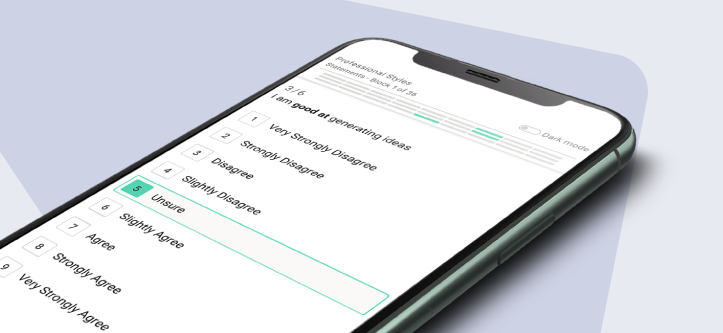
How someone approaches a task, a team and a setback, measured against what good looks like in the role rather than against a generic profile. Behavioral Snapshot is the read built for early careers and entry-level volumes. 

How quickly they will pick it up

Reasoning measured directly, which at this level predicts how fast someone gets productive better than anything a resume records. Verbal, numerical and abstract, at the level the role justifies. 

What it saves you

What an early careers campaign really costs

A graduate or apprentice who leaves or underperforms in their first year costs you the recruitment spend, the training and a place you could have filled well. Tell us how you assess early careers candidates today and how many you hire a year, and see how many hires are likely to go wrong, what they cost you, and what assessing with Saville would save.
Loading calculator
Client proof

What changed when they stopped reading applications

Results you can rely on

How we know a cognitive ability result is real

Reasoning tests are taken remotely and unsupervised at this volume, and it is the first thing your leadership will ask about. Here is the answer you can take back to them. 

Unusual response patterns, flagged automatically

We detect abnormally strong or unusual response patterns and flag the candidate for a re-test. It is already running, and it adds nothing to what the candidate has to do.  

Remote supervision, where the stakes demand it

For regulated, safety-critical or high-volume hiring, supervised assessment is available as an upgrade through our partner network. Most clients do not need it. It is there when you do. 

Help & Support

Frequently asked questions

The things early careers teams ask us first. If yours is not here, ask us directly and you will get a straight answer from someone who knows the science. 

How they work and how quickly they learn. Behavior and reasoning both predict performance without needing a track record, and both are measured against what good looks like in your specific role rather than against a generic graduate profile. That is why assessment is the fair option at this level rather than an extra hurdle. 

Get Started

Tell us about your intake

Thirty minutes. Your campaign as it runs today, and your own number at the end of it.