
2-minute read
Hannah Mullaney – Chief Commercial Officer
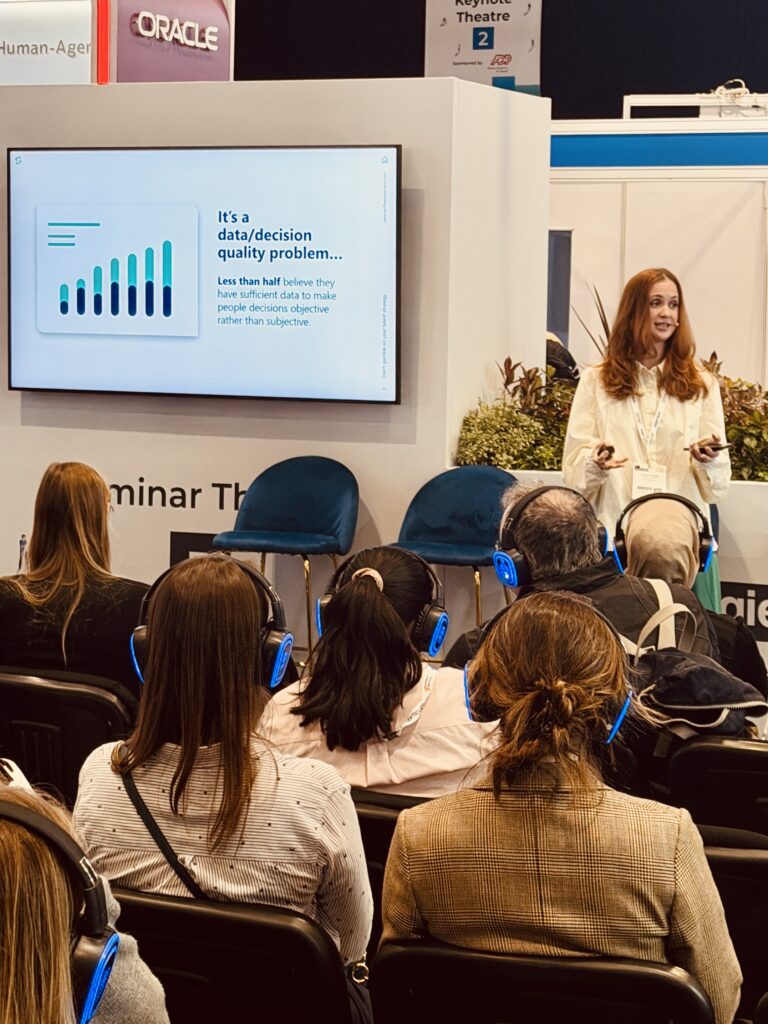
Last week, I spoke at HR Technologies in London on why leadership selection should never be left to chance.
The research I shared on stage was sobering enough (more on that later!) but a keynote I attended on day two reminded me of a legal dimension that I think every HR leader in the UK needs to understand before the end of this year.
Critical parts of the Employment Rights Act 2025 come into play in 2027 and for anyone making leadership hiring decisions right now, the window to get your processes right is shorter than you might think.
The Act received Royal Assent in December 2025 and introduces two changes that significantly raise the stakes for employers.
To put it plainly, 2026 is your preparation window. Employers who use it to strengthen their hiring processes and build defensible decision making by default will be in a very different position to those who don’t.
That matters immediately, because the change applies to employees already in employment at that date. Anyone you hire from around June or July 2026 onwards could have unfair dismissal protection by January.
The second change is one that should really catch your attention. The statutory cap on unfair dismissal compensation is being removed entirely. Currently set at the lower of 52 weeks’ pay or £118,223, that ceiling disappears. Employment tribunals will be able to make uncapped compensatory awards, subject to the requirement that compensation reflects actual financial loss.
For leadership hires, where salaries are higher and the financial exposure in a contested dismissal is already significant, this changes the risk calculation considerably.
Here is where the legal change intersects with something our own research has been pointing to for some time.
At HR Technologies, I shared findings from our recent global study of HR leaders.
> Nearly half said that up to 2 in 10 of their recent leadership appointments were mis-hires or mis-promotions.
> Only 16% said they always use structured, scientific assessment in those decisions.
> And 92% had witnessed senior leaders bypassing formal processes when making hires or promotions.
That last figure is the one that stays with me. Because it means the gap between what organisations know they should be doing and what actually happens in practice is significant. And under the new legal landscape, that gap carries a financial consequence with no upper limit.
> Less than half of UK respondents in our research said they felt confident they could identify leadership risk before it is too late.
> Fewer than 4 in 10 HR leaders felt fully prepared to build a leadership pipeline for a blended human-AI workforce.
> Just 1 in 5 were completely confident in identifying successors for critical roles.
These are not edge cases. They describe the majority of organisations right now.
Between sessions, we were running ROI calculations with HR leaders, equipping them with the business case for structured assessment to their boards. The tension that kept surfacing was familiar: they themselves believed in the science, but converting that belief into a number a CFO would act on was where progress stalled.
That difficulty is not unique to the people we spoke to in London. Our research shows that demonstrating clear ROI is the single biggest obstacle HR faces when seeking buy-in for assessment investment from senior business leaders. The qualitative case rarely survives intact by the time it reaches the finance committee.
What does land is a quantified projection. A concrete estimate of what better selection could save the organisation, grounded in their own cost-of-hire data, retention rates, and the documented cost of getting it wrong. Organisations that make that shift, from advocacy to evidence, are the ones getting the decisions made.
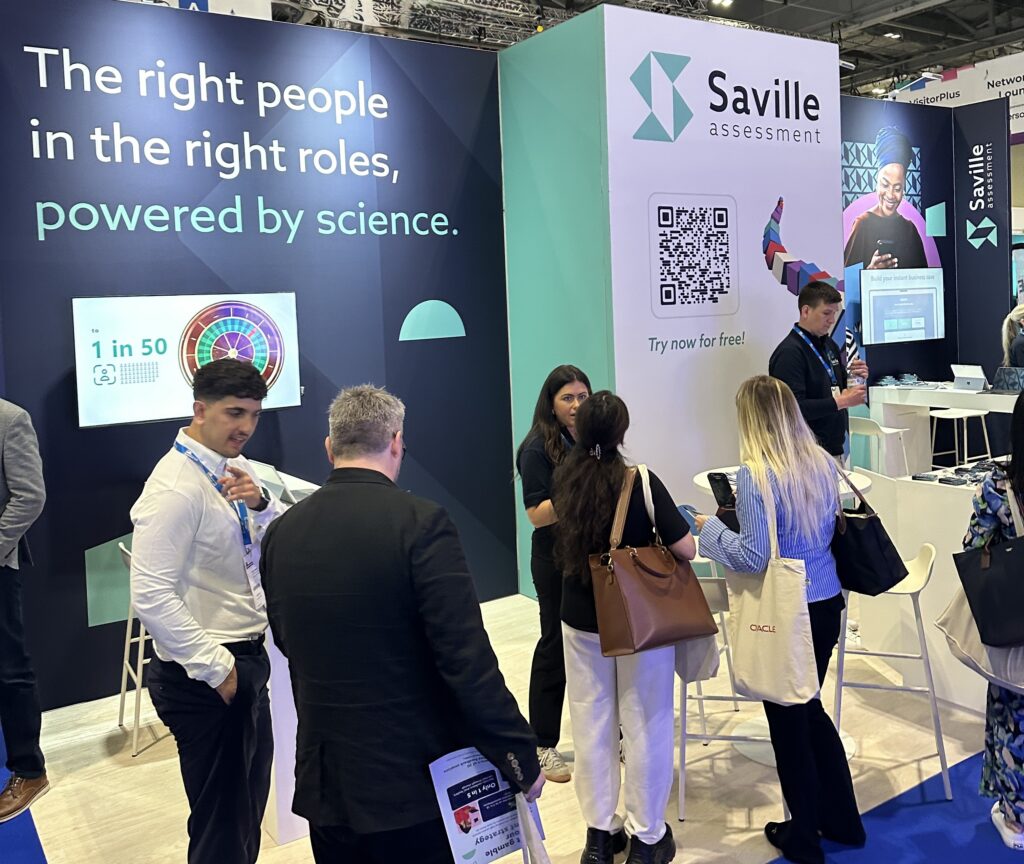
Our webinar on 3rd June looks at this in more detail.
The good news is that the science to solve this problem already exists. Independent research from BCG found that organisations focused on people-first transformation — not just technology — achieved four times higher shareholder returns over three years.
Structured, validated psychometric assessment removes gut-feel bias from leadership selection. It surfaces potential that interviews and CVs routinely miss. And critically in the current legal environment, it creates a documented, defensible basis for decisions that may later face scrutiny.
More than a theoretical benefit, this is an increasingly practical necessity.
On 3rd June, I’m co-hosting a a webinar specifically designed for HR teams who know the value of scientific assessment but are struggling to make the financial case land with their boards.
You will leave with the data that moves decision-makers, a framework for translating assessment impact into terms finance teams respond to, and a chance to use our new tool for building your own bespoke quantified business case.
The legal landscape is shifting. The cost of a mis-hire, especially at leadership level, has never been higher. If your selection process is not yet where it needs to be, now is the time to change that.
The Employment Rights Act 2025 introduces two significant changes. From January 2027, the qualifying period for unfair dismissal protection reduces from two years to six months. The statutory cap on compensation, currently the lower of 52 weeks’ pay or £118,223, is also being removed, leaving tribunal awards uncapped.
The changes take effect from 1 January 2027 and apply to employees already in employment at that date. Anyone hired from around June or July 2026 onwards could gain unfair dismissal protection from January 2027.
The removal of the compensation cap is particularly significant for senior hires, where salaries are higher and the financial exposure in a contested dismissal is already substantial. A mis-hire at leadership level comes with significant expense before legal costs are even considered. Under the new regime, there is no ceiling on what a tribunal could award.
The 2026 preparation window is the opportunity to review probationary processes, improve documentation around hiring decisions, and move to structured, evidence-based selection. Scientific assessment provides an objective, defensible basis for people decisions that will increasingly face legal and financial scrutiny.