The term ‘Future-ready’ gets thrown around a lot. But if you’re sitting in HR with critical appointments to make, a fragile culture, and transformation work that can’t afford to stall, the last thing you need is another buzzword.
You need a practical model that you can hire and develop against.
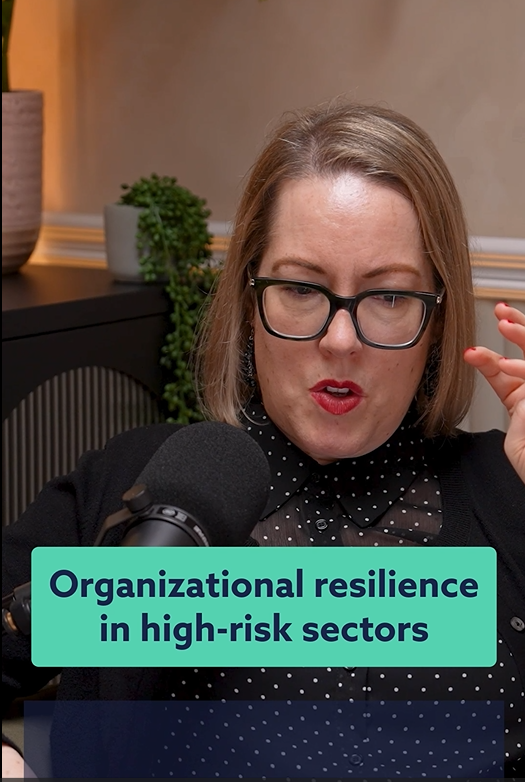
Listening back to Saville Assessment’s podcast episode with
Dr Hayley Lewis – Leading Through a Decade of Disruption – it’s clear that the playbook has changed, and it continues to be rewritten by the day.

“Trust is built at the speed of a snail and lost at the speed of a racehorse.”
Dr Hayley Lewis
Future-ready leaders don’t pretend to have certainty. They help others navigate complexity without oversimplifying it.
Strategic sensemaking is the ability to interpret weak signals, challenge assumptions, and create clarity people can act on, especially when information is incomplete or contradictory.
As Hayley noted “DQ (digital intelligence) is the new EQ (emotional intelligence).”
Not instead of EQ but alongside it.
In 2026, leaders don’t need to be technical experts, but they do need to learn fast, ask intelligent questions, and evaluate digital, data and AI-driven decisions without ego or false confidence.
In disruption, perfect information is a luxury. What matters is decision quality under constraint.
Future-ready leaders commit when they need to, explain their reasoning clearly, and adapt course without losing credibility. Accountability is key.
Pressure reveals default leadership behaviours. Some leaders become controlling. Others withdraw.
Future-ready leaders remain predictable, fair, and transparent when it matters most.
The leaders that organizations need can build momentum, remove friction, and deliver consistently—without exhausting teams or damaging culture.
These five areas don’t show up equally in every leader. Some over-index on delivery but struggle with building trust. Others excel at sensemaking but avoid hard decisions.
That’s why future-ready leadership is a balance of capability, impact, and risk, revealed most clearly when conditions change.
Less than half have confidence in their organization’s ability to spot leadership risk behaviors before they impact performance or culture.
As organizations are pushed to redefine what ‘future-ready leadership’ looks like for them, ensuring fairness and effectiveness in leadership identification and development is critical.
Predictive evidence-based tools that go beyond traditional concepts of leadership can provide the key data points, capturing the evolving skills and impact required.
Saville Assessment’s Leadership Impact Model deconstructs traditional approaches and highlights the need for diverse leadership. In developing this, we analyzed data that pointed clearly towards the idea that there were three broad types of leadership:

Those with impact in technical expertise and continuous learning, ensuring they stay up-to-date with AI advancements.

Focus on motivating teams, fostering a human-centered AI adoption approach, and ensuring AI enhances collaboration rather than replacing human ingenuity.

Visionaries who leverage AI to drive innovation, growth, and long-term straegic advantage.
At a time when individuals and organizations are having to be more agile and fluid, the potential for missteps is elevated, especially in high-risk/highly-regulated industries.
HR leaders around the world are utilizing Impact data alongside Leadership Risk to help make critical but defensible selection decisions, developing a clear picture on what success looks like in their leadership roles whilst surfacing potential hidden derailers before they have a negative – often irreversible – effect on the organization, culture and ultimately revenue.
One thing’s for certain. Those who still rely on traditional (out-dated) methods of hiring/promoting into critical leadership positions without utilizing objective reliable data are exposing themselves and their organizations to more potential risk than ever before.
I’m looking forward to co-hosting a webinar in March where we look at HR’s current challenges, how to overcome them and call on examples from leading organizations who are leading the way in this space.
I’d love for you to join us for what promises to be a great session via the link below.


Is HR set up to get them right?
We recently hosted a live webinar discussing this topic in a little more detail utilizing live polls for some real-time insight from the large audience of HR leaders.
Miss it live? Catch up on demand via the link below.
Today, future-ready leadership is the ability to deliver results through uncertainty by making sense of change, learning fast, deciding with courage, building trust, and executing consistently.
Sensemaking, willingness to learn, digital intelligence, decision quality under pressure, trust-building, and delivery discipline… to name a few!
Use a clear success profile, structured interviews, and objective evidence that measures both capability, impact and leadership risk (especially under stress).
Leadership risk is the likelihood a leader will damage performance, culture, trust, or outcomes, especially when pressure rises and conditions change.