“If your only ambition for AI is to cut your workforce, you’re missing a huge trick”
 Kerri O’Neill
Chief People Officer and Global AI Workforce Transformation Lead, Ipsos UK & Ireland
Kerri O’Neill has spent two decades in HR, seven of them as a Chief People Officer. Her brief now covers both people and AI transformation.
That combination is still rare, and it is why this conversation goes further than most. She makes the case for augmenting rather than cutting, sets out the three words every AI tool at Ipsos has to pass, and is candid about the moments she stops checking the output herself.
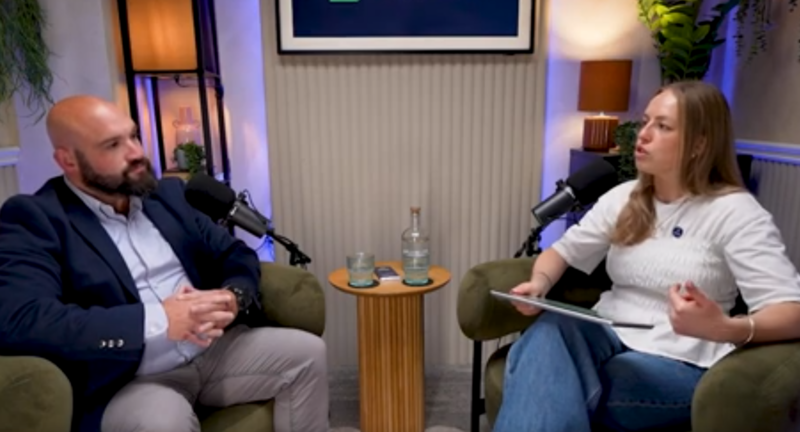
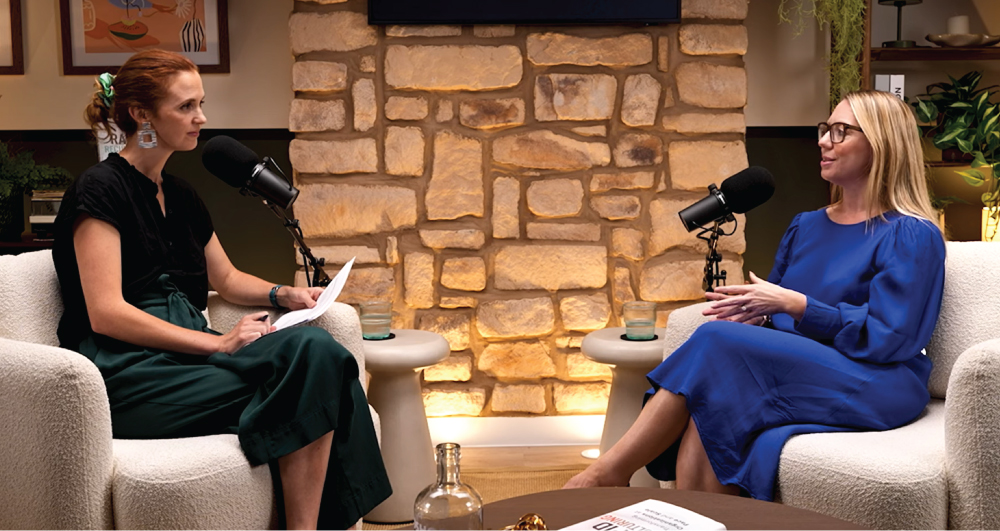
Hosted by Hannah Mullaney, Chief Commercial Officer at Saville Assessment.

In this episode
Kerri sits on the CIPD’s AI Advisory Board and the board of Oxfam, where she is working through what AI does to global inequality. The conversation travels a long way from HR.
- Cognitive surrender, and the one-day fix that stops it
- Why a 30% headcount cut is a saving you bank once
- The three words every AI tool at Ipsos has to pass
- Half the workforce ignores the AI their employer already pays for
- What happens to judgment when entry-level roles disappear
- The metric that beats productivity for measuring an AI rollout
- The one habit worth protecting, which turns out to involve poetry
Win a copy of Rapid Reculturing
We’re giving away copies of Rapid Reculturing: Transforming Organisations at Pace and Scale, by Kerri O’Neill and Alex Bailey. Add your details to enter. Entries close November 20, 2026.
Welcome to the Deep Dive, the show where we explore the hottest topics in HR, assessment and the world of work. If you caught our last episode, you’ll know we’ve been digging into how work is changing and what it’s doing to those expected to lead through it. AI is moving faster than any of us can keep up with. There’s a promise everywhere that it’ll make talent programs quicker and teams more efficient. What gets discussed far less is the human side and how we keep our judgment. So today we are asking a harder question. Is the technology really the difficult bit or is the difficult bit us? How do people leaders bring AI in without losing trust, transparency and the truth of what people experience? To get into it, I’m joined by Kerri O’Neill Kerri is Chief People Officer and Global AI Workforce Transformation Lead at Ipsos UK & Ireland and sits on the CIPD’s AI Advisory Board. She’s led culture and change under real pressure for two decades and we are very excited to have her here with us today. We are also giving away copies of her new book, co-authored with another recent deep dive guest, Alex Bailey. Do stay tuned for more info on all of that. Kerri, welcome to the Saville Assessment Podcast. Before we dive in, would you give us a bit more context of your career to date?
00:01:55 Kerri O’Neill
Absolutely. And thank you so much for having me. Delighted to be here.
00:02:00 Hannah (Host)
Pleasure.
00:02:00 Kerri O’Neill
I’ve been in HR, human resources for over 20 years. So I joined in the City of London in the HR function in the 2000s. So just as we’d hit the.com bubble and just before the smartphone. And so 2 decades, over 2 decades of HR, I’ve been chief people officer for seven of those and the digital transformation we’ve seen in that time has been incredible and my career is sort of ridden along with those waves.
00:02:33 Hannah (Host)
And just how different is the HR world on a day-to-day basis? now compared to when you started out two decades ago?
00:02:43 Kerri O’Neill
I genuinely think that this is a really consequential time for our profession. You mentioned there that I’m on the CIPD advisory board and I’ve been a member of the CIPD for the whole time I’ve been in HR. And I think the conversations I’m having with chief people officers and people in the profession now, people joining the profession now, are really genuinely different It seems a little bit obvious to say, but prior to the last couple of years, all the conversation was really about people and humans. And of course, we’ve changed our titles by preference. We’ve been human resources, we’ve been human capital. I don’t know if you remember that era. We have been people in culture, we have been people in inclusion, and everything. And increasingly, What I’m now seeing is as much conversation about technology, AI, agentic workforces. And that is a major difference. And I actually think it’s a real time of innovation for us as a profession.
00:03:49 Hannah (Host)
Definitely. And those two streams, people and technology, I think you’re right. In the past, they used to sit under two different functions. Two different people would lead on those two different things. Whereas As you say, now that’s changed. Why do you think now they go much more kind of hand in hand?
00:04:12 Kerri O’Neill
I think when you come, when you sort of, when you boil it back, you know, why did human resources come about? You know, it was personnel function if you want to go way back when, probably welfare before that. And it was an interest in, you know, it’s predominantly in how does the work happen. So organisations are made-up of, does things, the organisation’s purpose is to create something in the world. And so it’s always been about the work and I think. Where it’s coming together is we’ve never had a technology like artificial intelligence before. We’ve got closer and closer to it, social media and collaborative technologies, communication technologies. But we’ve never had something like that before. And so I think if we go back to the fact that really we’re here about getting work done, it’s quite natural that when we have a technology that can do work like a human potentially, that we start to meld and merge some of these conversations And actually the real promise with artificial intelligence in my view and I think many companies is how does it come together with human intelligence? And that makes it even more relevant, I think, to people who are in our profession and ones around us.
00:05:30 Hannah (Host)
Absolutely. The idea of augmentation, which we’ll talk a lot about today, I think. Kerri, what do you think people leaders are getting wrong about AI adoption right now that they maybe don’t realise that they’re getting wrong.
00:05:47 Kerri O’Neill
I think one of the things that I, and I was guilty of this myself, so I think this is a bit of a natural evolution. I think the first reaction to AI is it’s just another tool. it’s like Excel, it’s like, PowerPoint. They’ve come in the workplaces, we’ve used them. It’s not had the impact that we thought. I actually think it’s not a tool in reality. You know, it is a true agent. It’s got abilities to do things. I mean, we can put guardrails and stop it. And I think it’s that sort of sense of, oh, AI is just another tool. You know, I’ll get to it when I can. I’ll think about it when it’s urgent, etc, etc. That I think is something that people are potentially a bit mistaken.
00:06:40 Hannah (Host)
And what’s the impact of that?
00:06:42 Kerri O’Neill
It can make you narrow, I think, what is possible with the technology and force us into a sense where we just give it a role within the organisation without really realising what it could be doing in terms of augmentation, a topic I’m hugely passionate about, and also how can it support people. So in many of our workplaces, there’s way more work than people and the time to do it. we’ve had long histories of organisations where we have to ask people to put in a huge amount of discretionary effort. Of course, that’s what we’ve often been driving and measuring with engagement strategies in the workplace. And here is now a tool that enables us potentially not just to get the work done, but also to make it easier for people to do that and drive and direct and shape and innovate around that. And so I think almost it’s just a tool minimizes the potential and therefore it’s minimizing the potential for our people to really potentially release all of their gifts and talents in our organisation.
00:07:55 Hannah (Host)
Absolutely. And quite often we talk more generally about HR, but for a lot of our listeners, their roles will be more focused than that. So talent acquisition versus talent development, for example. Do you think the challenges are different in those spaces or do you think they’re much the same across the board?
00:08:16 Kerri O’Neill
It’s a good question. And of course, we’re in the early days of exploring exactly what AI can do for us. And the recruitment, the talent acquisition part of HR, I think, was one of the first to embrace AI. And we’ve seen a lot of experimentation and learnings, shall we say, about what that looks like. And so a lot of our focus also has been about how can it make processes more efficient So some of the early use cases for AI has been, okay, we have this massive volume recruitment. How do we get through it better and quicker and easier? But actually I think our. our focus should really be on quality. So what are the use cases that improve the quality of the work that we do in human resources? And that will mean different things in different parts. It might mean that we can model wages better in reward, for example, or compensation packages. It might mean in employee relations that we can find an earlier resolution and path, so it doesn’t end up in kind of formalised processes, for example, and other talent areas. So I think it will look different, but if we can focus on quality, so how do we improve the quality rather than just thinking about AI as improving efficiency and quantity, then we’ll really take it on to the next level.
00:09:43 Hannah (Host)
That’s such a good point. Even just thinking personally about all the conversations I’ve been in where the topic has been how can we leverage AI? I would say over 95% of those conversations have been more about efficiency than quality. I think that’s something that people are definitely missing.
00:10:06 Kerri O’Neill
Absolutely. And I’m, I say, guilty too. And I can almost guarantee that most people’s conversations with their board and C-suites are about productivity, and efficiency and doing more with less. And there is a huge value in that, huge economic value in that as well. And productivity is a real potential. But for me, it’s also innovation and quality and moving on to that next frontier of high quality work improving skills, upskilling everyone in a different way because we have a different resource available to us. We have a different intelligence available to us. And I get really excited when I start to think about when a point where we truly meld human intelligence and artificial intelligence together and we we’ve ironed out the kinks of AI. I mean, I always think it’s a good thing in a way that the first AI was so terrible because it kind of put us on guard, didn’t it? You know, it’s hallucinating all these things. It’s getting better and better as we’ve seen. The model releases are getting better and better. We’re learning how to sort of iron out some of these kinks. I’m sure that will improve in 10 years time. But in a way, it’s meant that we’re a little bit, sometimes a little bit more sceptical about AI than we potentially need to be. But equally, it’s a good thing because there is still a role for humans in this world to do its thing.
00:11:44 Hannah (Host)
Absolutely, absolutely. Kerri, when the team were doing their research, they came across an interview where you spoke about the approach to Ipsos. have taken to AI adoption around the three T’s. So we’ll walk through them individually in a second, but I’d love you to outline how that came about.
00:12:05 Kerri O’Neill
Yeah, well, one of the reasons I wanted to join Ipsos was because I felt it had a really mature and quite wise approach to AI and technology and innovation. And that’s built on its 50 years of of being a pioneer in its industry and market research has always been at the forefront of society and technology. And it had, so I didn’t come up with the three Ts, I want to point that out. But I’ve really embraced them because I think they really help us to embrace the potential that we have with artificial intelligence. So the three Ts stand for trust, truth and transparency and they sit as principles behind, we look at every product, every service, every through the lens of those T’s because if we don’t trust it, if it’s not transparent and if it’s not telling the truth or supporting the truth, then we won’t deploy it. And we need to make sure that any technology can be used for good and for bad. We know that. And so in order to really guarantee that we will use this technology for good, we’ll be thoughtful with the technology. And thoughtfulness is a word I use really, really often to explain our approach because we don’t always have the answers. we’re not always sitting here with the exact answers. This is quite new, but if we can be thoughtful and we can think about the three T’s, maybe there should be a fourth of T, maybe I’ll advocate for that, then I think we’re on the right path. And it is important that we are thoughtful about how this technology is deployed and how we use it.
00:14:03 Hannah (Host)
Absolutely. So to maybe get into them in a little bit more detail, maybe let’s start with trust. What does trust actually require when we’re putting AI into people decisions?
00:14:23 Kerri O’Neill
It’s such a good question, isn’t it? And I’ve been reflecting a lot recently on trust because trust a bit like culture. a discussion, obviously written a book about with Alex Bailey. It’s intangible. You know, you can’t go to a shop, buy trust off the shelf, put it on the conveyor belt. And there’s also the, you know, this famous adage we know about trust that it takes years to build, it’s earned. And it can be, take minutes to break it.
00:14:53 Hannah (Host)
Absolutely.
00:14:54 Kerri O’Neill
And so trust in people decisions, there’s an intangibility to it. And to me, it’s about substance then. It’s about, you know, have we, are we consistent? Are we reliable? You know, is the output of the decision logical to the input of the decision? And how biased is there opportunity for things like bias in the middle? And if there is, it makes us trust less some of those decisions. And so the way in which we need to think about artificial intelligence being in that process is does it help us to ensure that the inputs equal the outputs and it’s explainable? Does it help us remove the biases? Does it, you know, is it helping us to create a more reliable, more valid decision at the end, one that’s also explainable, for example. And so that’s the thoughtfulness for me. just because AI can do something, we need to think about, well, should it be doing something? And what is it actually helping us to do? And I think it’s critical that people decisions are trusted. And that remains, that remains vital to us no matter what age we’re in, no matter what technology’s been invented.
00:16:24 Hannah (Host)
Yes, absolutely. And I guess that you talked a bit there about being able to explain the decision, the outcome, what’s happened behind the scenes, which I guess links to the transparency T, doesn’t it? And that’s a word I hear a lot in AI conversations. In practice, What does a leader need to be able to see and explain for a tool or an AI to earn its place?
00:17:02 Kerri O’Neill
I think my absolute plea to HR people is if you can’t explain it, if you don’t understand it, do not deploy it. It’s just a real, it’s a cardinal rule, I think. And we have every right to ask as many questions as we like to vendors, to our tech teams, to our engineering teams, to our own teams who’ve maybe built an agent themselves, no code, low code agent, you know, here we are, which is, you know, a huge joy. to see this innovation, to see people who’ve never coded before creating things. But we have to ask those questions. And a little bit to the quality discussion, we need to have good quality control here. And so transparency is really about, do you know what it’s doing? Do you know what else it might do? Do you know the unintended consequences? What can go wrong? as well as what can go very right. And I think that we should have no qualms about asking a lot of questions about AI solutions or AI parts of the model. And the people who have been thoughtful and really considerate developers of some of these things, they will be able to answer these questions. And if they can’t, they will want to go away and ensure they understand the answer and then come back. And of course, maybe not every answer. And then you’re into a risk assessment discussion, of course, and you may not be able to rule everything out. But that is where I’d like us to be as a HR function. I think that would minimise many, many sort of rogue outcomes that might emerge otherwise unless we take that transparency point really seriously.
00:18:54 Hannah (Host)
Absolutely. I think there are some great example questions there that you should just have on a post-it note in front of you just to whittle off. Do you think, given where we are now with the technology still being relatively new, You’ve got some people absolutely embracing, innovating, doing things they’ve never done before that they never thought they would do now. And then you’ve probably got some people who are a little bit more cautious, a little bit more fearful. I think we’ve got a lot of people who don’t fully understand what’s in front of them. Do you think those questions get asked enough? Do you think people hold back from asking them because they don’t feel that they’re the experts, so they shouldn’t be asking those questions.
00:19:45 Kerri O’Neill
I think so. I mean, I think we need to have a lot of dialogue happening about artificial intelligence and how we’re going to use it, more so in organisations. I mean, every time I go to a town hall now, pretty much, because of my, I’m chief people officer, but also leading AI transformation, 93 countries, etc. all anyone wants to talk to me about is AI and I really embrace that because I think this is quite often it’s the first time we’re having the collective discussions that we need about this technology and allowing people to hear other people’s questions and to have a genuine answer and dialogue I think is vital right now. So I really encourage people to host conversations in groups and with teams and with the company to say let’s explore this together rather than just oh here’s how we’re going to roll it out or here’s the new tool you’ll get please use it do this training video etc. I think it needs discussion because this is a really important shift and Only in that discussion will people trust how we’re going to do this. Because I genuinely think with AI that people, it’s not about whether they trust the tool is not, do they trust the leaders who are bringing it in and do they trust what sort of the organization looks like potentially the other side of the deployments and the adoption. And that is the critical piece to master and to allow those conversations to happen whether whatever your personal views of, is this going to change our organisation? Is this going to make us lose something that we like or is this going to improve something? I really think that it is not a waste of time to enable this type of dialogue to happen and letting people see others questions and the answers will, I think, encourage. We know from, I mean, the great thing about working at Ipsos is you just learn so much about what’s going on everywhere, which is a huge perk. And we know from our AI monitor that we’ve been doing for six years that roughly half the workforce is using the AI tools its employer offers them. the other half not using it. And so we have got a huge amount of work to do to get everyone in a place where they are comfortable.
00:22:21 Hannah (Host)
Do you think organisations and leaders in organisations create enough space for those conversations?
00:22:28 Kerri O’Neill
100% not. And I get it. I’ve got two roles within the organisation. We’re all busy. And this is, but this is the equivalent, I think, of creating time to have a Christmas party together. it’s the equivalent of, there will, we don’t need more time. We just need to allocate some of the time that we have and do things with differently to this type of to this type of conversation. This is really important that we let people explore this and their thinking on this topic, I think. It is a major change and we need people to feel empowered to explore this topic more. And whether it’s affecting people’s roles right now or not, we know it will do in the future. And the other thing that I always sort of pick up on is if you have a really good dialogue, quite often people will take that dialogue and then have it at home and they’ll have it with their friends. And so you have the workplace dialogue and you create the opportunity for many, many others to happen. It starts to snowball. I mean, I know when I learned more about AI, I was teaching everyone, showing everyone. I was so excited. And that is what brings others along. And that’s also really important. This is not just about workplaces. This is This is about society, it’s about economy. And so I think, high quality discussion in one arena, like work, often creates really great conversations in others. And that collective power is what’s going to drive our national agendas. It’s what, you know, will drive other things.
00:24:19 Hannah (Host)
Absolutely. Our third tea truth, I think this is probably the most interesting. What do you mean by it within this context and where does AI most often risk drifting away from it?
00:24:37 Kerri O’Neill
Yeah, I mean, in the Ipsos context, we are, you know, we’re trusted to deliver data and insights that answers the question, you know, our ability to say what people think, you know, our election exit polling is a good example of that, 99 point something percent accurate representation. And so in the Ipsos context, truth, telling the truth, speaking truth to power, quite often we’re delivering insights that maybe people don’t want to hear quite frankly. But actually that’s also part of what makes us special and important. in the ecosystem. And so for us, AI, given the fact that it, can, if it’s not set up correctly, can make things up, it can hallucinate, it can, create what very convincing sounding answers, but not maybe not necessarily entirely accurate. So for us, it’s really important that we instill judgment, that curiosity, like maybe this is too good to be true, maybe I should check, making sure the sources are real and accurate and based on high quality. It’s almost back to some key skills of critical thinking, critical analysis, that’s what we mean by truth. And I think what comes with that is an important set of human skills and risk mitigation strategies that is important. We cannot build a world around misinformation and disinformation. Someone said to me that, you know, this is the first technology ever that can lie to us. I really love that as a sort of prompt. And that’s true. And so Being confident that what AI is doing and producing and saying and pulling together, that’s vitally important. But I actually think it’s also important outside of Ipsos and more generally, the truth matters on so many levels. And so we have to make a collective effort.
00:27:02 Hannah (Host)
Absolutely, particularly in the political climate that we have been in for the last few years, I guess, right? Super important.
00:27:12 Kerri O’Neill
You’re super important and we’re democracy. demands that we value the truth or the search of truth and that we believe that our leaders are telling the truth. And I think if we let go of that, then we’re in a slightly otherworldly place that can’t quite contemplate. And so, yeah, it’s a topic very close to my heart and I think it’s an important value for us in human resources as well and in our professions that sit around us that we all play a role in this area.
00:27:51 Hannah (Host)
So we have used the word augmentation a couple of times as we’ve been talking. I know it’s something you’re really passionate about, Kerri. A lot of AI conversations often default straight to cost efficiency, headcount efficiency. You’ve argued that cutting jobs is actually a pretty limited use of the technology. So make the case for us. What is the bigger prize?
00:28:23 Kerri O’Neill
Well, I mean, I just look at this economically, right? So, you know, and being able to, you know, oh, we’re going to use AI, we’ll cut the workforce by 30%. Well, you can only do that once. great for the few years in which maybe there’s some benefit somewhere in having done that. But, we’ve seen recently examples, the Ford is the famous one we’ve seen where they sort of cut, they were the wise people in the factories and things and, pretty cool short order and having to hire them back at, I mean, I’m making it up now, it’s become a bit folklore-ish, but, double the price. more conditions, et cetera. And so, and also seeing, seeing the outcry for students, when, big bosses are sort of saying, we can cut the low value work, the low value human capital and things like that. And, once you deploy a strategy like that, I think you’re wasting the opportunity because actually when you think about augmentation, when you think about, well, what is this release? It’s way cheaper to reskill than rehire. McKinsey’s done work on the economics of that, for example. And I’m not saying that every firm will be able to keep every job and every person. The economies rise and fall. There’s other things in the mix. I’m not advocating for that. there is a realism and practicalism in the world of commerce and business. But if your only ambition for AI is to cut your workforce, I just think you’re missing a huge trick. And I mean, maybe it’s my bias. I was started my career in insurance in the city of London here. And the absolutely amazing thing about insurance is its whole economic model is based on having a 100 year view or a 50 year view or a 10 year view and it then prices backwards the risk and so on and so forth. And I think I learned really early in my career that we have to think further out and come back. So call it the future back thinking. And that’s what I really believe is vital as boards and C-suites and finance teams and whoever is looking at AI is force yourself to have a longer term view of the technology and then come backwards. And maybe you’re not going to be quite so quick to suddenly hive off big chunks of your workforce and your people. And And so that’s the argument that I’ve come to. It’s very logical to me.
00:31:12 Hannah (Host)
No, I love that. Yeah, I do. The trying to, and I guess it’s probably quite hard, isn’t it, for people who are grappling with a new world right now to look into the future where it looks even more different. And I wonder if people might get a bit stuck doing that. And so that almost encourages more of a short-term view as well as kind of cost pressures, investor pressures, all of those standard sort of business-related pressures that we’ll all be under at the moment.
00:31:49 Kerri O’Neill
Yeah, and I think what’s interesting, I mean, it’s very early days and we, I was at an AI conference, tech conference, so I was pretty much the only chief people officer or certainly a human resources person there. And still not seeing enough chief people officers in the tech spaces if I’m honest. Why do you think that is? I don’t know if it’s a confidence thing or it’s like retinence. to, maybe I think a lot of chief people officers are working on AI and working with the tech teams. I know that for a fact because I’m speaking to them about that, but not so much being externally in those settings. The only way I learn is to throw myself in. So I’m there listening, taking notes, observing and seeing where the conversation is. And that’s how I learn. So I’ve got very comfortable in largely being the only chief people officer in the room full of financiers and technologists. But what was interesting recently is we sort of thought, well, AI is really cheap. And of course, the AI companies have made it quite cheap, but they don’t have to. And that real panic in the room of like, what is going to be your token pricing strategy? This was to a chief economist of one of the big AI firms, and he was sort of a fairly coy answer, but that really matters too. So AI may not be as cheap as it is today, and it may certainly may not be cheaper than humans in the future. And I think that has to also be in the equation of people weighing this up. And I think that conversation really forces us to then have a back to the quality. So if AI is going to improve the quality, why wouldn’t we invest in that? would be a very sensible decision. But actually, if it’s not really going to improve the quality and we’ve got to do a huge amount of restructuring and other things to get there, then we will need to think, is that going to be worth it? Is that going to really pay off? Is that really a good high quality business decision?
00:34:10 Hannah (Host)
Yeah. We should be looking at it as an investment rather than a cost cutting tool.
00:34:18 Kerri O’Neill
I think so, and also thinking, what would it release in my people to do differently. And a key thing for me is, if we had 10% more time personally, what would we want to do with that? What could we do with that? What is the sort of thing that we never get to? And then if we think of that across a team or a department and then a business, I think that’s a much more exciting conversation as well around AI. And if we really want what that looks like, then it’s actually so much easier to have the, okay, now we need to learn how to use it properly and go through training and all of that good sort of stuff, which, I think also has had a factor in the adoption piece is because it takes effort to learn to use it. And you’ve got to want to make that effort. Life has got to look better on the other side if you’ve made that effort. Because if it doesn’t, then you’re not going to do it.
00:35:18 Hannah (Host)
Yeah. I love that way of looking at it though. What is it we never get to? that we really want to get to and that we should get to. That makes it really exciting.
00:35:29 Kerri O’Neill
And so many times when I ask that question, people say I’d like to spend more time with people in some capacity. So higher quality time with clients or more time with customers or more time with my colleagues or And so I find it fascinating and exciting as well that actually could AI enable a resurgence of connection and human connection? Will it finally release some of those sort of administrative bureaucratic elements of how we spend our time? and force us to be back together in the world. Yes, exactly, And human connection is really, really vital as we move forward. And so, yes, so I think, so for me, aside from practical cost pressures, really we should be seeing boards encouraging a discussion on the augmentation side, even if a subtraction strategy is what’s decided, at least have weighed it up.
00:36:34 Hannah (Host)
Yes.
00:36:35 Kerri O’Neill
And certainly would like to have seen, you know, CEOs and chief people officers, I think, have a real opportunity if they’re seeing the conversation be really about subtraction and cutting. They’ve got an opportunity, I think, to show at least the other side so that it can be weighed up properly.
00:36:55 Hannah (Host)
Absolutely. I love that. So thinking then about augmentation rather than replacement, what does that look like in a real team in practice?
00:37:09 Kerri O’Neill
Well, I think, you know, back to the conversation about, you know, what is it we don’t have time to do or what is it that stops us from having more well-being in our team? What is it that, what’s the ideas that we don’t get to? Or what are the things that really, none of us really like doing?
00:37:31 Hannah (Host)
Yes, of course, that one’s a good one.
00:37:35 Kerri O’Neill
We had that conversation in my own HR team and I’m very proud of the fact that in my HR team, it’s our HR administrative function have led the way on our foray into using AI. And so it’s not been top down, it’s been entirely led by them. And the first thing they created was a interrogate our policy bot, you know, to stop the questions that they get of, you know, what do I do here on this policy? And, you know, that slightly frustrating answer of, you know, read it on page two, and they get people get a quicker response, it’s a better experience. And, that also removing that is like, that’s a relief, I can now do some other things and on we go. And so I think it’s how can AI be in service to us is a really good first place to start. And whatever conversation you’re having, maybe your team are working more hours than they should be. Maybe people are a bit tired. maybe there’s things that could be, if they weren’t there, everyone would feel a little bit happier or more excited about the work and life. And those are really good examples and good ways in if you’re looking at this. And yeah, so I think, seeing AI as a positive and creating a positive experience generally is a helpful first base.
00:39:11 Hannah (Host)
And how often have you come across or heard people talk about when those conversations happen, some people might be worried to make suggestions because they’re worried that they would then be replaced by AI. It wouldn’t actually be augmentation.
00:39:34 Kerri O’Neill
I hear this a lot. I sometimes under, I’m not sure whether the base of it, when you sort of ask a few coaching style questions, when you help people realize that they are way more than their job title. And when you ask, people, AI does tasks really well at the moment now, who knows in 20 years what it’ll be able to do. But people are not tasks. People are way more than that. We need to give ourselves way more credit, I think. And I often say to people, you’re worried about AI, like the biggest supercomputer on the planet at the moment sits in your own, behind your two very eyes. People’s brains are an incredible, incredible organ. You know, I read it, I think it’s 100 billion neurons are firing in an average human brain. That is an incredible amount of potential. We’re also five senses as a species, so we have, we have sight and hearing and touch and smell and, AI doesn’t have that advantage. It’s got language. and visual capability and other things. But we are, people’s, I sort of ask people like, you need to have a little bit more faith in yourself and in our species. and we, replacement is a really reductionist mindset, I think. people who do their jobs really well are irreplaceable quite often. And we talk about this Alex and I in the book, the humans create culture as well.
00:41:21 Hannah (Host)
Yes.
00:41:23 Kerri O’Neill
And it’s how we, work together, it’s how we be together. And we, if you take people out of that equation, cultures start to erode as well. And there’s so much richness in our worlds around culture too. And so, yes, so I mean, can, will certain tasks be replaced, maybe. Will AI be able to do things better than us today? Probably, but we need to back ourselves better and have more faith that we are an adaptive species and, people will, they’ve got so much more to them.
00:42:01 Hannah (Host)
Yeah, I love that comparison. I mean, imagine going to a Christmas party just with AI agents.
00:42:06 Kerri O’Neill
Well, quite. I mean.
00:42:09 Hannah (Host)
I don’t think it would be the same.
00:42:11 Kerri O’Neill
I probably would have stolen all the money out of my bank account if, we’re seeing all the hacking agents going on at the moment.
00:42:19 Hannah (Host)
Yeah, exactly. Do you have any examples of augmentation done really well?
00:42:26 Kerri O’Neill
What I’ve seen is a few people who, with the use of AI, are almost transformed individuals, you know, starting new businesses. alongside what they’re doing. I’ve seen, people who have, in the workplace as well, where through the confidence that they’ve built with AI, suddenly they’re coming up with more ideas. I’ve got a member of my team who has, you know, gone away and created a tool to help people understand what their relationship is at the moment with AI. And she’s used AI to help her and they’ve done it together and it’s now been checked out by the neuroscientist community that we have within Ipsos and improving the validity and the reliability and all the rest of it. But that That is to me an amazing example of where, imagine without AI, the effort that would have taken, she probably wouldn’t have done it. Well, I know she wouldn’t have done it, but with AI that’s been created and that’s now going to be something that we’re going to be rolling out in the autumn so that people can just understand, you know, do they, you know, do they believe everything AI says? Do they not touch it with a barge pole? All of these things. So it’s quite light-hearted. And those examples of innovation, I think, are really, really exciting. But also seeing people chase and follow their dreams a bit because suddenly AI is giving them a bit of a super booster on that. Those are some of the best examples that I’m seeing at the moment. And I think that will just grow and grow and grow.
00:44:17 Hannah (Host)
It’s opening up possibilities, which is really exciting. We touched very lightly on this a few moments ago, but we spoke to Alex last month about the number of big organisations sort of hollowing out junior roles. What worries you most about that? There’s an obvious impact on talent pipelines, but there are other impacts too.
00:44:43 Kerri O’Neill
I worry about it hugely. I think we all need to be quite shocked by the fact that we have, over a million young people not in education or employment, etc. And we’re not the only country facing this problem. This is happening in many, many Western economies as well. It’s one of those unintended consequences, I think, you know, firms cutting few graduates off here, a few entry level roles off there, and then it building up to being this tremendous problem. I think, without that pipeline being built, we’re going to sort of choke off the fresh kind of ideas. And also our ability in our organisations to teach and nurture will get lost. as well. And we need to think carefully about actually how our organisations actually operate. They operate, yes, through job descriptions and tasks, processes, systems, but they also operate through relationships and skill sets and bringing people in at the early stages of their careers and helping them grow and develop. is a very is a human skill set, and without it, we, lose way more, I think, than we realise. And, we’re increasing our early career recruitment. We’ve made active decisions in Ipsos to, where we’ve had a headcount at a more senior level. We’ve we’ve turned it into a more junior one because, we play a role in making sure that this industry can, that has people who can lead it, who can be part of it, who can innovate. No matter how much sort of AI does for us, we want that. And so we take that really, really seriously. But I think the hollowing out aspect is that, we lose some of those abilities to nurture knowledge and wisdom and skills and other things. And that’s often quite forgotten about in this issue.
00:47:11 Hannah (Host)
Absolutely.
00:47:12 Kerri O’Neill
And at some point, it’ll fall over. Exactly, And I can’t even contemplate a world where it’s a dangerous place for us to be in when people don’t believe that.
00:47:26 Hannah (Host)
They have got opportunity.
00:47:28 Kerri O’Neill
Yes, 100%. is an issue not just for governments, but it is an issue for business. And we all play a role in making sure that does not happen. And I know there’s, I know I’ve because I’ve been involved in discussions, there is a lot there are a lot of people worried about this. And I’m seeing more and more business momentum to ensure that we take this more seriously.
00:47:58 Hannah (Host)
Do you think businesses are taking it seriously enough?
00:48:01 Kerri O’Neill
What was quite interesting is in the 2000s, there was a really high quality dialogue among business leaders about things like sustainability. And sustainability is not just about the green agenda. Sustainability is about building the next generation of our economy and our society and our environment. and our institutions and our rule of law and all these things in our democracy. And I sort of, I don’t quite know when or how it happened, but the quality of that dialogue doesn’t seem as strong. And so I’d like to see that back. I think there is a leadership role for business. We absolutely know that. And in, more broadly than just within the four walls, proverbially in an organization, a business leader plays a community role, whether they like it or not. and they can choose to sort of shun and not be interested in issues that link to the community or they can choose to embrace them. Not always asking them to put loads of money in that direction or loads of money, but a little bit of attention. I think once you’ve got to the more senior levels of an organisation, no matter what size, lifting your head up and playing a role in a broader community is really, really important. I’ve seen this in my local town. I joined the board of arts and culture organisations. I did that for four years because I was like, actually it will say matters doing things in your local community. And I think if more people did that and more business leaders did that, then we would have way more vibrant discussions. But also I think we would have many more solutions to some of these issues.
00:49:51 Hannah (Host)
What would you say is the best metric of success around AI adoption or transformation?
00:49:59 Kerri O’Neill
I think wellbeing is an interesting angle to look at this from. I’ve been recently reading again Jean-Emmanuel de Neve’s work with George Ward. I recently interviewed him as part of a series of discussions, George Ward, and it’s about the economics of wellbeing, actually. It’s a fantastic piece of of work and research. And actually, so some of the measures of wellbeing are how people feel about the quality of their job. And jobs are really important for people psychologically and they’re important for our economy, society, all of these things. And so actually I think a really interesting metric is does this technology, does the work we’re doing on AI, does it improve people’s perception of the quality of their roles? Because I think if it does, then you’re getting something really, really right. If it’s degrading the quality of people’s jobs and their feelings of that, then you may be going down a track that you need to consider a bit more. I mean, of course, productivity is going to be on most people’s list. I’m not saying that’s not important, but that’s the obvious thing.
00:51:12 Hannah (Host)
Back to your missing a trick point, if that’s your only metric.
00:51:14 Kerri O’Neill
Back to your missing a trick point, but if this is about true augmentation, then then why wouldn’t we be aspiring for the quality of jobs and the perception of the quality of jobs to be improving and other things like that? So yeah, that’s what I think.
00:51:29 Hannah (Host)
We’ve talked about quite a lot the pressures that leaders face to show those sort of quick AI cost savings, efficiency savings. If leaders want to take the braver path, the better path, the path that we’ve been talking about, what do they need to do to sell it upwards?
00:51:53 Kerri O’Neill
I think what they need to do is look further out and think how could AI help us get there quicker. So, you know, short term it could help us save and do X. Great, brilliant. But actually a braver decision is might it help us enter a new product category? Might it actually help us deliver this service? What if this were true finally within our organisation? You know, what if we finally were able to join up these data sets and create this option? And I think that’s quite important. I think the skill of looking further out is a visioning skill, I guess we might describe it as, is really an important option for leaders if they want to take a braver path with AI. And also thinking about what are the problems that we could solve with AI, and maybe not AI directly solving it, but what if AI over here released these people’s time, could they then solve this problem? That I think is a much more exciting conversation for leaders and teams to actually have. And you don’t have to worry so much about how you can do that because you can now just say, ask AI, how am I going to achieve that? And it’ll tell you a few options, no doubt. And I think, you know, being that ability to really think through what AI could be doing for us in its fullest sense is is the way to go if you want to take a different path with AI, a more one that I think will also generate much more energy and excitement from your people to go in that direction. Because then you go on an adventure with AI. And that is, who doesn’t want to be part of that?
00:54:04 Hannah (Host)
Absolutely. It’s probably quite a good time now actually to talk about the work you do with Oxfam. Off camera we had a bit of a chat about this and I think that the experiences that you’ve had in that space with AI, I guess maybe does it offer a slightly different lens or there are different challenges that are coming up perhaps? Could you share a little bit about that?
00:54:35 Kerri O’Neill
Yeah, I mean, it’s really live exploratory thinking and research work that I’m doing myself as a member of the board of Oxfam. But Oxfam exists because we still have huge inequality in the world, unacceptable levels of inequality. in the world. And so what’s the role of AI in that you might ask. And in many ways it’s probably exacerbating or has at least the potential to exacerbate where we are, which is not a good thing. And so my thoughts in the World Bank has recently, and literally in the last few days, released a report around the promise of AI for developing nations and lower mid-income countries. And I really enjoyed the report. It was a really optimistic and practical look of how AI could really support in that space. And for me, shared prosperity, which is the route to what life looks like the other side, if we can solve this big problem, is really about making sure that we still have high quality jobs, that democracy and other ability to participate in our world continues. And ultimately we do need to make sure that our planet is still hospitable and habitable. And actually, what’s interesting is how can, AI can help us think through some of those challenges. it can ingest huge amounts of data and information and thoughts and ideas and really tell us things. And I got half an eye on how medical problems are being solved with AI now. We know the Google DeepMind CEO, he’s become the chair so that he can focus more on this, the promise of AI to solve some of these intractable issues. And I really would like to apply that to the issues of inequality that we see. And so, yeah, thank you for raising that because I think there’s many more people need to help contribute to this discussion. But if AI can help us to solve some of the really big issues tackling us. I also think it will help us reduce the fear around it.
00:57:10 Hannah (Host)
That’s a really good point. I know it’s a long path, but what are the first steps? What does that look like?
00:57:17 Kerri O’Neill
I think for me, the first steps are, you know, what’s the data that we need and where is it? Because one of the things that AI is actually really great at is knitting together things that have been almost impossible to knit together before. And, I’ve been, I’ve seen amazing things that Ipsos can now do, with AI in the middle, things that were not possible for, it can take people’s thoughts, journal ideas from all around the world and, 48 hours, or less sense check things. And so, for me, it takes, I mean, I don’t quite know how it’s done, but maybe even the big AI providers can help. I know Anthropic did a research asking 80,000 people to input ideas to certain questions and has then been able to analyse that. But I think I think the first step is really what’s the data that we could bring together that’s never been brought together before that would help us to solve some of this. And then I do think that institutions and organisations and movements like Oxfam with others could really, really drive them.
00:58:39 Hannah (Host)
Yeah, really powerful or the potential to be really powerful. Okay, so this next section is 1 I’m really excited to talk to you about. I think it’s really fascinating. It’s probably happening everywhere, not just the HR space. But I really like what you talk about when it comes to the term cognitive surrender. So this is, I guess, the idea that we quietly stop questioning the machine. Can you sort of build this out a little bit for our listeners? What does that look like on a day-to-day basis?
00:59:20 Kerri O’Neill
Yeah, I loved this research when I first saw it. So Wharton, I first saw it in a Wharton academic paper and it was thinking fast and thinking slow and thinking with AI and actually seeing the there is real potential that people just blindly follow what AI says and coined the term cognitive surrender. Because at the same time, I was doing a series of articles with Vivian Meredith, who’s ex-CHRO of Anglo-American and we did a series of articles about AI and what’s going on with it in the boardroom. And our inclination was that we need to make sure that we don’t lose the time to think and we don’t lose the ability for leaders to think for themselves. So we’re coming at this from lots and lots of different angles, but basically cognitive surrender is when you just sort of blindly do and follow what AI is telling you without necessarily interrogating it, without necessarily thinking about it from the other. And we are all at a reasonably high risk a falling foul to this. So when I’m tired, I notice that I probably am a little bit more surrendered to AI than I should be. And so we’ve got to all be on guard.
01:00:50 Hannah (Host)
So that’s a really interesting point. That was going to be my next question. When have you noticed it in yourself, happening in yourself? So it’s that tiredness piece. That’s playing a part.
01:01:02 Kerri O’Neill
It is for me. I think, you ask AI to draft an e-mail for you or whatever, and it drafts it. And you just give it a quick read and you’re like, that’s good, off you go. And then you wake up the next day and you’re like, oh, actually I missed this whole important point, had I thought about it, and it’s What I’m increasingly trying to do is do the, get AI to do stuff for me, but not actually do anything with it until the next day, later on in the day. Because it is so easy to just kind of go, yeah, that’s good enough, off we go.
01:01:47 Hannah (Host)
That’s such a great tip because I think, and I’ve definitely seen this myself, I think when the pace of day-to-day work is so fast and you’ve got the pressure of the next thing on the list, that I can imagine is a scenario where you could easily fall foul to cognitive surrender as well and go great that’s job done. The temptation to just to send that e-mail in that moment that’s just been drafted for you because you can tick it off the list is probably quite strong.
01:02:20 Kerri O’Neill
I think so and I think the higher the more important the thing maybe your CV or a cover letter to an employer or a really important e-mail, the more attention you need to give it and probably some space from when you asked it, prompted it, got it back, some space. Because yeah, I think the danger comes when you’re firing things off and something very high value and important to you like your own CV, your own record, of your career, you need to make sure that you’ve given yourself some space to actually think, what would I write there if AI wasn’t available to me?
01:03:09 Hannah (Host)
Yes.
01:03:09 Kerri O’Neill
What would I want to say? And that’s, I think, a vital question to think about before you kind of, you know, as you’re prompting, like, if I wasn’t getting AI to help me with this, what would I want to say? And I know neuroscientists are now saying, metacognition, the ability to think about thinking. And it is quite important that we tune into our own thoughts and what do we want to say on a topic or on a thing or in an e-mail or in a message and just hold that thought and then make sure that what comes back from Claude or Copilot or ChatGPT or Gemini or whatever does it say that? And that is vital because otherwise you’ll sort of turn around and realise that maybe a conversation has missed something or it didn’t quite go. And what is really interesting and kind of fascinating is, you’re writing an e-mail to someone with AI and they’re writing back to you with AI and like then who’s actually having the conversation if you haven’t actually got full you haven’t fully thought through what it is that we’re trying to achieve with this.
01:04:29 Hannah (Host)
Well, I guess it just stops becoming you having the conversation, right?
01:04:33 Kerri O’Neill
Yes, interestingly. And, you know, are you going to achieve it in 100% of everything you’re doing? No, because humans are not perfect today. You know, we just say stuff, you know, we haven’t given it any thought. And, you know, we’re like, I said that without thinking, you know, so it’s not trying to be perfect, but I think being conscious that actually it’s quite persuasive having that first draft and that straw man. Have we actually applied anything of our own experience or own thinking or own to that? Or have we just gone, okay, that’s great, off I go.
01:05:12 Hannah (Host)
Yeah.
01:05:12 Kerri O’Neill
Keep doing that and you, know, and you might find that, you know, that’s where the risk, I think, where people are saying, oh, you know, could there be could your IQ dip, et cetera? the risk is if you just, in that sort of conveyor belt of whatever AI produces, you chuck out into the world.
01:05:33 Hannah (Host)
Yes. So how does a leader spot cognitive surrender happening in their team and what can they do to challenge it?
01:05:43 Kerri O’Neill
I think talking about it as a phenomena first and foremost helps. because you can make a joke of it, we can all find examples of AI sort of slop and all the rest of it. So I think talking about it as a real potential is quite helpful and sort of normalising what that looks like. But equally, it’s asking questions about what do you really think about this topic? And I do think the human connection side and encouraging when people are together to talk about what people actually really genuinely think without screens, without that, you’ll start spotting people who look a bit panicked about, well, I don’t know what I actually really think about this because I’ve got a little bit used to asking AI.
01:06:37 Hannah (Host)
It goes back to the critical thinking skills from the beginning.
01:06:40 Kerri O’Neill
And I’ve always said to, you know, this is outside of AI. When people always say to me about, you know, graduates, what I was, how do I get ahead? how do I stand out? All this, I’ve always said, have an opinion.
01:06:57 Hannah (Host)
Yes.
01:06:58 Kerri O’Neill
Know your opinion. Think about a topic and have an opinion on it. And that is honestly the way in which I’ve always seen people stand out and shine. And I’ve been giving that some thought recently because I like, well, why have I always said that? And I think what having an opinion shows is that you’ve given some independent thought to a topic and you’ve made a decision. You might change your mind, actually it’s a good thing if you’ve got ability to change your mind, but you’ve given it thought and you’ve made a decision and that process is vital.
01:07:35 Hannah (Host)
Yes.
01:07:36 Kerri O’Neill
And I think continues to be as we move forward. And I think we will see more assessment being based face to face, potentially to test and really examine this more and more. And I think it’s going to grow as a huge, huge topic.
01:07:56 Hannah (Host)
So if that critical thinking and judgement as well, I think is the thing that we are most at risk of losing, What is the one habit that we should all be trying to protect in our day-to-day?
01:08:14 Kerri O’Neill
I mean, for my view, I continue to read books and I’ve increasingly started to read poetry as well. So I’ve got a great book, poetry book by William Iott and he writes poems about the corporate world of work. So it’s brilliant.
01:08:31 Hannah (Host)
I love that. I’ve not come across him. I have to put him on my list.
01:08:35 Kerri O’Neill
He’s Oxford. I came across him at Oxford Said, an amazing poet about work. So I just enjoy it. And the reason I say that is because being lost in your own thoughts, for me it’s reading. For others there’s other things where you get lost in thought. That I think is a critical habit to build. for some people it’s daydreaming, but there’ll be something for most people where they get lost in their own thoughts. This is not about a habit that takes you away from your thoughts, exercise where you’re doing no thinking. Actually, that’s really vitally important as well. But actually, where do you keep, you know, where do you get lost in your own thoughts? I think if you can understand that and then build a habit around that, then you have got a very strong chance of not allowing AI to take absolutely everything from you.
01:09:39 Hannah (Host)
Yes, being a little protected. Yes. Kerri, where is the line for you when it comes to AI? What decisions would you never let AI make on its own, however good it gets?
01:09:55 Kerri O’Neill
I do think critical people decisions need to be retained because you, because of you own then the outcome. So it’s not so much the process, I mean the process of making a big decision. And I think all people decisions are big decisions, who to promote, who to hire, who to let go of. who to give another piece of work to, who to test in a different setting. They’re really, really big decisions, particularly for the other person. And I think making them yourself means that you have skin in the game of what that means and you own that decision. I am desperately worried that, you know, the more AI does around around this space that then people won’t feel ownership.
01:10:51 Hannah (Host)
That’s so interesting and so true.
01:10:54 Kerri O’Neill
Of the decisions that they are making. And yeah, so I would like to see us as a profession find a way to retain that ability to decide and that be a human to human. piece because I think that’s important for cohesion. I think it’s important for fairness. I think it’s important for our culture, frankly, and our ability to stay human and humanity. And so big people decisions like the ones I’ve mentioned, I really, really think that even if AI can do it, we have to have a sort of moral of should it do it. And we should never give up the fact that if we’re a leader in a business making decisions on people that we are accountable for those decisions.
01:11:56 Hannah (Host)
And what’s the most dangerous thing about not having a person to take accountability and ownership for those sorts of decisions?
01:12:06 Kerri O’Neill
I think it’s one of those things that you might not notice it for a while. if there is a lack of accountability or a lack of ownership. Things can often run fairly well without that. But you will, over time, you start to notice this sort of drift. We talk about it in the book, Alex and I actually, because we can see some of this, kind of cultural drift. And you then start to create an environment where people don’t really trust. that the right things are being done and actually maybe they need to give their time elsewhere. Now they might not physically move, but they may mentally move and then you’re in a space of, as we’ve seen with, quiet quitting and disengagement and other things. And so accountability and ownership, I just think they are really vital things to protect. And actually, the issues boards, this is a hugely important topic and we can never let AI get in the middle of that. And we should always be building leaders around taking more ownership, more accountability, because I think that’s when they become braver. I think it’s when they become, we step into a space of wisdom versus just knowledge and lots of good things come. when there is true ownership and accountability in the system.
01:13:47 Hannah (Host)
We’ve talked a little bit about learning AI socially and the importance of that, the value that adds. How does that play into this idea of keeping our judgement really sharp and protecting against cognitive surrender?
01:14:08 Kerri O’Neill
So judgement is about being able, if you think about the weighing scales of, the classic legal symbol of the weighing scales. So judgement is the ability to weigh both sides. I mean, that can be a complex idea. But it’s the idea that you can imagine an alternative to this and then you’ve decided to, so judgment is the ability for alternatives to be in existence and then you weigh it up and you make a decision and that’s what judgment is. If you just have AI in the mix and you just do what AI says, you’ve not judged anything because you’ve not weighed it up, you’ve not thought of an alternative, you’ve not And so judgement is about thinking fully. I think back to what I was saying earlier about thoughtfulness. That’s you thinking fully about a topic and that’s what judgement is. And so when we’re using AI, we should be asking questions of, well, what else could be true? What else should we ask AI to get another side of this story? what is it that, what is it that actually if AI wasn’t in the room, you would do differently? All of those things. And I think that’s really, really vital as we move forward.
01:15:38 Hannah (Host)
And how, if we think about that social learning, what could we do to stop a gap opening between our fast movers and everyone else? You had that 50-50 stat earlier. So how do we make sure that gap closes rather than broadens?
01:15:57 Kerri O’Neill
I’ve been trying to encourage our real fast movers, the people who just seem to get it and go with it and have confidence. And so there’s the ability to use AI and then there’s the confidence to apply it. We’ve done some work in our UK business on this. And so you might be able to use it quite well, but not be very confident to apply it. You might be confident to apply it, but actually not use it very well. Possibly the worst of the two. Yeah, maybe not the great scenario to be in, but if you’re confident and you use it really well, we try and really encourage you to then sort of bring others along with you. And so we have this amazing champion network within Ipsos. We call it the AI Wizard Community. I love that. A name they come up with it, but it is great. And that sort of teach what help others, buddy with people is something that we really encourage. And And it is quite magical when people show you something. I mean, I still feel the same when people show me like an Excel shortcut and you’re like, wow, that’s amazing. I think I’m just easily pleased. But you know, allowing, encouraging people to show and teach others what they’re able to do is a really important social currency, social trait and And it also means that, there’s a transparency factor as well, if you can encourage that, because then it really helps you understand what people are using AI for and other things.
01:17:43 Hannah (Host)
Right, Kerri, we’ve covered a lot of ground. If AI really is a people challenge before it’s a technology one, the obvious question is then who should be leading this change in organisations?
01:17:58 Kerri O’Neill
I mean, we’re seeing a lot of shift and change with this, aren’t we? so everything from, people in tech, officers emerging, some technology leaders and people leaders and then some transformation leaders and lots of change. I don’t know how it will exactly settle. I think the best person to lead this in an organisation is someone with a really strong vision that people will follow and believe and will and want to take on the adventure and on the journey. It doesn’t necessarily mean that there isn’t something for people to learn, but I don’t think it’s obvious to say it’s this person’s job or that person’s job. This is about someone who’s saying, I’m going to lead. I want to lead where we can go with this organisation. And maybe that ends up being actually our chief executive officers and And we have less of this sort of obsession that we have to have chief AI officer, we’ve had chief sustainability officers, chief, maybe it’s actually back to thinking, if I lead this business, I need to lead AI actually, and who’s going to help me?
01:19:13 Hannah (Host)
That’s such a good point. Why do you think the people function so often ends up though perhaps more supporting AI adoption? rather than being at the forefront and leading it.
01:19:27 Kerri O’Neill
I think we often as a profession kind of think, oh, well, technology, that’s someone else’s field. And so we don’t give ourselves the space to learn about it. But actually, AI is quite new. You know, you can learn how to build an agent you can learn how LLMs work. You can learn about how, the basic stuff behind it. And, no one is, there’s a few people who’ve been working with AI for 50 years or 20 years. And, Stephen Hawkins was sort of wondering whether AI will be a good thing or a bad thing in 2016. So, of course, there’s But they’re a very slim minority of people. Everyone else is new to this. And so this, maybe a bit about confidence and use. I think maybe in HR our use is getting much better, but our confidence is lagging. I don’t know. But there is absolutely, it’s very joyful for me when I see chief people officers taking on the AI brief more and more. I’m seeing that more and more. I’m in dialogue with chief people officers around the world who are taking that brief on, we all have a sort of moment of like, gosh, what don’t we know? quite a lot. Off we go to learn. But actually, there is no reason. There’s nothing holding us back as a profession, I don’t think so.
01:21:03 Hannah (Host)
Other than perhaps a bit of confidence.
01:21:05 Kerri O’Neill
Other than the confidence and, you know, and if we think about actually this is how work is going to get done, it might be human, it might not be human. we need to not just have one expertise in one side of that equation.
01:21:21 Hannah (Host)
Yes, absolutely. Kerri, if listeners take one thing and one thing only from this conversation, what would you want it to be?
01:21:31 Kerri O’Neill
So listeners are clearly intrigued about AI because they’re listening. to this episode. So I would say two things, I think, not one. I’m A Gemini, so we can’t do one.
01:21:46 Hannah (Host)
Has to be two.
01:21:47 Kerri O’Neill
Yes, it has to be two. People say, what’s your favourite colour? It’s like, I’m in blind panic. I don’t have one thing, but the two things that I would say is, you know, be open-minded about the potential of the technology. to do great things in the organisation. It’s very, very easy to go down risk, governance, all of those things, but be really open-minded and curious about the potential this could offer your organisation. And the second thing is just get your hands dirty a bit, really. You know, go and build an agent with the, you know, you can do that in many, many, you know, get the subscription to AI and start thinking, okay, what do I want to, what would help me with AI? And honestly, you cannot replace the hands-on learning with AI. It can be very theoretical. But one of the best things that I did was buy a subscription to, you know, an AI at home. And then I started thinking, okay, well, if I put all my daughter’s friends’ allergies in, then it should tell me what I should cook when they come round. It’s very simple, but it’s transformative because I don’t think any more about trying to remember everyone’s food preferences and allergies and all the rest of it.
01:23:17 Hannah (Host)
Are we vegetarian or vegan or celiac today? Yeah, absolutely.
01:23:20 Kerri O’Neill
And you know, AI to do the school holiday planning and various things like that and like, but if you don’t get started, then you won’t, it doesn’t, it won’t help you to see the potential. And then if you’ve become super whizzy about it, then start inspiring.
01:23:42 Hannah (Host)
So Kerri, moving on to your excellent new book, Alex did a really good job of introducing this last month, but for anyone who didn’t catch that episode, could you give us a brief outline of how this project came about, the core ideas behind it, and why our listeners should go and enter the giveaway to win a copy?
01:24:02 Kerri O’Neill
Thank you for making that available for people. So Alex and I have known each other for over 20 years. We met each other at Aviva and started working on positive psychology linked interventions. We’ve stayed friends and contacts ever since, even though our careers have diverged. And in the lockdown, we met and we talked about the book that we would love to write. And it turned out we wanted to write the same book. And so a little bit after that, we were like, should we just do that then? And so we got started and Alex had moved to America by this point. So it was a fantastic way for us to stay in contact. But actually, as we were writing the book and as the AI piece was really emerging, we felt a real sense of urgency around the book because the book’s all about how do we make sure that we protect culture. And where there is humans, there is culture. We create it almost automatically. It helps shortcut how we are together. And it is an important part of what goes on in organisational life. It’s often misunderstood because it is not written down. It’s not a thing. It exists in language, it exists in our sort of neural networks, it exists and it gets passed down. And so it’s this very intangible thing. So it often gets ignored and it often gets put to the pile. And that’s a real frustration for Alex and I because we know the power of culture. And if culture is really working for the organization, then that organization has almost got a bit of a slipstream to where it wants to go. outside of anything else. And so the book is a culmination of our collective experience, multi-decades of experience all around the world about, okay, so if we want to look at culture afresh, we need to do it quite quickly because AI is marching there. What are the things that we should really look at? So we talk about the key drivers and if you get those things right, you can build lots of other different cultural programmes on the top of that, solid base, great soil, whatever your analogy of choice is there. And then the second-half of the book is about, well, then if you’re tasked or have a call to lead this in your organisation, how might you go about that really because change rarely looks like the idealised models that we see in business school books and other things and so it’s a real view and we’ve had many practitioners. I had a practitioner phone me the other day and just say this book is magic, it’s amazing, I feel seen, I feel heard and that’s a really amazing reaction. It’s been utterly joyful to put the book out into the world and really, really, I wanted to do it because I like to make things easier for others. And so hopefully reading this book will make this idea of culture and how we transform it and how we, do it at some pace. Hopefully it’ll make things a bit easier for them.
01:27:26 Hannah (Host)
Absolutely. And I picked it up on Tuesday. I’m about 1/4 of the way through and I’m really enjoying my commutes at the moment because that’s what I’ve got my head in. So I would thoroughly recommend it. We’re very pleased that we have secured more copies of Rapid Reculturing for our exclusive audience giveaway. So we ran this with Alex’s episode. It went down so well that we’re going to do it again. So there’s more information on that in the show notes and on the webpage. So listeners do enter straight after finishing the episode. Kerri, thank you so, much for your time and insight today. I’ve really, really loved our conversation. I could go on for hours. So a quick reminder of the book. It’s rapid reculturing, transforming organisations at pace and scale and is available now on all the main platforms. We’ll make sure the links are in the show notes everywhere as well. If people would like to hear more from you, Kerri, or get in touch, what’s the best way for them to do that?
01:28:35 Kerri O’Neill
I think my LinkedIn profile is a really good way and the messaging there and I’m also in different conferences and other things over the next few months. So hopefully if you want to have a conversation you can easily reach me because I would love to as well.
01:28:51 Hannah (Host)
Fantastic, thank you. So a final reminder, we’re giving away copies of Rapid Reculturing. Check the show notes and the webpage to enter and do go back to our recent episode with Alex Bailey. This is the ideal companion podcast to the one you’ve just listened to and we’ll catch up with you next time on the Deep Dive.
Resources
If you want to go further on anything in this episode, start with these four:
- HR’s Defining Era: the Deep Dive episode with Alex Bailey, the companion episode, and Kerri’s co-author on Rapid Reculturing
- HR Compliance & Audit-Ready AI
- Defensible People Decisions: Why HR Needs A Stronger Evidence Base
- Rapid Reculturing: Transforming Organisations at Pace and Scale, by Kerri O’Neill and Alex Bailey