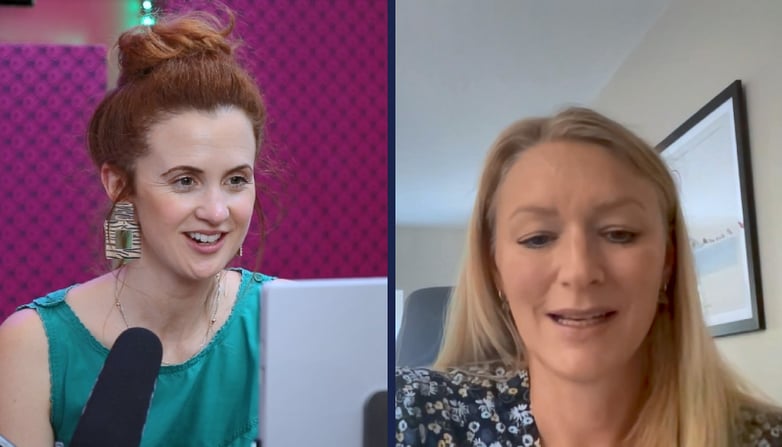
"There can be hesitation there because people don’t want to be treated differently. They don’t want to be seen as asking for anything special."
Melissa Chester
Business Psychologist and Co-founder, 80Twenty
Melissa Chester splits 80Twenty’s work 80/20: most of it with clients, the rest pro bono, supporting neurodivergent young people and charities. Her interest in neurodiversity is personal. She supports someone close to her who is neurodivergent.
Hannah Mullaney asks what employers get wrong and what good looks like. They cover the move from education into work, unbundling roles so spiky profiles get a fair hearing, reasonable adjustments at interview, onboarding and coaching, using Wave and 360 feedback well, and where an organization should start.

In this episode
Melissa draws on a long career heading up people functions and her coaching work with neurodivergent clients, from school leavers to senior leaders who have masked for decades.
It’s a practical listen for recruiters running early careers programs, managers onboarding new starters, and HR leaders who want inclusion built into process rather than promised in a campaign.
- Why 18 to 25 is a critical window, and how a first job below someone’s ability holds them back
- Unbundling roles so candidates with spiky profiles are assessed on the skills that matter
- Why a named point of contact keeps neurodivergent candidates in your process
- Reasonable adjustments at interview, from sharing questions upfront to eye contact
- What managers and mentors can do to make onboarding work
- Neurodivergent employees in their 50s and 60s, and the cost of years of masking
- Using Wave and 360 feedback with neurodivergent people
- Why inclusion by design beats a polished shop window
Hello and welcome to The Deep Dive. I’m Hannah Mullaney, Chief Commercial Officer at Saville Assessment. And each episode I’ll be joined by an industry expert to discuss the hottest topics in assessment today. Let’s dive in.
00:00:21 Hannah (Host)
Hi, Melissa. Thank you for joining us on the podcast today. How are you?
00:00:27 Melissa Chester
I’m good thanks. Hi, Hannah. Good to be with you today.
00:00:30 Hannah (Host)
Good. So, Melissa, I wonder if you could start us off by telling us a little bit about you and also a little bit about the work you do with your business 80twenty.
00:00:43 Melissa Chester
Absolutely, yeah. My name is Melissa Chester. I, am a business psychologist, and I am the co-founder of 80twenty. So along with my co-founder, we work on individual team and organizational development projects, drawing on our coaching, consulting and leadership backgrounds. Interesting that we’re structured in such a way that we split our work and our resources 80/20. So with 80% doing client work and 20% focused on pro-bono work and donations, really supporting neurodivergent individuals and charities, I’m really focused on accessibility and supporting neurodivergent clients.
00:01:24 Melissa Chester
So hence the name 80twenty.
00:01:26 Hannah (Host)
Fantastic, Fantastic. And today neurodiversity is our topic of conversation and what was it that first got you interested in the subject?
00:01:39 Melissa Chester
Well, I support someone close to me who is Neurodivergent, and it’s been a really steep learning curve. There’s lots of things I’ve had to unlearn along the way, and I continue to learn every day and I’ve experienced first hand just the opposite of inclusion and how isolating and challenging it can be. But I’ve also had the privilege to see raw talent and potential develop in for, you know, in front of my eyes.
00:02:08 Melissa Chester
So I think coming from a background as a business psychologist, where you care about good work, you care about people in the workplace and that match being right and people being able to fulfill their potential. There’s a real passion there around wanting to ensure that as many employers as possible I see see that talent and potential as well. You know, having had a fairly long career heading up, people function and being accountable for resourcing and development.
00:02:39 Melissa Chester
With that comes, it comes a lot of responsibility. You’re literally people’s futures are literally in your hands. So I’m invested in developing my knowledge of how to support neurodivergent individuals and combining that with my organizational knowledge to really drive that systemic change by building inclusion into structures and practices. That’s something now that I’m focusing on, but it comes from a personal place.
00:03:06 Hannah (Host)
I think you’ve probably articulated already there what I think the answer is to this next question, but I’m going to ask it anyway, just in case you’ve got something to add. It might seem like a little bit of an odd question given that neurodiversity is such a hot topic, but I think when things become really hot topics, you can sometimes forget why they’re hot.
00:03:34 Hannah (Host)
And so the question I want to ask is why is neurodiversity? And the discussion and the discussion around neurodiversity right now so important to think about and consider?
00:03:49 Melissa Chester
Yeah, great question. So when I started off my journey about learning about neurodiversity, what surprised me the most was some of the rates of unemployment or underemployment, particularly people who were who were autistic. So that that just shocked me, shocked me hugely that the rates of of unemployment there alongside that, just generally knowing that 15 to 20% of the population are neurodiverse.
00:04:21 Melissa Chester
Think as an employer, there’s potentially I’ve got people in my organization who are neurodiverse and neurodivergent and do I know who they are and are they getting the support that they need? And are we are we able to go out and and offer employment and attract neurodivergent individuals? So if you’re not if you’re not focused on neurodiversity as part of your EDI, then you’re missing potentially connecting with up with 15 to 20% of the population, that’s big, they’re big numbers.
00:04:57 Hannah (Host)
Absolutely.
00:04:59 Melissa Chester
So I think if you care about being an inclusive employer and neurodiversity has to be on the agenda. You, and with neurodiversity comes neurodiversity, diverse thinking and what great a asset to to any team having a neurodiverse thinker so thinking about actually potential that that the skills add, the culture add, the potential there for what you can achieve as a team, as an organization and wellbeing as well.
00:05:32 Melissa Chester
I think wellbeing is an important link in more and more employers are investing in the wellbeing of their people. And we know that if you are neurodivergent then the wellbeing is taking care of your wellbeing, ensuring the environment is right for you, that you’re able to access the support that you need for your own wellbeing. So you can, you can be at your best is really critical.
00:05:58 Melissa Chester
So again, if you’re an employer that cares about wellbeing, then you really do need to be caring about your neurodiversity as well and supporting your neurodiverse colleagues.
00:06:08 Hannah (Host)
So the two go hand in hand. That’s a really interesting way of looking at it. I don’t I don’t think I’ve thought about about it in that way before. So, yeah, thank you for sharing that. I know that as part of your pro-bono work, Melissa, you work specifically with neurodivergent individuals between the ages of 18 to 25 as part of that.
00:06:32 Hannah (Host)
Why is it so important to focus there on that age group.
00:06:37 Melissa Chester
So I think you’ve got a lot of transitions going on in that age group between 18 and we said 25 because maybe by 25 you’re sort of settling into your career. Okay, So 18 to 25 just felt like a real key time when young people are going through potentially quite a few transitions. So it might be a transition from education straight to employment, it might be from education onto some training scheme, maybe as part of an apprenticeship or something.
00:07:10 Melissa Chester
So not only are you learning, but you’re also working. So big changes there, or it may well be going from education through to university to continue your education and then on to employment. So a lot of change going on there and there is no continuity of support. So you may be in school and have had certain adjustments in place to support you with your learning.
00:07:40 Melissa Chester
It may be that with with with waiting lists as there are time for diagnosis, type is taking quite a long time. So it could be that you might be leaving school just as you’re getting a diagnosis, then you haven’t had certain support put in place that would have benefited you. So how then do you transition through to perhaps the workplace or to university and know what you need?
00:08:06 Melissa Chester
So how are those needs? How do you get continuity? So you’ve got those needs taken care of and depending on your experience from school, university through can really influence your level of of knowledge of what’s right for you. So by working with that group, we’re able to help them really think about what their needs are, how do they learn at their best, what kind of learning environment might be right for them, bringing in some of the career coaching into that work as well to help them, that age group really identify where are their strengths, where their motivations, where do their passions lie?
00:08:44 Melissa Chester
What might that look like in terms of future study or work? So thinking about that, thinking about the best environment for them to go into and learn and what they might need, what would what would be helpful for them. And really the the intention behind doing all of this is to help reduce those unemployment rates. And the really, really interesting space, I think is around underemployment.
00:09:11 Melissa Chester
So if if your first job is not at a level that’s commensurate with your ability, it’s going to be harder to to get to that role. That is that job that is commensurate with your ability. So if we can do early intervention and support to get that much right, to get that person and and job right, and hopefully we can set them up for success going forward and that they know what they need in terms of support and whilst that learning or in the workplace and that they can kind of advocate for themselves and communicate what their needs are.
00:09:52 Hannah (Host)
And why is it so difficult to almost kind of transition across to something that might be more aligned with your capability and potential? Do you think that’s, it’s, it’s as difficult as it would be for anybody, or do you think Neurodivergent individuals have particular challenges with that?
00:10:20 Melissa Chester
So I think if you if we say transitioning from school to university, so then you’re going through quite a big, big change there. So an environment change and, and, and sometimes for neurodivergent individuals, change is is magnified terms of what they’re facing and preparing for that change. There’s lots of things you can do upfront to help with that preparation for change and thinking about the environment you’re going into and how you’re going to cope and navigate that.
00:10:52 Melissa Chester
But then thinking moving from education to employment. I think there are still a number of barriers there where individuals may not necessarily be able to be given a platform to showcase their strengths and they they may well come with a very different profile to what might be seen as more neurotypical and more broader, broader at that you might then use to to assess talent against.
00:11:22 Melissa Chester
So there are there are barriers to entry for some individuals and we just need to be employers just need to be mindful of those and think about how they how they remove some of those barriers so they can see the raw potential in front of them and see that they’re going to be a great addition to the organization.
00:11:43 Hannah (Host)
And do you think the pandemic has had any specific impact on this group of individuals? And and if so, what does that look like?
00:11:55 Melissa Chester
So I think if you were if you were studying and doing exams during the pandemic, who know for some individuals that might they might be impacted there in terms of their academic results because of the disruption and and how that was all dealt with. I think coming from the pandemic, what we’ve had is vast technology improvements. So we’ve accelerated shift towards virtual working and that has many advantages.
00:12:28 Melissa Chester
I think access to employment has has improved for for for some individuals. But there are there are challenges as well. As we move more towards the virtual hybrid working where you may you may benefit from working virtually and having having your environment just right. So being able to be in control of your environment and where you work and having that set up that works for you to do that focused work.
00:12:58 Melissa Chester
But then, particularly if you’re early on in your career and your learning, there are challenges around the lack of opportunity really for that learning through osmosis for a better phrase, just being able to pick up and learn and ask questions and learning real learning on the job. So how do you make that work more in a in a virtual setting?
00:13:22 Melissa Chester
So I think from from the pandemic, it’s opened up greater opportunities for flexibility. So I think people where they can and they are allowed to have more control over their environment, that’s a major factor, particularly for a number of people who are neurodivergent. And I think that that shift more towards virtual working has lends itself very nicely for a number of people.
00:13:50 Melissa Chester
I think that the risks are around learning to learn, learning informally and building, having that sense of building, that sense of belonging in a team and blending bonding as a team, building relationships, it can be more isolating and people prefer also to have more of a delineation between work and home. So actually having having a routine, having a place of work to go to.
00:14:18 Melissa Chester
Some people really benefit from that. So if if you don’t have control over your environment, if you you aren’t able to access an office on a full time basis, then that could be challenging. I think what I’m doing is highlighting how individual it is really for some people there’s elements of it that marvelous, the virtual working, the flexibility for for some it might, might pose more challenges. I think yeah, yeah it’s the key and it’s a really interesting topic isn’t it as we come out of the pandemic and more and more employers are working out what does hybrid working means to them.
00:15:01 Melissa Chester
The key thing is around flexibility for your neurodivergent workforce, really, really enabling them to to work in an environment where they can really thrive.
00:15:14 Hannah (Host)
And picking up on your point there around development and learning, I think that I’ve heard that theme come up in conversations about the whole population, you know, not just for neurodivergent individuals. And I think it’s something that a lot of organizations are grappling with. Have you seen, Melissa, anyone that you think is doing this really well in an inclusive way?
00:15:42 Melissa Chester
I think what we’re seeing more is a shift to learning in the moment. So I haven’t got any specific examples of particular organizations that are doing particular things. But this move towards more learning in the moment and being able to access whether that be online learning that you can just you can just do by yourself, whether that be perhaps working with a coach or a mentor to to learn peer peer coaching, peer mentoring that is so powerful to help with that learning in the moment, to move people along, to just share what’s going on for guidance and get some input and insight and directions.
00:16:30 Melissa Chester
Really valuable. So I, I think we went, you know, we went online and everything went big and virtual and now there’s this desire to get back to in-person and connection and, and learning together. And I think it’s just having, having that that variety of learning.
00:16:56 Hannah (Host)
Yeah, absolutely. Maybe taking a few steps back and and thinking about recruitment, because you talked a little bit earlier around the challenges of transition and the changes that 18 to 25 year olds are dealing with on on their journey from education into the world of work. So I guess we’re probably thinking about apprenticeship programs, graduate programs, you know, maybe some of the entry level roles.
00:17:29 Hannah (Host)
What should recruiters for those sorts of programs be thinking about and be considering and maybe even doing differently to make sure that process is a neuro inclusive?
00:17:43 Melissa Chester
It’s interesting, isn’t it? You you might go to university and be passionate about perhaps one subject and then you come in to apply for a for a graduate role and you’re expected to demonstrate you’re really bright, a broad range of skills. And I think that can be particularly difficult for neurodivergent candidates who may be may have a very we call a kind of spiky profile.
00:18:10 Melissa Chester
They might be quite specialist thinkers. So from a recruitment perspective, I think what’s what’s really important is, is thinking about what you’re recruiting for and what are the required skills or the experience necessary for the role and being really clear on on, on that so that you can unbundle roles a little bit and think actually what are the core skills we’re looking for and what could this individual do?
00:18:38 Melissa Chester
Do, do in our organization? So I think one of the barriers can be that a number of employers will have broad competency frameworks, for instance, and they want to see evidence across that whole broad, broad framework, the challenges, the other opportunities to be flexible around that and look at the matching between what you might see in somebody’s profile versus the opportunity within an organization, within a role that could be it could be quite, quite niche.
00:19:10 Melissa Chester
So rather than looking for the sort of broad range across the board, recognizing that you might have a slightly different profile in front of you, and how might that can that still work? And I think in some cases it can work brilliantly if you’re able to to unbundle some of these roles and just really niche down on what what those core skills.
00:19:34 Melissa Chester
So I think I think that’s one element.
00:19:37 Hannah (Host)
That age old avoiding that age old temptation of wanting to throw the kitchen sink at a job description.
00:19:44 Melissa Chester
Yes, yes. And recycling old job descriptions and putting in everything that you think needs to be put in there when actually it may not. And by doing that you may well be putting off a number of of potential candidates. That would be a great asset to your organization. So really thinking about being careful about what you’re going out and looking for, what you’re recruiting for and then it’s about starting with what’s your recruitment strategy.
00:20:09 Melissa Chester
So starting at Attraction side, how are you messaging to this talent pool? Are you showing that you’re neurodiverse friendly employer and that you welcome neurodiverse talent? Why might Neurodivergent individual want to join you? What do you what are you saying to them? How well do they think you understand their needs? How good are you at providing that personalized support?
00:20:37 Melissa Chester
So getting that comfort over in the messaging over to that talent pool is really, really important. And then when you go into the recruitment process and you have your process outlined, it’s about making sure that there are no barriers to through, through the application stages. And it can be really helpful to have a single point of contact for your neurodivergent individual encourage disclosure, application stage, have a single point of contact.
00:21:07 Hannah (Host)
And Melissa on that single point of contact. Is that a named point of contact rather than a generic email address?
00:21:14 Melissa Chester
Yes, yes. I think a named contact that you might be able to discuss anything with. Could it be that the application, if there’s an application form, is there a different way is if if that is presenting any challenges, what might be alternatives? Do they maybe have questions about well, how what’s, what’s the next stage, what does that look like?
00:21:35 Melissa Chester
So they can if they if they do disclose, then they’ve got somebody who they can talk to and work with on what those reasonable adjustments might be to the recruitment process. And the key thing there is because they are all so different, that what the needs of one person are so different to another. So I think having that single point of contact is is a great way of not losing talent as they go through the process.
00:22:01 Melissa Chester
So they might have thought, right, you look like a great organization to join and now I’m I’m joining I’ve taken that next step. But I’ve got so far in the process and I can’t I can’t get any further because of the barriers there and the barriers that you may not be aware of. So having having something a bit more personalized, I know that that can be that can be difficult to put in place when you’re doing large scale recruitment programs that I think hugely, hugely beneficial in ensuring that you’re not losing any talent along the way.
00:22:32 Hannah (Host)
And I guess if you’re really if you’re really serious as an organization about doing this properly, you know, not just from a recruitment perspective, but just organization wide, actually, it sets a really good example and it says to candidates, we we take that we take this seriously. This matters to us. Your experience here is an example of what your experience would be like in the organization.
00:22:56 Hannah (Host)
So, yeah, as you say, it’s almost the attraction piece is equally as important, as well as thinking about the barriers.
00:23:04 Melissa Chester
Absolutely, it really is. And then ensuring that carries through when you when you get inside the organization, that it’s not just the front that looks really good, that actually when you’re really supported. Yeah. Other other areas during the recruitment process I think looking at your recruitment process and ensuring that it’s designed to draw out that potential and not based on kind of a lack of evidence of those skills that aren’t essential a bit like what we were talking about before and assessing that ability rather than maybe relying on the academics, particularly if they have been affected for whatever reason.
00:23:41 Melissa Chester
So making sure that you can you can actually, accurately, measure potential and much, much potential. So there’s you’ve got a candidates have got an opportunity to shine and show what that what they’re capable of. And then again, reasonable adjustments the interview stage. So being being really clear on the process and reasonable adjustments interview stage, they could they might be a variety of things.
00:24:09 Melissa Chester
It might be about sharing interview questions upfront and I, and and I still people find that one really difficult to get my head around like why would you do that? But you want to give everybody an opportunity to demonstrate what they’re capable of. For some individuals that can be really helpful, or it might be having the questions written down at the same time as you might be saying them.
00:24:31 Melissa Chester
So they’ve got a reference point to look at, could be about making some environmental changes to where the interview is. And it could be the candidate saying, look, I’m not eye contact for me, it’s overstimulating, for instance. So I’m it’s not that I don’t want to make eye contact. It’s just that I can’t make maintain eye contact and process what you’ve asked me for me to come up with a with a great response.
00:24:58 Melissa Chester
So yeah, that, that in itself could be some adjustment. So the the interviewer is just see actually yes, that’s perfectly acceptable and we’re not going to mark you down on the fact that you didn’t make eye contact. So that’s just a few a few things there from in terms of recruitment process, that are probably worth recruiters thinking about.
00:25:22 Hannah (Host)
Really useful and then moving on through the the candidate journey well turning that candidate into an employee. What do managers need to think about when onboarding and then developing neurodivergent individuals?
00:25:41 Melissa Chester
So if if the person joining you is disclosed there there neurodivergent, then you’ve you’ve got something to work with there in terms of how best do we do we support you and the managers that that do this really well almost accepting of the fact that they don’t know the answers and there may not be a perfect solution and they’re happy to and support this this kind of they go on a journey with their employee and they’re happy to explore and be curious about what might work and think about what reasonable adjustments they might want to put in place and will be very much led by the individual.
00:26:20 Melissa Chester
So I think that accepting that you can’t get these things right straightaway, you can’t, you know, an individual’s joining a new organization, they’ve got to get a sense of the role, a sense of the cultural norms, how they navigate that, and then think about what’s working for them and what could work better and how that might work better.
00:26:41 Melissa Chester
I think managers have such an important role in nurturing team relationships. So bringing individuals in, helping build relationships, helping to build that psychological safety offering, you know, having a mentor or a coach just just to support with settling in and trying out some of these strategies that are going to be helpful is a great addition during onboarding.
00:27:05 Hannah (Host)
And should that mentor or coach have a specialist understanding of neurodiversity or is it less about that and more or more about something else?
00:27:19 Melissa Chester
I think it definitely helps.
00:27:22 Hannah (Host)
Mmm
00:27:22 Melissa Chester
It really does help if you do have a good understanding of neurodiversity and how how that shows up in individuals and how individual it is, in fact. So being able to explore that as a coach, knowing how to explore that as a coach and having some ideas and strategies that might be helpful that they can try. So I think that’s where that sort of mentor role can come work quite well that you’re able to share well, actually we’ve supported it because sometimes individuals are not quite sure what’s going to be helpful for them, and it’s the same with the recruitment process as well, that having that single point of contact or having a mentor in your organization who can say, Well, this is what’s helped previous candidates or other other employees, if you thought about this, it’s that just giving them some some ideas and normalizing it because it can be real particularly when it comes to disclosure. There can be hesitation there because people don’t want to be treated differently. They don’t want to be seen as asking for anything special.
00:28:30 Melissa Chester
So sharing with them the actually normalizing it and sharing that this is what other people have asked for. This is what’s worked for other people. It can just give them that confidence to say, okay, well, yeah, I’ll give that a try that might work, that might work well for me, it normalizes it. So I think that’s really important.
00:28:51 Melissa Chester
Going back to the to the manager role, I think regular check ins is so, so important in the early days of onboarding somebody. So regular catch ups and reviews, particularly reviews around different strategies and thinking about being able to give really good feedback and ensure it’s regular, it’s really clear you’ve been very clear on expectations, I think exploring preferences.
00:29:17 Melissa Chester
So what are your preferred ways of working? What would work for you? If you’re an employer that is particularly flexible about where and when you work? Just okay what are your preferences then? How do we how do we shape this role and the environment around you? So you can you can really be at your best? So I think from a manager’s perspective, it’s it’s the keeping in contact, being really clear on expectations, feedback, being curious, exploring strategies with them, ensuring that they can signpost them to any other support within the organization that might be able to help them with some of those strategies.
00:29:54 Melissa Chester
And, and just accepting that that it’s you know, it’s an ongoing process and will require revisiting.
00:30:04 Hannah (Host)
Yes. It’s not one item on a checklist that once you’ve ticked it off you don’t have to think about it again. Before we maybe move on to some of our older generations. Maybe my my last question, thinking about this sort of 18 to 25 year old age group, I think there’ll be a lot of parents who are either already on this journey or who who know they will be going on this journey at some point with their offspring.
00:30:33 Hannah (Host)
What should they be doing or indeed not doing to to support?
00:30:39 Melissa Chester
So I think for for parents, their children will be going through these transitions and it’s it’s supporting them through that. So I think helping them doing some of that thinking, what is it that they’re passionate about? What is they want to do? Helping them explore options, helping them share what their concerns might be going and you know with change being change, change is difficult.
00:31:09 Melissa Chester
And if you’re leaving home for the first time and moving somewhere else, and where might that place be? Can you can you go and visit various places, get a sense of what it might be like? I think I don’t think it’s really clear in terms of what support is available. So being able to find out and look at as if, for instance, if you’re if you’re applying to different universities, not just looking at the courses or the reputation of the university overall and the match, but for what you want to do, but also thinking about what kind of support is available for for neurodivergent students and what what might that look like? And what’s the learning environment like? So helping, helping ensure that the learning environment is fit for for how how your you know, your son, your daughter needs to learn at their best thinking about other environmental elements. So study spaces, you know, what’s the living accommodation like, all these different things that was the technology like do you go and sit in one big lecture hall?
00:32:18 Melissa Chester
And that’s the only option to, to, to learn. I’m thinking back to my days, you know, you turn up to your lecture and you take notes and it’s a big lecture hall that can be hugely distracting you know, can you get do you get slides up from the small learning groups in thinking really thinking about how how you need to learn at your best.
00:32:35 Melissa Chester
I think as a parent may be asking some of those questions that nobody else might be asking, because I just don’t I’m I’m not sure what that what that support looks like in that transition from school to through to university and then through to the workplace. You’ve really got to arm yourself with as much self-knowledge as possible and take it with you because there isn’t a there isn’t a form that comes with you that says, Melissa needs this, this and this and needs change as we as we move forward and become and start getting used to different environments and things like that, we have new challenges and different changes…
00:33:13 Hannah (Host)
A constant evolution.
00:33:15 Melissa Chester
Yeah, Yeah. And I think for parents it’s also exploring different options. So okay, University is it University? Is it, is it into employment? Is it is apprenticeship and helping with the weighing up the pros and cons of each of those options? Yeah.
00:33:34 Hannah (Host)
Absolutely. And now maybe thinking about the other end of of the workforce from an age perspective. So individuals in their in their fifties and sixties and the maybe neurodivergent, do they face any different or additional challenges compared to what we’ve talked about already?
00:33:58 Melissa Chester
Well, they will have grown up a very different time when the awareness wasn’t there. So that I think one of the one of the interesting areas is, well, if the awareness wasn’t there, have they they lived a large proportion of their life undiagnosed. And if are they just at this point getting a diagnosis? So you imagine that that could have meant years and years of masking.
00:34:31 Melissa Chester
Masking is kind of trying to show up as as neurotypical as possible. And that’s about masking, which can be exhausting and can have an impact on your, on your wellbeing. So what’s that meant? So that that process of they might be going through their own time of, of getting a diagnosis and coming to terms with that.
00:34:54 Melissa Chester
And I think that age group, there are other things going on, you know, menopause at real life changes that coupled with being neurodiverse that they can it can be it can be even more difficult time to navigate for individuals being aware of that. And you may be maybe some are in a leadership role and that you know, that masking is been really, really important for them to get to the classic.
00:35:22 Melissa Chester
What does it mean to be a leader? If you’re in that age group? It’s probably looked very different 20, 30 years ago to what it looks like today. So there could be real a sense of vulnerability around disclosing your own neurodiversity but you could also be a great ally. So yeah, other other things to think about there that are really linked to your identity and your professional identity as well.
00:35:51 Melissa Chester
And I also think that we focused and we’ve talked about recruitment and, and that outward how you want to message to your future talent but remembering that you know if if you are in this age group and you’re in an organization that hasn’t historically done much in this area and is now talking about it, I think you’re going to you know, the people in your organization are going to hear different things coming out.
00:36:24 Melissa Chester
They’re going to they’re going to see you. Actually, my my organization is embracing neurodiversity and that means it’s safe now. So it’s safe to to share. And or I might want ask some support. So just thinking that that’s that’s a real opportunity for for employers to as they’re talking more about neurodiversity, knowing that they’ve probably got 15 to 20% perhaps of their own employee group here are neurodivergent and it might encourage them to to disclose.
00:36:58 Hannah (Host)
Absolutely.
00:36:59 Melissa Chester
And get the support that they need. So yeah, there’s different challenges there.
00:37:03 Hannah (Host)
Yes. Really interesting. And Melissa, I know you get involved in a lot of neurodiversity coaching. Talk to me a little bit about how that works. What is it exactly?
00:37:16 Melissa Chester
It usually starts with that piece around understanding yourself in terms of your neurodiverse profile. So and I mentioned this before, this sort of spiky profile. So you might have extremely high ability in in some areas and their ability in others. So just having that opportunity to to understand and learn about your own neurodiverse profile is is a good starting point.
00:37:44 Melissa Chester
And and I think with those profiles they they may well fluctuate according to the amount of stress you might be under or any any sensory that the you know the environment and any sensory inputs there that you are experiencing and so that can positively or negatively influence performance. So it’s also drawing attention to what they may be so you can manage your environment more.
00:38:11 Melissa Chester
And and that is particularly challenging because you are expected to perform of a particular standard the whole time. So this is how we perform and performance is consistent. So being able to work with clients to help them identify and address those issues that might be affecting their performance, holding them back, thinking about what adjustments might be necessary, that’s where the coaching can really help.
00:38:35 Melissa Chester
And we we work with clients to really help them build their own collection of strategies so they can work at their best in the workplace. And that might be things that they’re going to try themselves to to help them with their day to day work. But it might be things that they need that their employer to think about as well and put in place.
00:38:55 Melissa Chester
So it helps. It helps build self understanding offers them a safe, understanding and non-judgmental space, for them to explore and try out different strategies. And I’m thinking about what you asked before. You know, just a coach need to have specialist knowledge and an associate for genius within. And that’s been an amazing, rich training ground for learning about neurodiversity and working with neurodivergent clients.
00:39:25 Melissa Chester
I learned so much. I think that has been massively helpful in my coaching practice, particularly to enable me to support this population. So yeah, helping with strategies and one aspect can also be around communication challenges and expressing their needs. Being clear what their needs are, and then getting comfortable expressing those and building confidence so they can really advocate for themselves.
00:39:51 Melissa Chester
Ultimately, the organization benefits massively because they’re they’re coming forward and having that open dialog about what their needs are and then together they can try out and discuss what these adjustments and often these adjustments are not and not not major things and probably for most people in fact.
00:40:10 Hannah (Host)
And our tools so Wave specifically get used a lot in executive coaching. Is there a place for those tools in neurodiversity coaching? Are they still helpful there or do you look to other things to support?
00:40:29 Melissa Chester
I think it depends what what the goal of the coaching is. So if you are doing executive coaching and your client is neurodivergent and maybe your or your running a leadership program and your using psychometrics and you’ve within your your, your cohort, you’ve got neurodivergent individuals, then I think anything that helps towards developing that deeper understanding of yourself and builds self-awareness and, and also really focuses on creating the best working environment for you that I think they can still be really useful and a focus on that that environment fit is so important, how we how we show up in our environment might be quite different to who we are underlying.
00:41:17 Melissa Chester
So that that masking piece is an interesting one. To what degree you might be, you might have to, you might be adjusting so that the environment piece is really interesting and I think anything that can really help identify your strengths is is, is a great benefit to your own personal development and and leadership development as well.
00:41:41 Hannah (Host)
That’s really interesting.
00:41:43 Melissa Chester
Yeah, so I think from looking at use of tools, just being clear on what’s what’s the what’s the intention behind using them, what what, what is it supporting? Is it supporting a development discussion or is it you know what, what’s the purpose behind it? So being really clear on intent. And then when individuals are engaging with these tools, just thinking about any any impact from from an executive functioning point of view.
00:42:12 Melissa Chester
So questions how they’re phrased is there is there anything that could be could be misinterpreted, making sure that the questions are really clear and being aware of the risk of of overrunning over analysis of of the tool itself and perhaps, you know to start looking at the relationship between different questions. So sometimes people can get and you’ll know this from from from using using way when you do feedback, sometimes your clients can get quite involved in the design and the questions and that takes away from the value of having the conversation and and is self-report.
00:42:55 Melissa Chester
So just looking at what comes out of that self-reports, so focusing on, on the output and some of the learning insights that can be gained there and that comes down to having a good a good qualified coach there to talk you through the feedback and help you get that insight. So I think tools use well designed where you’re really clear on the intention behind them, what they’re supporting and in the right hands and debriefed in the right way can be really valuable and just aiding, self understanding and helping with development.
00:43:25 Hannah (Host)
Absolutely. We’re seeing a bit of a rise in the use of 360 assessments for development. I think maybe because of possibly because of a trend for organizations to, I guess, aspire to this kind of feedback, culture, coaching culture, those are two phrases I hear quite a lot at the moment. Are there any is there anything specific that we need to think about when using 360 assessments with neurodivergent individuals?
00:44:01 Melissa Chester
I think it comes back to some of the same things around the intention behind using them. So what is what is the intention? Is it for development purposes? Is there a performance review element being added? Just to be really clear on what’s being measured and and why fairness I think is really important. So are you rolling out a 360 program for everyone to engage in or in the wrong hands.
00:44:30 Melissa Chester
Sometimes it can be used as an indirect way of providing feedback to someone because you’re uncomfortable providing that feedback face to face. So I think being making sure it’s being done for the right purposes and these these tools are great, but I think you have to have psychological safety first so that you’ve got and that’s that’s core to to developing any kind of coaching culture and feedback culture that you’ve got that psychological safety invested and, and that you’ve got a team that are, are aware and have understanding of neurodiversity as well, I think probably where it could be linked to performance, making sure there’s a revision of any core competencies. So you’re you’re providing feedback on on the role on aspects of the role and the job and the skills that are required to deliver and perform in that role or potential for the future so being really clear on what it is that you’re measuring.
00:45:38 Melissa Chester
Yeah. So I think and again, the feedback mechanism, so there are some tools out there that you get a report and you have to make sense of that yourself as the individual. How, how helpful is that, to make sense of the feedback, what’s the feedback on? So I think having robust tools where the feedback is around your actual role and the performance in the role and what’s going to help you, and having somebody who’s trained in that tool to give you that feedback to help you learn and I think is really advantageous if you’ve got that self-report there as well.
00:46:13 Melissa Chester
So you can start to identify any blind spots.
00:46:17 Hannah (Host)
Absolutely, yes. I’m a big advocate of using self-report along alongside 360. Panning out a little bit now, Melissa, and thinking about being neuro inclusive more generally. What have you seen some organizations doing really well?
00:46:38 Melissa Chester
I think they have really embraced inclusion by design in their processes, procedures, their messaging. And what I see the organizations that do what stands out for me, the quality of the managers, you see the managers to be open, to engage, to have these open conversations, open dialog, learn, sit alongside the neurodivergent employee and support them in in the way that they need supporting.
00:47:17 Melissa Chester
That, that’s really does stand out for me. And I, you know, when I work with with clients and their manager together, that that for me is is a real insight into into the quality of of management and leadership there and is often a reflection of the investment that the organization is made.
00:47:38 Hannah (Host)
And what are some of the common pitfalls you see organizations fall into.
00:47:46 Melissa Chester
Yeah I guess it’s the opposite of that. So it’s it’s failing to make those systemic changes internally. So and focusing too much on the external messaging and thinking about recruitment. So it becomes a bit of the diversity tick box exercise rather than them looking at their systems and processes, sort of auditing themselves and redesigning. So they are really inclusive by design.
00:48:10 Melissa Chester
And the danger there is that you then overpromise and you fail people when they come into the organization and they find that they’re not supported. And that’s something we really have to work hard to prevent because of the the impact on confidence, there a lot of these individuals have faced a number of challenges, a number of barriers.
00:48:31 Melissa Chester
So we have to do everything we can to support them. So it would be better for an organization to hold the hands up and say, we’re not quite ready yet. We’re going on this journey and we’re going to do it properly rather than quickly push something out and try and get their shop window looking good when actually behind the scenes.
00:48:49 Melissa Chester
It’s not there yet.
00:48:51 Hannah (Host)
For those organizations who are at the beginning of that journey. It feels like there there could be a lot to do. Where do they start? What’s the what’s the first thing that they should be doing?
00:49:06 Melissa Chester
I think looking at thinking about inclusivity as as more of a inclusive mindset, inclusive practices that do look beyond diversity. So do they have a shared understanding and a shared desire around inclusivity and what that means and I think it starts with that audit looking inside and internally and not overpromising. So and taking your time with it.
00:49:35 Melissa Chester
So recognizing, I think really starting with recognizing that you’re going to have a proportion of your own existing workforce who are neurodivergent. So actually perhaps starting there, so how, how do you support them how are you supporting them? Do you know who they are and how might you encourage disclosure and open up some dialogue? Do you need to start upskilling your managers on neurodiversity and how to navigate these conversations?
00:50:02 Melissa Chester
So I think that’s a really a starting point is taking those steps to make your current neurodivergent employees feel valued, feeling part of the team and supportive so they can fully contribute towards the, you know, the organization, so start inside internally first.
00:50:21 Hannah (Host)
You mentioned just before Melissa about it actually being better if you’re not there yet to put your hands up and say, you know, we’re we’re at the beginning of this journey. I feel that that might feel like quite a scary thing for a lot of organizations to do when the the mantra for everyone seems to be, you know, let’s focus on neurodiversity.
00:50:45 Hannah (Host)
Let’s, you know, we need to tell everybody we’re neuro inclusive. And I think that’s quite an interesting way to think about because the danger I guess the irony is that by doing that, you’re actually making yourself potentially less neuro inclusive because you’re saying, come on in, everybody, we’re going to be great at supporting you, but then you’re essentially setting people up to fail.
00:51:08 Hannah (Host)
That’s, I think, really interesting takeaway.
00:51:10 Melissa Chester
Is it’s a it’s a real it’s a real risk. And I’m go back to this inclusion by design because if you if you get it right by your design, then whether it’s neurodiversity, whether it’s physical disability, whether it you’re designing for that in your processes once you may keep revisiting them, but you talking about inclusivity and it means that those those processes and procedures, the policies, everything, lend themselves so favorably to supporting a really diverse workforce.
00:51:44 Melissa Chester
Whatever make up that looks like a neurodiversity is, is is an important one. But there’s there’s there’s no point to that which is jumping on the latest the latest hot topic and saying, yes, we’re doing something on this otherwise you would just be accused of whether it be greenwashing or purpose washing, whatever else. It has to be authentic.
00:52:03 Hannah (Host)
Absolutely.
00:52:04 Melissa Chester
And and it’s there’s learning there and acceptance of of being, yeah. Accepting that you don’t know the answers and that your learning and with that comes a bit of vulnerability and I think that’s I think that’s okay I think that’s actually will build more trust and authenticity and that’s what we’re actually asking from a number of a number of, of of organizations and of employees to to be to be authentic.
00:52:34 Melissa Chester
So as employers, we need to be authentic as well.
00:52:37 Hannah (Host)
So what about organizations that are more a little bit more mature, maybe further on in that journey? What are the things that they now should be thinking about in order to really push themselves even further forward?
00:52:50 Melissa Chester
I think it’s about showing what they’re doing with other organizations, sharing good practice, collaborating for the greater good, you said before, actually for some organizations that are early on in this journey, it can feel quite daunting. Well, if you’ve got those that are further on then they they can share what they’ve gone through and that can help accelerate your progress and your work.
00:53:13 Melissa Chester
So I would say, you know, we’re all about using business as a force for good and a force for change. And and sometimes we can we can put down the competitive ness to put that to one side and see that on certain things, it’s really worthwhile collaborating and sharing. For the for the sake of supporting a supporting community out there.
00:53:36 Melissa Chester
So I think that’s that’s something that that those organizations can do. I mean, I professionally have got a growing interest in teams and done further studying in team coaching. So I think for me for those organizations that kind of got a lot of this cracked it’s it’s about focusing away just from the individual to thinking about the team dynamics and moving more towards team outcomes.
00:54:05 Melissa Chester
How do you build psychological safety in a team? How do you encourage learning and sharing about individual differences? How do you leverage those different strengths across team? How do you ensure a team can work really effectively together? How are they going to interact? How do you help with rapport building, understanding, respecting different communication differences? So I think investment in teams and how we come together to to work as a team and and and understand and celebrate and work with individual differences across the board is is a real area that I think organizations can be can be focusing on on more so moving away from the individual and really thinking about the team.
00:54:52 Hannah (Host)
Mhmm Really interesting stuff. I look forward to following what you do there, and I hope you practice what you preach Melissa, in terms of sharing that with us all.
00:55:03 Melissa Chester
Absolutely. Will do.
00:55:04 Hannah (Host)
I think that’s a great place for us to finish and say a big thank you to for sharing your experience, your thoughts, your ideas in this space. I’ve really enjoyed our conversation. And thank you very much, Melissa, for joining us.
00:55:22 Melissa Chester
You too. Thank you very much for inviting me.
00:55:32 Hannah (Host)
We hope you’ve enjoyed today’s episode of The Deep Dive. If you have, please remember to like and subscribe to stay tuned for all our latest content. If you want more information on any of the topics you’ve heard today, check out the show notes for case studies, resources and articles. I’ve been Hannah Mullaney. See you next time on The Deep Dive.
Resources
If you’d like to know more about fair, inclusive assessment, start with these resources: