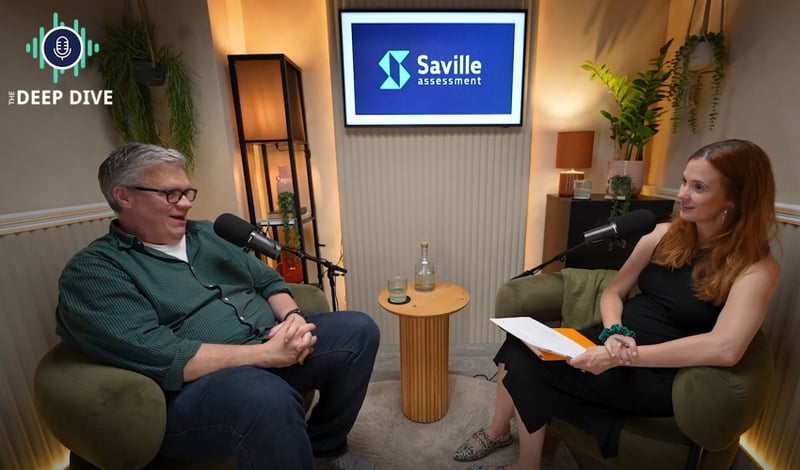
"Time to hire is probably the most widely spoken about KPI, and I absolutely flat out refuse to have that be a measure of performance."
Andrew Meechan
Head of Talent Acquisition, Third Space
When Andrew Meechan joined Third Space, recruitment sat with line managers and there was no real process. Six years on, his team partners with the business on every hire.
Hannah Mullaney asks what changed and what he learned along the way. They cover why he refuses to measure his team on time to hire, how a better brief prevents the wrong hire, why candidates deserve to know every stage in advance, and how to challenge a hiring manager and keep them on side.

In this episode
Andrew draws on six years of building Third Space’s talent acquisition function, moving recruitment from line managers to a team that partners with the business on every hire.
It’s a practical listen for talent acquisition leaders taking a team from order taker to business partner, and for anyone who has to defend a careful process to a busy business.
- Why Andrew refuses to measure his team on time to hire
- How a bar raiser keeps hiring standards rising over time
- Briefing hiring managers on success at three and 12 months
- Why candidates deserve the same service as a prospective member
- Telling candidates every stage, and why each assessment is there
- Why great recruiters are comfortable telling hiring managers no
- Andrew’s three tips for leading a team from order taker to partner
Hello and welcome to The Deep Dive. I’m Hannah Mullaney, Client Solutions Director at Saville Assessment, and each episode I’ll be joined by an industry expert to discuss the hottest topics in assessment today. Let’s dive in.
00:00:21 Hannah (Host)
Hello and welcome to today’s episode of The Deep Dive. We’re talking about challenges in recruitment, and I am delighted to be joined by Andrew Meechan, Head of Talent Acquisition at Third Space. Welcome, Andrew.
00:00:33 Andrew Meechan
Thank you for having me.
00:00:34 Hannah (Host)
Andrew, we’ve been working together for a while now and I guess been on a bit of a journey. I wonder if you could set the scene by painting a bit of a picture of what that’s looked like for us.
00:00:46 Andrew Meechan
Yep. So I’ve been at Third Space now for coming up to six years. I was the second person in the HR team. The business was growing very quickly, we grew by acquisition, and I think our CEO and MD realized that if we were going to continue to grow, we really needed to centralize recruitment. Before I joined, it was a totally decentralized function. Responsibility sat with the line manager and there was no real process or way of doing things. We’ve definitely been on a journey. Fast forward to today, we’re now a people team of 14. We have a people director who sits within the executive team, and I think we’re front and center of everything that happens in the business. We’re a real people-centric organization. My role within talent acquisition has really been to bring it forward into the 21st century, which has been challenging but fun, and by no means finished. The work that we’ve been doing with Saville has really matured how we assess people, how we structure our processes and how we make sure we’re getting the best out of our hiring managers and our candidates.
00:02:02 Hannah (Host)
You talked there about the start of the journey, with recruitment devolved to line managers. What were some of the challenges with that? What was the impact?
00:02:18 Andrew Meechan
I think more broadly speaking, in the world of recruitment, everybody thinks that they know how to do your job better.
00:02:26 Hannah (Host)
Yes, definitely.
00:02:28 Andrew Meechan
I won’t just talk about my individual experience. I think it’s in every corner of every business. The biggest challenge in recruitment is that we are experts at what we do, and our job is to make sure that best practice exists everywhere.
00:02:45 Hannah (Host)
So fast forwarding to today, what does that look like? How has the landscape changed, where a recruiter is really adding value?
00:02:54 Andrew Meechan
Again, talking about my individual experience, I’m really proud of the journey that my team and the business have been on. Six years later, I’ve got a team of three talent acquisition partners who really do partner with all of their hiring managers to make sure that we are running the best recruitment processes that we possibly can. That’s still with challenge, I should say, but it’s very much a partnership approach. I think our leaders really do value having a dedicated function that’s there to make sure we’re acquiring great talent and doing something with them when they get there.
00:03:40 Hannah (Host)
And what are the challenges?
00:03:41 Andrew Meechan
In the world of recruitment? I think post-COVID, and I hate saying post-COVID...
00:03:47 Hannah (Host)
I know.
00:03:49 Andrew Meechan
It is a very, very different place. The market right now, I think we are in a candidate-heavy market, and some of our challenges are really about being clearer on what good looks like, not accepting mediocre, and really raising the bar in terms of the profile of the people that we look for.
00:04:13 Hannah (Host)
What does that look like? Raising the bar, how do you do that?
00:04:17 Andrew Meechan
I often talk about Amazon as an organization and the way that they recruit. They have a dedicated bar raiser in their recruitment processes, and I really, really like that. That’s an individual who sits within the business but is not connected to the role that’s being recruited, and ultimately they have the final say on whether or not that individual gets hired. The questions they’re asking themselves are: is this person better than the previous person in the role, or is this person better than the people we currently have in a similar role? So it’s constantly benchmarking against what you currently have in the organization, and not being willing to accept somebody just because you need somebody in that role. In our organization, our MD always says to me, “I don’t care how long it takes you to hire somebody. What’s most important is that we get the right person.”
00:05:13 Hannah (Host)
How refreshing. I feel like that’s rare.
00:05:17 Andrew Meechan
I think it’s rare. Absolutely. When you look at talent acquisition KPIs and how people measure their success, time to hire is probably the most widely spoken about KPI, and I absolutely flat out refuse to have that be a measure of performance in my team or for our business. We have had to think outside the box about what KPIs we do have for what my team are delivering. But if I was to set a target for a reduction in time to hire, what we’re doing there is encouraging the business to hire somebody just because they need to fill the role as quickly as possible.
00:05:59 Hannah (Host)
Yes, and it becomes a bums-on-seats exercise, not a let’s-get-the-right-person-and-the-best-person exercise.
00:06:06 Andrew Meechan
Hire somebody who’s wrong and they leave within a relatively short space of time, and we’re back to square one. But time to hire always looks really short, because we’re always hiring people really quickly. So what we actually do is pull our processes apart. How can we be really clear with people about what the role is and what it isn’t, make sure we’re hiring people who are motivated to deliver what we need, and set them up for success from day one? As soon as time to hire becomes the challenge, you cut corners and skip steps. You hire somebody because you need to hire them as quickly as possible, and it just becomes that revolving door of “we need another, we need another, we need another”, because we’re never going to get it right.
00:06:51 Hannah (Host)
And do you get pushback from the business on not having that as a KPI, or do they understand?
00:06:58 Andrew Meechan
Less and less. We have to be really clear with people about why our processes exist and what the value is for them and for us. We are an operational business, a members-first organization, and we need people to be in role in order for our members to have the service that they quite rightly expect. So I always have to be mindful of how that impacts the operation. That certainly doesn’t mean my team are sitting there thinking, “Well, I can take as long as I want.” There have to be regular updates and commitments: within this time frame we will have delivered X, Y and Z. So I think the business understand what we do and why we do it. They appreciate that it’s about getting the right person, and they’re very aware of the impact of hiring the wrong person. But the operation comes first, so you still do need to act quickly.
00:07:59 Hannah (Host)
What does some of that look like? Have you done education with your stakeholders around the impact of making the wrong hire, or is it something they inherently understand?
00:08:13 Andrew Meechan
I think as a business we’re really data-driven. A lot of people are surprised when they walk into an organization like ours at how much we talk in factual information. We’re very open, and very candid with leaders in the organization, and everybody has a story that they need to tell. So we will talk to them about attrition, about success stories, and also about where we have our challenges, in particular clubs or departments. Why is that? What can we do about it? Then talent acquisition will step in and say our responsibility is to design a process where we are giving people the reality of the role, and as many opportunities to opt out as possible, so that by the time we get to offer, we know they are fully aware of what the role is, and they are likely to stay in that role for longer.
00:09:15 Hannah (Host)
That makes sense. Maybe stepping back a little from Third Space, while still drawing on that experience, I’m asking this question more broadly. Thinking about talent acquisition teams, and successful talent acquisition teams, what does good look like?
00:09:39 Andrew Meechan
Good or great?
00:09:40 Hannah (Host)
Great. Challenge accepted. What does great look like?
00:09:47 Andrew Meechan
I think recruitment as an industry, if that’s the word we can use, has a very negative perception. Go on LinkedIn now and have a look at your news feed, and somebody will be talking about a really bad recruitment experience they’ve had, or about being ignored.
00:10:07 Hannah (Host)
Why do you think that is? Why the negative perception? Is it something that’s always been there, or has it got worse?
00:10:14 Andrew Meechan
I try to have a balanced view on it. When I read about a disgruntled candidate’s experience, I have to try to put myself in their shoes. People quite rightly expect to be communicated with and to be informed. They expect to get feedback, at the point they were told they would get it, and when they don’t get it, it’s very easy for people to go onto a platform, scream about it, and have a million people like it and back it up. That being said, if you put yourself in a recruiter’s shoes, recruiters are really busy and it never stops. My team have various projects, really great projects, that they get to work on throughout any calendar year, but recruitment always comes first, and so things do slip past them. We really have to prioritize where we’re going to focus our attention. So I think the negative perception exists because candidates don’t get what they deserve. But I also think everybody needs to put some perspective on it. We don’t always get it right. We do make mistakes. We are humans, not robots. So, going back to your question about what great looks like, I think externally, candidate experience is fundamentally the number one most important thing. I’m really fortunate that I work for a private members’ organization, and everything we do is geared around our members’ experience. That translates really nicely when we talk about candidates, because they should receive the same level of service that a prospective member receives. So externally, great talent acquisition is really loving your candidates and making sure that you’re doing the best possible job for them. And the best possible job will often mean telling people information they don’t want to hear. Everybody thinks they’re the most suitable person for the job. If you are confident enough to tell them that they’re not, and why, as early in the process as possible, that might not land very well, but it’s the best thing to do. It’s a bit like dating.
00:12:52 Hannah (Host)
Yeah.
00:12:54 Andrew Meechan
No one ever tells you that they’re not interested. They just ghost you.
00:12:57 Hannah (Host)
Just ghost, yes.
00:13:00 Andrew Meechan
So externally, yes. But we also have a duty of care to people more broadly, who might be going through a difficult time, or might be nervous. Our job is to really make them feel cared for, and I genuinely believe they are. Give them the reality of what they’re about to go through, make sure they’re fully informed, and give them a forum to ask questions and a point of contact. Internally, I think great talent acquisition comes down to the role of a business partner. When you’re partnering with somebody, it’s really knowing the balance between when to support somebody and when to challenge them. I think a great recruiter or a great business partner is very comfortable saying no, as opposed to yes. The easy thing for us to do is to say yes. But saying to somebody, “No, I’m not going to do that for you, because that’s the easy way out. This is what I need you to do, and I’m going to coach you and encourage you to do it yourself,” is a far better return on investment than just saying yes and ticking a box.
00:14:21 Hannah (Host)
And do you think recruiters are generally yes people?
00:14:25 Andrew Meechan
Yeah, I think by nature we are. It is a demanding role and we are people pleasers. If you think about your hiring manager, we absolutely want to please them and find them the best candidate. And if you think about the candidates in the process, we absolutely want to please them too. We are absolutely frightened to death of a negative review every day.
00:14:50 Hannah (Host)
And is that where the people pleasing comes from? It’s probably multifaceted, and we could do a whole other podcast episode on this one topic, but in one question: where does that people-pleasing characteristic come from?
00:15:12 Andrew Meechan
Let me come back to you on that one. I don’t have the answer off the top of my head.
00:15:17 Hannah (Host)
So we’ve talked about what great looks like. What does not so great look like? What have you seen or heard of over the course of your career that has made you think, “That’s probably not how to do it”?
00:15:35 Andrew Meechan
I’m often baffled, when I’m speaking to people in the industry, at how recruiters or business partners aren’t really clear from the get-go about what the expectations are. Even if you are looking to fill a role as quickly as possible, we really need to be clear: what is the problem that we’re trying to solve? What does that look like? Here’s how I’m going to go out and do that, and these are the key points when things are going to happen. So I think “not great” is things taking too long, and a lack of communication with all the parties concerned, because no one is clear about when things should happen. There’s nothing more frustrating for me than running a recruitment process, getting to the final interview, and finding out that the hiring manager is on holiday for three weeks, because I didn’t anticipate it, because I never asked the question in the first place. And there’s nothing more frustrating for a hiring manager than finding out I’m out of the business for two weeks on holiday when I never told them. The communication has to be really, really clear from the outset. We need to be really clear about who needs to be involved, who needs to be engaged in this process, and at what point that’s relevant. So cutting corners, or missing steps out of the process, is what results in that perception.
00:17:14 Hannah (Host)
Absolutely. And to pick up specifically on something you talked about there, around everyone being on the same page about what you’re looking for, I’d be really interested to hear, from a practical perspective, what that looks like when it’s done really well.
00:17:31 Andrew Meechan
It’s going to sound really bizarre, but I was having a conversation with a member of my team a few weeks ago about ordering a pizza. Sometimes you can talk about recruitment as if you’re ordering a pizza. A hiring manager has decided that they want a new pizza, and they want a thin 12-inch with a tomato base, extra cheese, pepperoni, chili, and, being a bit rogue, a bit of pineapple on there.
00:18:05 Hannah (Host)
Wouldn’t be my choice.
00:18:09 Andrew Meechan
They send their order through, and if you’re ordering a pizza, someone says, “I’ll be with you in 40 minutes.” It’s got to look exactly as you ordered it and taste exactly like you want it to, and if it doesn’t, you can get a refund. In recruitment, there are no refunds. When we talk about getting on the same page, it’s really easy to order a pizza. It’s really easy to look at those instructions, follow them to the nth degree, and the output is exactly what somebody was looking for. The reality in recruitment is that it’s never the case. You can write a job description and try to get a bit of rationale for why you need something. But actually putting yourself into a future state of mind: what does success actually look like? What is the problem we’re trying to solve here? Because the answer doesn’t always need to be a short-term fix. So I send my team into their meetings knowing it’s really important that they get the manager thinking about what success looks like when that person has been in the role for three months, and when they’ve been in the role for 12 months, and that the manager can articulate it. It’s surprising how often people haven’t thought about that, or have never been asked that question, because it really challenges them to think differently about what they need and what they’re looking for. It also allows us as recruiters to have better conversations with candidates, because we’re not just saying, “This is the job I’m looking to hire for, and it’s an immediate fix.” We can talk about what you’re going to be doing in a year’s time, the relationships you will have built and the impact you will have made. We can’t do that if you haven’t thought about it and shared it with us.
00:20:01 Hannah (Host)
And I guess that means you’re more likely to hire the right person, but it probably also makes for a more engaging candidate experience, that level of detail.
00:20:13 Andrew Meechan
Yeah, absolutely. We map out the process as well, from start to finish. I was having a conversation with one of my team today about the little introduction packs we make for candidates: this is the role we’re looking to recruit, these are some of the key team members you’ll be working with, the benefits and what it’s like working here. And what we’re now going to do is set out the process in those documents. How many stages are there? When are they likely to happen? Who are you going to be meeting, and what’s going to happen? Saville assessments and Wave will absolutely be something that goes in there, because we need candidates to know that that’s what they’re going to do, and to give them the opportunity to ask questions at the start. We can then guide them through that process.
00:21:01 Hannah (Host)
Absolutely. And I think that point about communication is really key, as much with candidates as with stakeholders in the business. I was having a conversation earlier today with a couple of the team about training, socialization and upskilling on assessments within our clients’ organizations. We felt that the one stakeholder who is often missed out is the candidate: information about why you’re doing these assessments, what they’ll need to do when completing them, what they look like, and then any feedback they might get and how they should understand it. Those are three really important things that recruiters probably always want to think about.
00:21:53 Andrew Meechan
From my perspective, I shouldn’t be surprised, but I’m really surprised that, more broadly speaking, the candidate gets overlooked, because they absolutely have to know. If I’m asking somebody to go online and spend 40 minutes being asked to answer questions, they need to understand why. We will all have our own unique ways of explaining it, but there needs to be some explanation of why it’s happening. And expecting someone to come to a structured, competency-based interview with no idea why we ask those types of questions, or how to structure a response, is just setting somebody up for failure. I would never put a candidate in front of a hiring manager and expect them to fail, because that would be the worst outcome for everybody. We’re always really clear with people that what we’re doing with this process is we want you to be successful, and therefore we’re going to give you as much information as possible in order for that to happen. It’s always really disappointing, then, when you’ve got a candidate who turns up and lets themselves down because they haven’t prepared, when you set that expectation with them from the start.
00:23:19 Hannah (Host)
But that’s beyond your control. You’ve done everything you can do. Thinking about the journey you’ve been on over the last few years, moving from a place where everything was completely decentralized, bringing a lot more structure, process, rigor and science into recruitment, and then taking that even further, making sure your recruiters are really partnering with line managers, challenging them where appropriate, asking really good questions and getting everybody to clearly understand what the end game is. I’m sure there’ll be many people listening to this podcast who are somewhere on that journey, and people are always really interested to hear from someone who’s been there and got the T-shirt. What would you say have been some of the biggest learnings for you, having gone through the process yourself?
00:24:24 Andrew Meechan
Well, first of all, you’ve got to be up for a challenge, and if you’re not, then you should probably get off the train now, quite frankly. I think you’ve really got to believe that the work you’re doing and the changes you’re making are a force for good. The things that we’ve implemented and our ways of working haven’t been easy, but nothing worth doing is ever easy, is it? So be aware that there are going to be derailers. It’s not going to be easy. You might have to park things, et cetera, but it’s all for the greater good, and you’ve got to be really clear about what that might look like. I also think, for me, I really have to think very carefully about what I’m going to care about. I could spend all of my time crying and moaning and saying that nothing’s working and no one likes me, and this is really hard, but that’s not going to get me anywhere. Things aren’t always going to go as planned. Someone’s always going to do something that you least expect from them, and that is okay, as long as you have a plan to stop that happening again in the future.
00:25:40 Hannah (Host)
What were some of the biggest challenges, from a practical perspective, that you had to overcome? And how did you do that?
00:25:50 Andrew Meechan
I think introducing structured assessments, psychometric assessments, and a reason and a rationale for why each stage of a process exists can be quite difficult for people, especially when you’re working with people who are really experienced in their field. They’ve been doing this job for years, they’ve recruited for years and years. “I know what I’m looking for. I know how to recruit. Why are you making me ask that really rigid question and probe?” From a challenge perspective, I’ve certainly been met with that a number of times.
00:26:29 Hannah (Host)
And how have you dealt with that? What’s been the most effective?
00:26:36 Andrew Meechan
I think I’m okay with that, because I’d rather know where someone’s coming from and be able to work on it than for them to hide it from me. If somebody is uncomfortable with something I’m asking them to do, I’ve missed a bit there, and therefore we need to go back to basics and start again.
00:26:53 Hannah (Host)
And what does going back to basics look like, from a practical perspective?
00:26:58 Andrew Meechan
I think acknowledging that you’re both at different points, and being prepared to accept that that’s okay. We’re going to sit down... it could be anything, couldn’t it? But I think you really need to look at leaders on a case-by-case basis. Some people will absolutely embrace anything that you do and deliver, and love it, and it’s great. Other people might not feel that way. So working with those people, understanding that there’s probably more work to do, and agreeing and committing to work on that together, is where you’re partnering.
00:27:44 Hannah (Host)
Do you become a bit of an educator?
00:27:47 Andrew Meechan
Yeah, I think I do. The world of recruitment is always changing, and we need to stay ahead of the game as well, because we need to be there before everybody else gets there. Our job sometimes is explaining something that’s really unfamiliar to people: this is real, it’s here, it exists, and this is what we’re going to do about it, and this is what you need to do about it. I know you’re not okay with that, but we’re here to work together and we’ll get there.
00:28:19 Hannah (Host)
And how does that intersect with the people-pleaser piece we talked about earlier? Does the people-pleaser element make that job of educator and challenger quite difficult for some people?
00:28:33 Andrew Meechan
Yeah, absolutely. I think if you’re a people pleaser, and I’m a people pleaser, though not in this instance... If you’re saying to somebody, “Right, these are the tools that we use for this recruitment process, and these are the reasons why,” and they say, “I don’t want to, I want to do things my own way,” a people pleaser goes, “Okay, tell me about that.” And the hiring manager will say, “I’m just going to ask a load of random questions.”
00:29:04 Hannah (Host)
And have a nice coffee.
00:29:06 Andrew Meechan
And if I was to then say, “Okay, we’ll do it your way,” I’m undermining the recruitment process. So, the role of the educator: if we think about the role of the partner, you can call yourself a business partner if you want, but think about a partnership. If I think about my relationship with my partner, we care about each other, we support each other, we love each other, but sometimes we really dislike each other. Sometimes we’re going to fight and argue, but we’re going to sit down and talk about it. We’ve got to get to a place where there’s a bit of common ground. We are going to educate each other. We’re going to have different points of view and different perspectives, but we’re in this together, and therefore we’ve got to get on an even page. I think it’s exactly the same partnership that you have with your stakeholders in a business.
00:29:59 Hannah (Host)
It’s almost like, don’t be scared of the conflict, because you’ll be able to work through it together.
00:30:06 Andrew Meechan
Sometimes there is conflict, but fundamentally everybody wants the same outcome. So let’s cut the crap, put it to one side and have a plan to move forward.
00:30:20 Hannah (Host)
Absolutely. Andrew, could you close this out by giving your top three pieces of advice to someone at the very beginning of this order taker to business partner journey? So, for a leader who is taking their team on that journey.
00:30:42 Andrew Meechan
I’ve got all these pizzas that I need to make.
00:30:44 Hannah (Host)
Exactly.
00:30:46 Andrew Meechan
But I don’t want to do that. I want to love and care for someone. Exactly. So, number one: have a plan, and stick to it. Think about everybody who needs to be involved, and everybody who needs to be influenced, on the journey you’re about to go on. And accept that there will be derailers. It’s not going to be easy, but have a plan for what you’re going to do about them. And if you haven’t got a plan, you need a network of people who have been through exactly the same thing, who you can reach out to and say, “I don’t have a plan anymore. Can somebody help me?”
00:31:25 Hannah (Host)
Your inbox is now going to be flooded with everyone asking for your plan.
00:31:31 Andrew Meechan
And complaining because I’ve not replied.
00:31:36 Hannah (Host)
Andrew, it’s been an absolute pleasure. Thank you so much for joining us today.
00:31:40 Andrew Meechan
Thank you.
00:31:49 Hannah (Host)
We hope you’ve enjoyed today’s episode of The Deep Dive. If you have, please remember to like and subscribe, and stay tuned for all our latest content. If you want more information on any of the topics you’ve heard today, check out the show notes for case studies, resources and articles. I’ve been Hannah Mullaney. See you next time on The Deep Dive.
Resources
If you’d like to know more about hiring for quality over speed, start with these resources: